HPL Adhesive

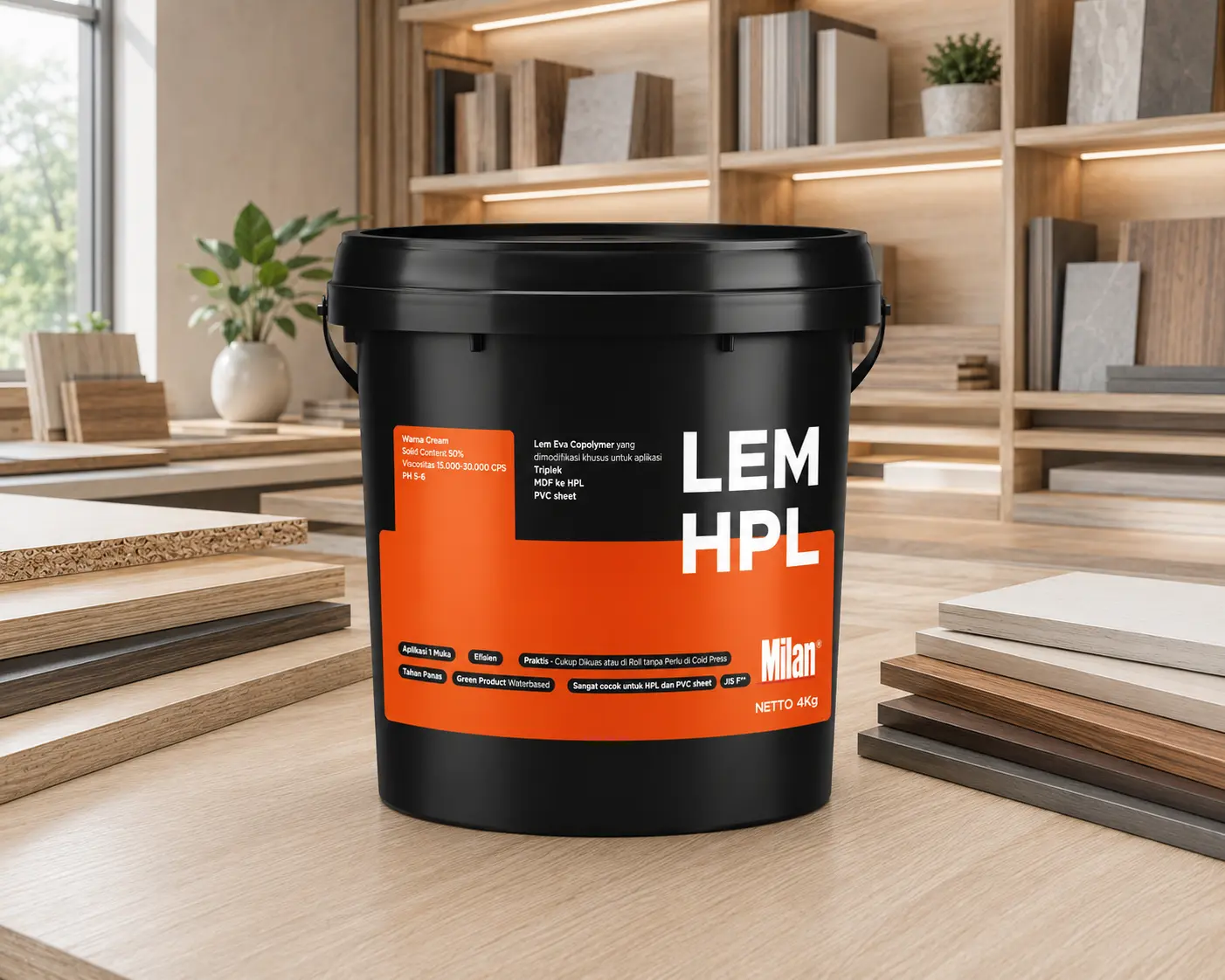
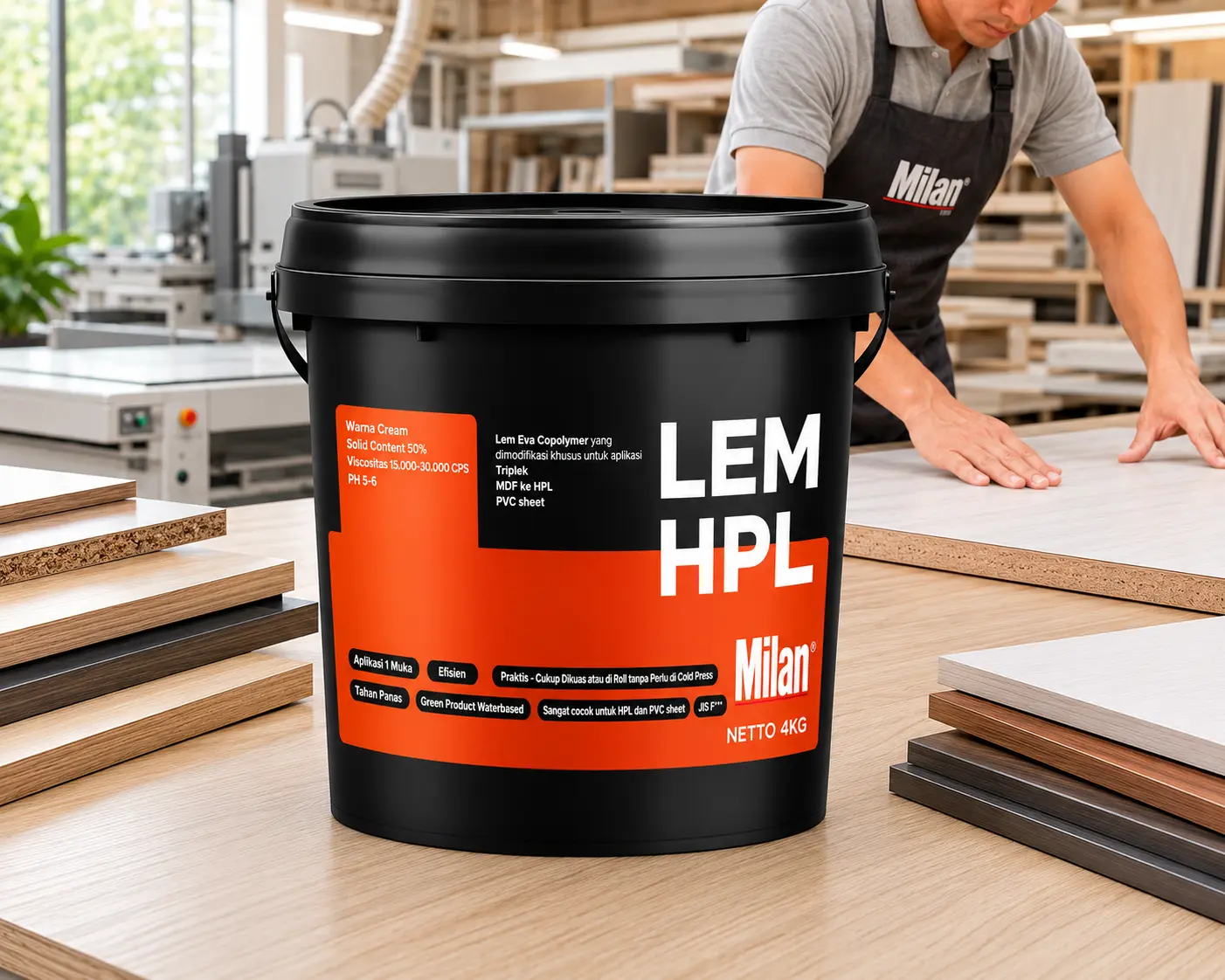
HPL adhesive is water-based glue high-quality products specifically designed for the process HPL and PVC sheet lamination for a variety of interior needs. Its formula provides strong adhesion with easier and cleaner application.

Water-Based HPL Adhesive – Convenient, Quick-Setting, and Maximum Adhesion

HPL Adhesive is water-based glue high-quality products specifically designed for the process HPL and PVC sheet lamination for a variety of interior needs. Its formula provides strong adhesion with easier and cleaner application.

Unlike conventional contact adhesives, this product can be applied to one side of the surface and bonded immediately without having to wait for it to flash off. This makes the process faster, more convenient, and more efficient.

This glue is suitable for making furniture, tables, and various decorative panel applications. It provides a strong, neat bond and helps increase productivity in lamination work.

With water-based technology, Milan HPL Glue It helps produce a cleaner, low-odor lamination process. It’s no wonder this product is the right choice for the furniture industry and interior contractors who need an adhesive that can be applied quickly and efficiently.

Want a convenient adhesive for HPL and PVC sheets for all your laminating needs? Order Milan HPL Adhesive now by clicking the banner below!
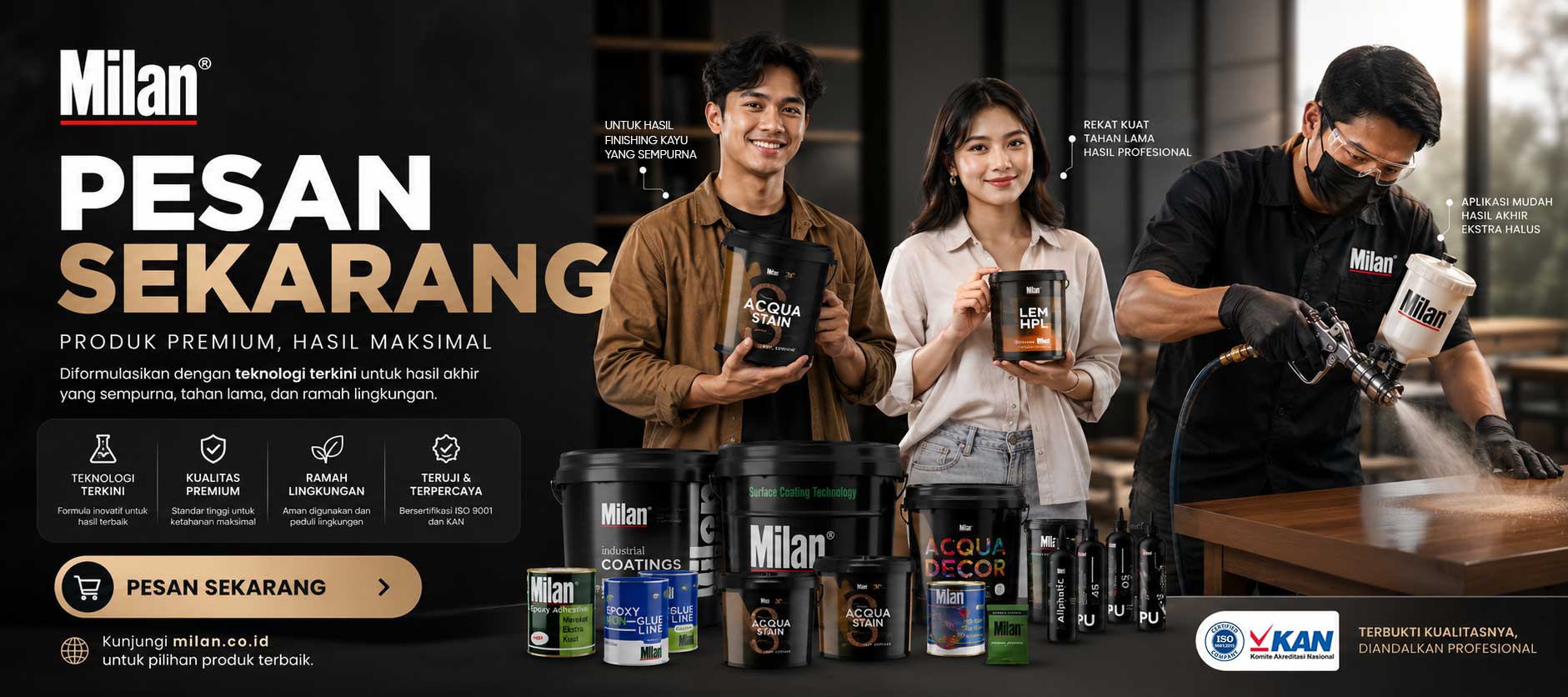
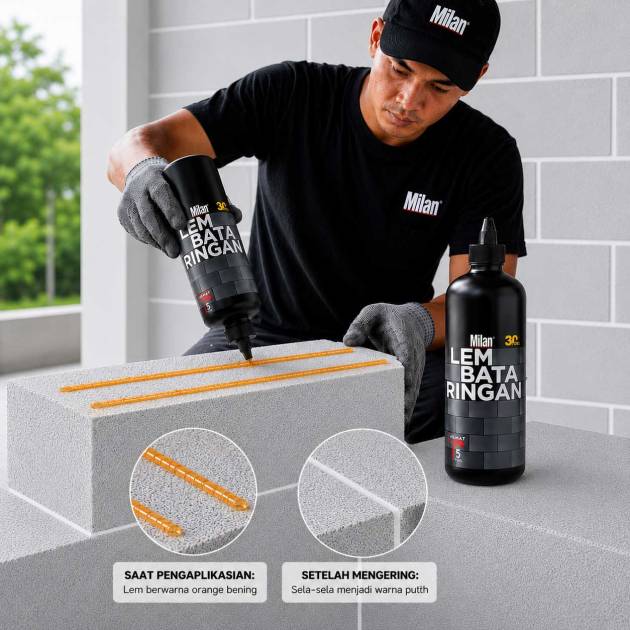
Banner promosi produk Milan Coating & Adhesive dengan teknisi Indonesia menggunakan wood coating dan menampilkan berbagai produk premium finishing industrial dari Milan.co.id.

Packaging

With packaging options 1 kg, 4 kg, and 15 kg, Milan HPL Adhesive is ready to support all your laminating needs, from home projects to professional jobs.

Advantages of HPL Adhesive

By using Milan’s water-based HPL adhesive, you’ll enjoy several benefits, including:

1. Single-page app

2. Can be applied directly

3. Eliminates strong odors

4. Environmentally friendly

5. Dries quickly

6. Heat-resistant

HPL Adhesive User Guide

To use Milan adhesive, there’s no need to worry—just follow these simple steps.

1. Gather the tools you’ll need, such as a hand roller, HPL cutter, and a scraper. Make sure all tools are free of glue residue and other debris.

2. Wipe the surface of the plywood with a cloth

3. Pour the Milan HPL adhesive into the roller

4. Pull the roller lever so the glue can come out

5. Apply Milan HPL adhesive to the plywood surface, continuing until the surface is evenly coated

6. Install HPL

7. Smooth out the HPL with a wooden block wrapped in cloth, and wait 15 minutes for the adhesive to set completely.

8. Cut off the part of the HPL that isn't touching the board using an HPL cutter


Video Tutorial on How to Use Quick-Set HPL Adhesive

If you're still confused about the steps above, for a more practical and simple guide, you can watch the video tutorial below.

Dos and Don'ts

Do

Read and follow the instructions on the package before use.

Make sure the substrate surface is free of dust, dirt, oil, silicone, and other finishing coatings.

Suitable for laminating HPL or PVC sheets onto plywood, MDF, and similar engineered wood panels.

Apply the adhesive evenly to one of the surfaces, using the recommended thickness.

Immediately join the two substrates together after applying the adhesive, before a skin forms.

Apply even pressure throughout the drying process according to the method used (manual, cold press, or hot press).

Clean the applicator with water after use, then dry it so it’s ready for the next use.

Store the adhesive in a tightly sealed container in a cool, dry, well-ventilated place, out of the reach of children.


Don’t

Do not apply glue to surfaces that are dirty, dusty, or wet.

Do not wait too long to join the surfaces after the adhesive has been applied.

Do not apply glue to both sides of the surface; just one side is enough.

Do not apply the adhesive without applying sufficient pressure.

Do not mix the glue with other chemicals that are not recommended.

Do not use application tools that are contaminated with other substances.

Do not touch or move the material until the adhesive has dried according to the recommendations.

Do not test the adhesive strength or store the product improperly before it has undergone the proper drying and storage process.