When choosing paint, Milanians probably often come across water-based options, right? But you might be wondering: what exactly is water-based paint, and why is it becoming increasingly popular across various industries?.
It’s worth noting that whenever people are choosing a coating, water-based paint is often recommended. This is not without reason, as this type of paint is more environmentally friendly and safer to use.
So, what exactly is water-based paint, and for which industries is it suitable? Let’s find out in the discussion below!
What Is Water-Based Paint, and Why Is It Becoming More Popular?
Water-based paint is a type of paint or coating that uses water as its primary solvent, rather than thinner or solvent-based solvents. Once applied, the water evaporates, leaving a strong, smooth, and durable protective layer on the surface of the material.
The popularity of water-based paint continues to rise as various industries begin to adopt safer and more sustainable production processes. The lower VOC (Volatile Organic Compounds) content improves air quality in the workplace while helping companies meet various environmental standards.
In addition, advances in resin technology have brought the quality of water-based coatings closer to—and in some cases even on par with—the performance of solvent-based paints in various industrial applications. Today, many water-based paint products offer high adhesion, weather resistance, resistance to mild chemicals, and a more consistent finish.
See Also: What Is a Water-Repellent Coating and Its Benefits for Buildings
The Difference Between Water-Based Paint and Solvent-Based Paint
| Aspect | Water-Based Paint | Solvent-Based Paint |
| Solvents | It uses water as its primary solvent, making it safer to use in a variety of work environments. | Use thinner or a volatile chemical solvent. |
| Resilience | It offers excellent resistance to weather, humidity, and daily use, depending on the resin formulation used. | Generally offers superior resistance to harsh chemicals and certain extreme industrial conditions. |
| Final Results | A smooth, even finish with stable color and minimal color change over time. | A hard coating with a thicker finish. |
| Drying Time | It dries faster because water evaporates more easily under the right conditions. | It usually takes longer because of the solvent evaporation process. |
| Gloss Level | Available in a variety of finishes, ranging from matte to satin to glossy. | Produces a naturally higher gloss level. |
| Scent | It has a much milder odor, making it more comfortable for production operators. | It emits a fairly strong solvent odor during application. |
| Environmental Impact | It is more environmentally friendly because it produces lower VOC emissions. | Has higher carbon emissions |
| Cleaning of Equipment | The equipment can be cleaned with water, making it more convenient. | Requires thinner or a special cleaning solution after use. |
Advantages and Disadvantages of Water-Based Paint
| Advantages | Disadvantages |
| It has a lower VOC content, making it more environmentally friendly. | Requires a completely clean surface for optimal adhesion. |
| The smell isn't overpowering | Some formulations require temperature and humidity control during application. |
| It dries quickly, thereby improving production efficiency. | Not all types are suitable for exposure to highly aggressive chemicals. |
| Easy to clean with just water. | The prices of some premium products may be higher than those of conventional paint. |
| The color is more stable and does not yellow easily. | The choice of resin must be tailored to the needs of the industrial application. |
| Available for a variety of materials, including wood, concrete, metal, and fiber cement. | It requires the proper application procedure to achieve optimal results. |
Key Components in Water-Based Coatings
1. Resin
Resin is the primary component that determines the adhesion, flexibility, scratch resistance, and durability of water-based paint against weather and everyday use. The type of resin used will affect the final performance of the coating in every industrial application.
2. Pigments
Pigments serve to add color while enhancing the coverage of a material’s surface. In addition to providing an attractive appearance, certain pigments can also help improve resistance to UV rays and corrosion.
3. Additives
Additives are supplementary ingredients that serve to enhance the performance of water-based coatings, such as accelerating drying time, improving stability, reducing foaming, improving paint flow, and increasing resistance to mold or scratches.
4. Water
Water serves as the carrier for all the components in water-based paint. In addition to being safer than chemical solvents, the use of water also simplifies the application and mixing processes, as well as the cleanup of equipment once the job is complete.
What Industrial Applications Are Water-Based Coatings Suitable For?
1. The Wood and Furniture Industry
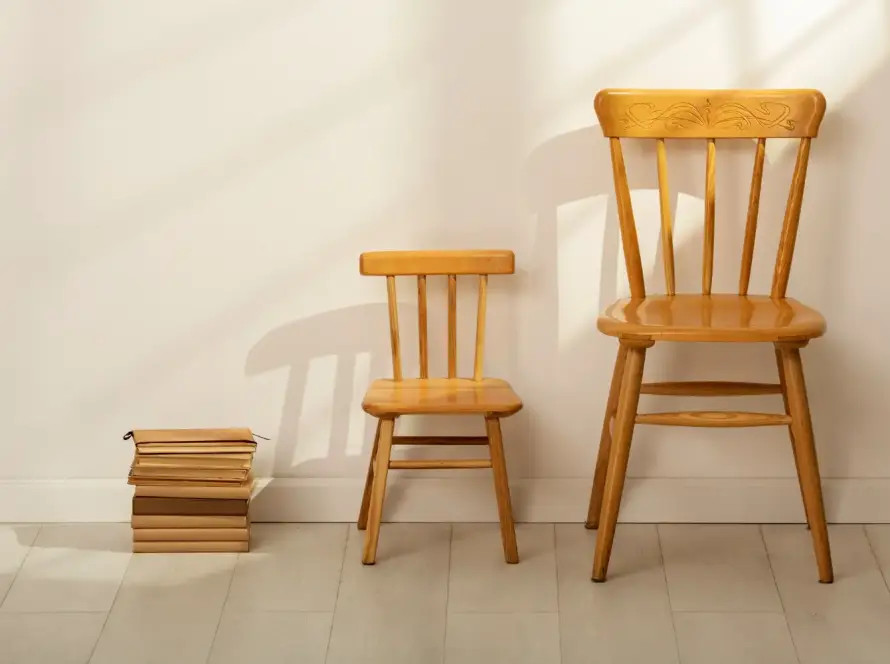
In the wood industry, water-based paint is widely used as a finish for furniture, doors, door frames, decorative panels, and various interior products. The finish helps preserve the beauty of the wood grain wood while also providing protection against moisture and everyday wear and tear.
2. Packaging Industry
Various paper- and cardboard-based packaging products use water-based coatings because they are safer to use and produce sharper print results. In addition, the production process is more aligned with sustainability standards.
3. Electronics Industry
Certain electronic components use water-based paint as a protective coating to improve the surface’s resistance to dust, moisture, and light abrasion without producing excessive solvent emissions during the production process.
4. Construction Industry
In the construction sector, water-based paint is used on walls, concrete, fiber cement, and various other building materials. This coating helps enhance aesthetics while providing protection against the weather and environmental exposure.
5. Automotive and Transportation Industry
Some vehicle components and transportation interiors are now beginning to use water-based paint because it produces a high-quality finish with lower emissions. Its use also supports modern automotive industry standards, which are increasingly focused on environmental considerations.
See Also: Switch Now! 6 Benefits of Eco-Friendly Wood Paint for Maximum Results
When Is the Best Time to Use Water-Based Paint?
Milanians should choose water-based paint when they need a finishing process that is fast, environmentally friendly, has a milder odor, and is easy to clean up after application. This product is also the right choice for companies seeking to implement production standards that are safer for workers while reducing VOC emissions.
In addition, water-based paint is ideal for a wide range of finishing applications on wood, concrete, fiber cement, decorative materials, and various industrial components that require a neat finish and long-term protection.
Need Water-Based Paint for Industrial Use? Try Milan Acqua Stain Today!
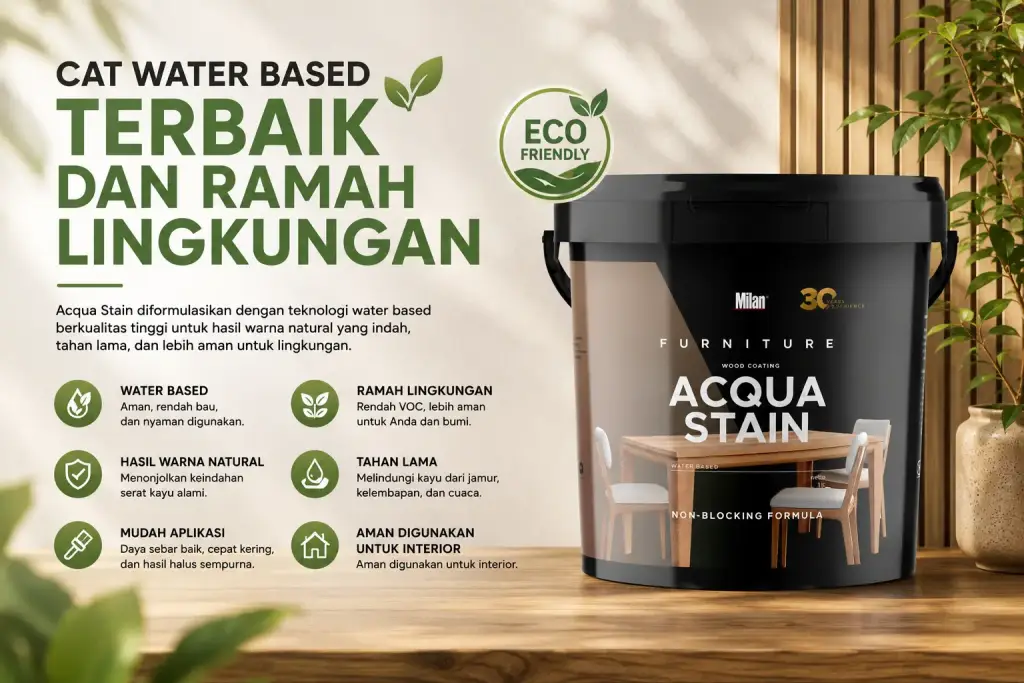
Need water-based paint for various industrial applications? Try Milan Acqua Stain today! Formulated with water-based ingredients, Milan Acqua Stain is safe and eco-friendly.
Milan Acqua Stain Suitable for various industries, such as furniture, woodworking, and construction. Its ease of application makes this paint the top choice. What’s more, it features anti-fungal and anti-moss technology, which makes the wood even more durable.
Want to get Milan Acqua Stain at a special price? Contact the Milan Indonesia team now at Click the banner below!