Aliphatic Wood Glue

Aliphatic is a wood adhesive specifically designed for laminating and finger-jointing applications, offering strong adhesion and precise joints. It is ideal for dry wood with a moisture content (MC) of 8–12% and is heat- and solvent-resistant.

Aliphatic – Heat-Resistant Wood Glue for Stronger Laminations & Finger Joints

Aliphatic is wood glue high-performance, specifically designed for applications lamination and finger jointing. The formula produces a strong bond and ensures precise, long-lasting joints on various types of wood.

With its resistance to heat and solvents, this product helps maintain optimal bond strength during production processes and everyday use. This adhesive is highly Ideal for dry wood with a moisture content (MC) of 8–12% resulting in more optimal and consistent adhesion.

As super-strong wood glue, Aliphatic provides reliable bonding performance for a variety of wood processing needs. Not only that, but this product is also the best choice for applications that require solvent-based wood glue or solvent-resistant wood glue, yet it still produces a strong, neat, and durable joint.

With its ease of application and consistent bonding results, this wood adhesive supports a more efficient production process. It is suitable for use in the furniture industry, wood panel manufacturing, door production, finger joints, and a variety of high-quality wood lamination applications.

Interested in using Milan’s super-strong Finger Point wood glue? Order now and get the best price by clicking the banner below!
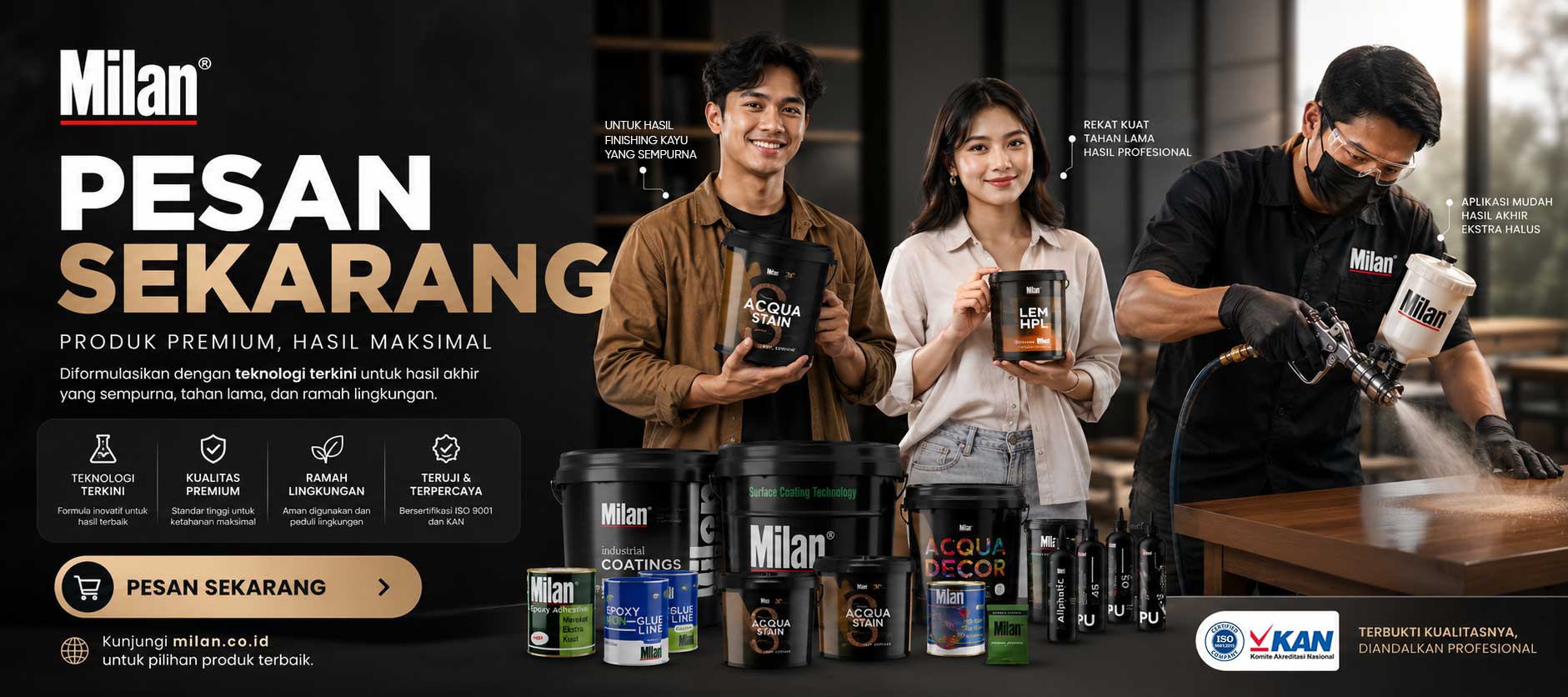
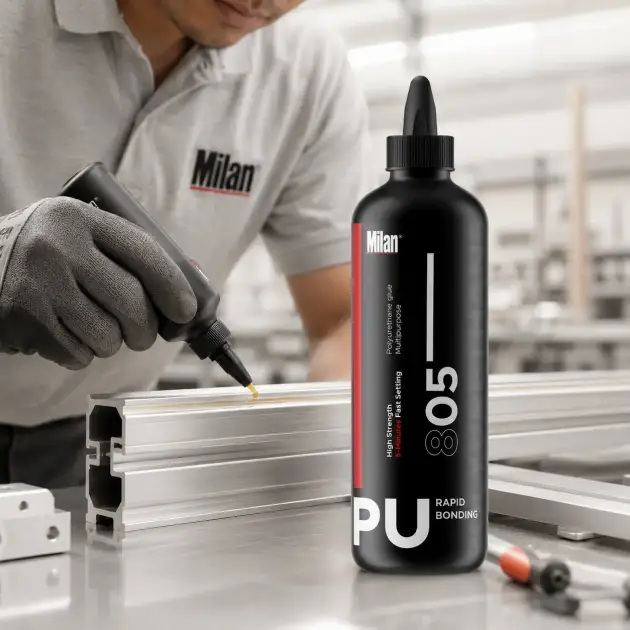
Banner promosi produk Milan Coating & Adhesive dengan teknisi Indonesia menggunakan wood coating dan menampilkan berbagai produk premium finishing industrial dari Milan.co.id.

Packaging

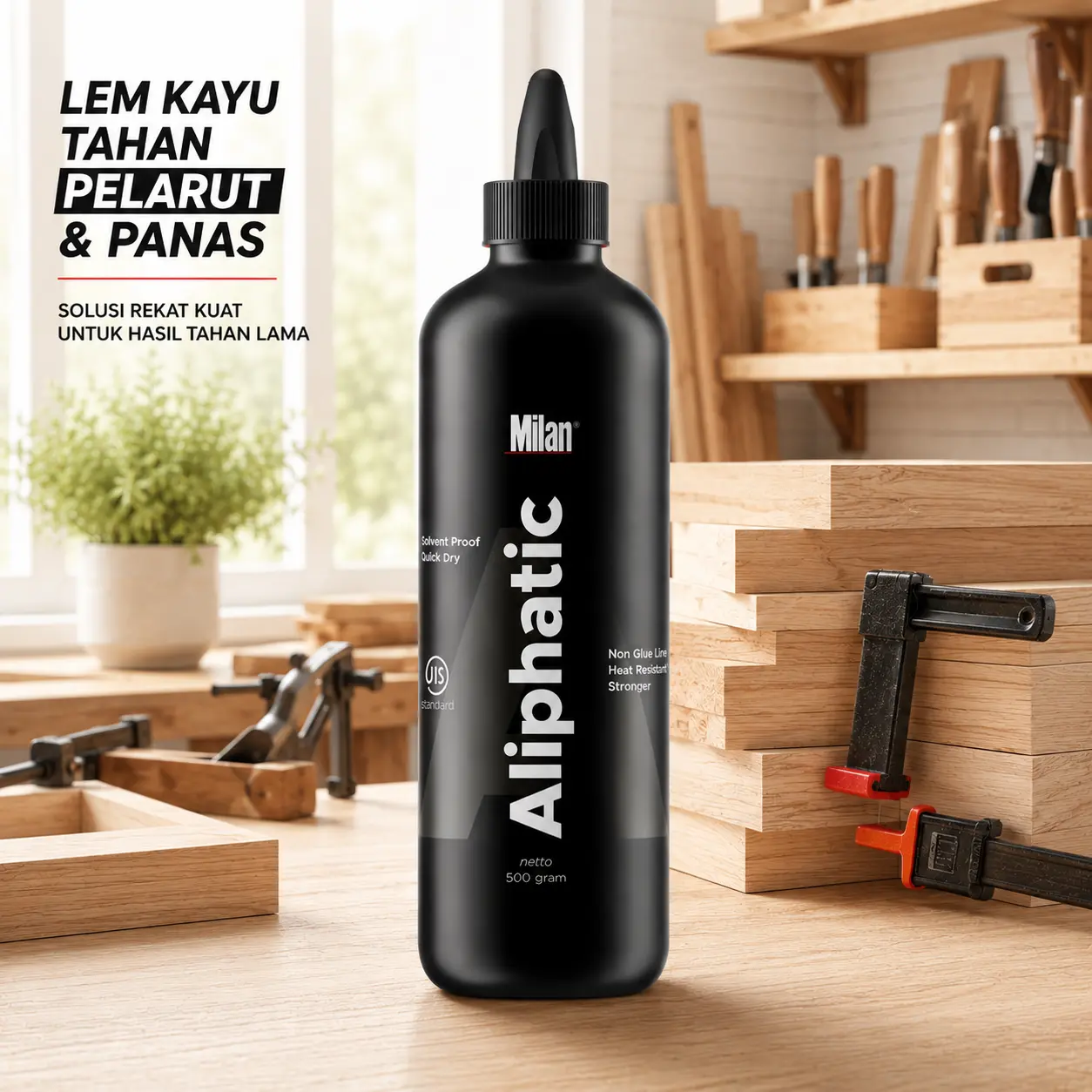
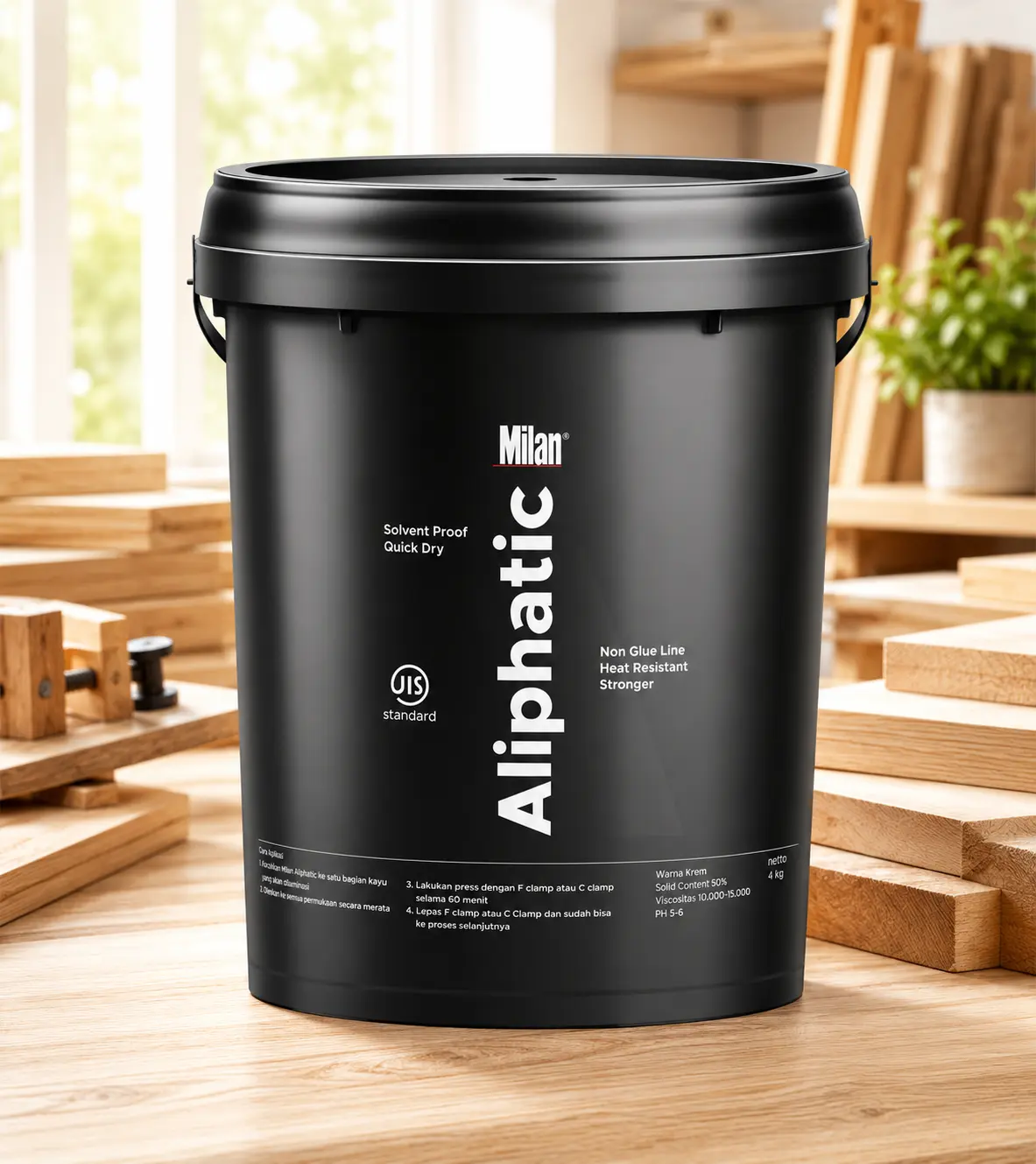
Milan Aliphatic’s super-strong wood glue offers flexible packaging options to suit your needs, including:

  • 0.5 kg
  • 4 kg
  • 20 kg

Advantages of Aliphatic

Still unsure about using Milan Aliphatic laminate wood glue? Check out the many benefits of using it, including:

1. Solvent-resistant

2. No Glue Line

3. Heat-resistant

4. Formaldehyde-Free (F**** JIS Standard)

5. Super-Strong Adhesion

6. Suitable for Finger Point


Guide to Using Aliphatic Wood Glue

As a super-strong wood glue that’s safe to use for a variety of applications, it’s also very easy to use—just follow the few steps below.

1. Apply Milan Aliphatic to one side of the wood to be laminated

2. Apply evenly to all surfaces

3. Apply pressure using an F-clamp or C-clamp for 60 minutes

4. Remove the F-clamp or C-clamp, and you’re ready to move on to the next step.


Video Tutorial on Using Aliphatic Wood Glue

Still not sure how to follow the steps above? Don’t worry—you can follow the guide for applying Aliphatic wood glue by watching the video tutorial below!

Dos and Don'ts

Do

Read and follow all the instructions for use printed on the packaging.

Make sure the wood surface is free of dust, dirt, oil, peeling paint, and other finishes.

Check the moisture content (MC) of the wood and ensure it is within the range of 6–12% before application.

Sand the rough wooden surface to increase the contact area and adhesion.

Apply the adhesive evenly and to the appropriate thickness to the surface to be bonded.

Immediately join the two wooden surfaces together after applying the adhesive and apply even pressure using clamps or tongs.

Let the joint set for at least 60 minutes, then continue the drying process until the adhesive has completely cured before use.

Clean the tool with water after use, store the adhesive in a tightly sealed container in a cool, dry place, and use it in an area with appropriate ventilation, temperature, and humidity.


Don’t

Do not apply glue to surfaces that are dirty, dusty, or wet.

Do not use on wood with a moisture content higher than the recommended level.

Avoid using the product at temperatures that are too high or too low.

Do not mix the glue with other chemicals that are not recommended.

Do not wait too long to join the surfaces after the adhesive has been applied.

Do not apply insufficient pressure or release the clamp too quickly during the bonding process.

Do not touch, move, or place any weight on the joint until the adhesive is completely dry.

Do not use contaminated tools, and avoid improper storage, as this can reduce the adhesive's quality.