Dinding bata ekspos memang punya daya tarik tersendiri. Tekstur dan warna alaminya bisa membuat bangunan terlihat lebih hangat, natural, sekaligus punya karakter yang kuat. Tapi, ada satu hal yang sering terlupakan, yakni soal perawatannya.
Banyak yang mengira, batu bata ekspos tidak perlu dirawat, cukup dibiarkan saja karakternya masih terlihat bertahun-tahun.
Padahal, ini salah besar – batu ekspos tanpa perawatan bakal cepat kusam, dipenuhi debu, bahkan ditumbuhi lumut. Apalagi jika dinding berada di area luar yang terus terkena hujan dan sinar matahari.
Oleh karena itu, Milanians perlu tahu cara merawat dinding bata ekspos yang tepat agar tampilannya tetap menarik dan materialnya lebih terlindungi. Perawatannya sebenarnya tidak sulit, asalkan dilakukan secara rutin dan menggunakan perlindungan yang sesuai.
Alasan Dinding Bangunan dari Bata Ekspos Perlu Perawatan Khusus
Bata ekspos memiliki permukaan yang cenderung berpori. Kondisi ini membuat material lebih mudah menyerap air dan kelembapan dibandingkan permukaan dinding yang sudah dilapisi finishing kedap air.
Ketika air masuk ke dalam pori-pori bata dan tidak cepat mengering, lingkungan tersebut bisa menjadi tempat yang ideal bagi lumut dan jamur untuk tumbuh. Dalam jangka panjang, kelembapan berlebih juga dapat membuat warna bata berubah dan permukaannya terlihat semakin kusam.
Selain air, debu, kotoran, serta paparan sinar matahari juga dapat memengaruhi tampilan bata. Itulah mengapa cara merawat dinding bata ekspos bukan hanya soal menjaga kebersihan, tetapi juga melindungi permukaannya dari faktor lingkungan.
See Also: Solutions for Treating Moldy and Mossy Natural Stone with a Water-Repellent Coating
Penyebab Utama Dinding Bata Ekspos Cepat Berlumut dan Kusam
1. Terpapar Air Hujan dan Sinar Matahari Terus Menerus
Dinding bata ekspos outdoor menerima paparan cuaca secara langsung. Air hujan dapat masuk ke pori-pori bata, sedangkan sinar matahari terus-menerus dapat membuat warna permukaan perlahan memudar. Siklus basah dan kering yang berulang juga dapat mempercepat perubahan kondisi permukaan bata.
2. Kurangnya Sirkulasi Udara, Membuat Kelembapan Tinggi
Area yang minim sirkulasi udara cenderung lebih lembap karena air yang menempel pada permukaan dinding lebih lama mengering. Kondisi ini sangat mendukung pertumbuhan lumut, terutama pada dinding yang berada di area teduh dan jarang terkena sinar matahari.
3. Dust and Dirt Build Up
Debu, tanah, asap, dan kotoran lain yang menempel terlalu lama dapat membuat warna alami bata terlihat lebih gelap dan kusam. Jika bercampur dengan air dan kelembapan, kotoran tersebut juga bisa semakin sulit dibersihkan.
4. Kurangnya Perawatan dan Pembersihan
Bata ekspos yang tidak pernah dibersihkan akan lebih mudah mengalami penumpukan kotoran. Masalah kecil seperti noda lembap atau pertumbuhan lumut tipis juga bisa berkembang menjadi lebih sulit ditangani jika dibiarkan terlalu lama.
5. Tidak Menggunakan Perlindungan Khusus Bata Ekspos
Tanpa perlindungan tambahan, bata harus menghadapi air dan kelembapan secara langsung. Penggunaan coating bata ekspos yang tepat dapat membantu mengurangi penyerapan air sekaligus menjaga tampilan permukaan agar lebih awet.
Perbedaan Perawatan Bata Ekspos Indoor dan Outdoor
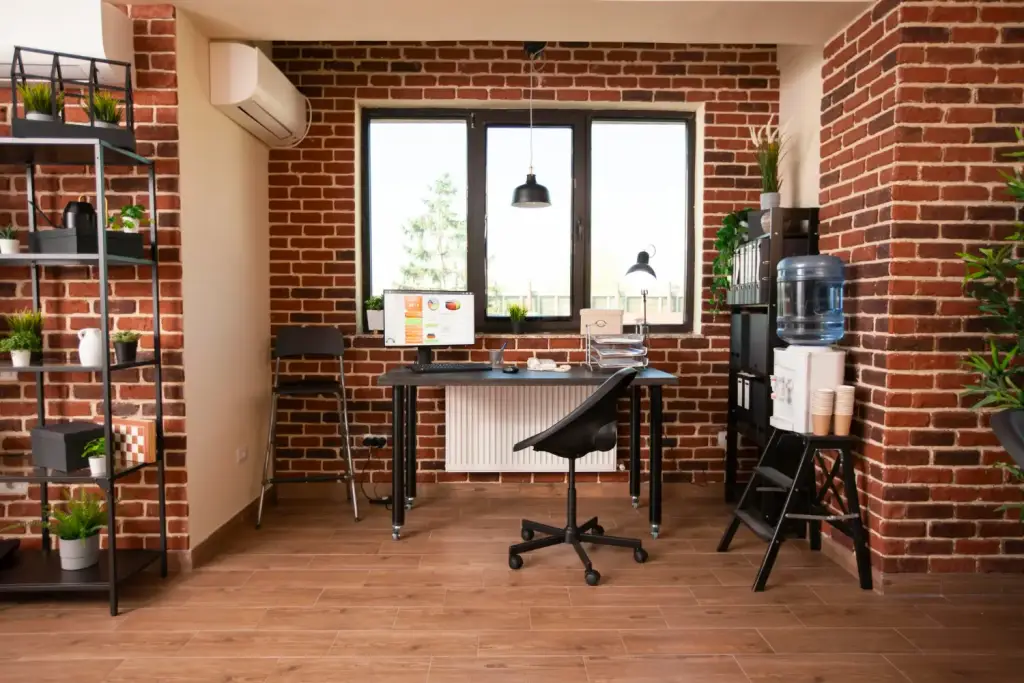
Cara merawat dinding bata ekspos perlu disesuaikan dengan lokasi pemasangannya. Bata yang berada di dalam ruangan memiliki risiko paparan cuaca yang lebih rendah dibandingkan bata ekspos outdoor.
| Aspect | Bata Ekspos Indoor | Bata Ekspos Outdoor |
| Paparan air | Rendah, kecuali area lembap | Tinggi karena hujan |
| Paparan sinar matahari | Relatif rendah | Tinggi |
| Risiko lumut | Lebih rendah | Lebih tinggi |
| Fokus perawatan | Debu dan noda | Air, lumut, debu, dan cuaca |
| Frekuensi pembersihan | Secara berkala | Lebih rutin |
| Perlindungan tambahan | Disesuaikan kondisi ruangan | Sangat disarankan |
| Hal yang perlu diperhatikan | Sirkulasi udara | Drainase dan kelembapan |
Kesalahan yang Harus Dihindari Saat Merawat Bata Ekspos
Sebelum tahu soal cara merawat dinding bata ekspos, Milanians harus memahami kesalahan yang perlu dihindari saat melakukan perawatan, meliputi:
- Membiarkan lumut tumbuh terlalu lama.
- Menggunakan sikat yang terlalu kasar.
- Menggunakan bahan pembersih yang tidak sesuai untuk bata.
- Menyemprot air bertekanan terlalu tinggi secara sembarangan.
- Membiarkan dinding terus-menerus dalam kondisi lembap.
- Mengabaikan retakan pada permukaan atau sambungan bata.
- Menggunakan coating tanpa membersihkan permukaan terlebih dahulu.
- Mengaplikasikan produk perlindungan yang tidak sesuai dengan material bata.
Cara Merawat Dinding Bata Ekspos agar Tidak Cepat Berlumut dan Kusam
1. Bersihkan Dinding dari Debu dan Kotoran Secara Rutin
Mulailah dengan membersihkan permukaan secara berkala menggunakan metode yang sesuai. Debu ringan dapat dibersihkan dengan sikat lembut atau kain, sedangkan noda yang lebih berat perlu ditangani menggunakan pembersih yang aman untuk material bata.
Jangan menunggu sampai dinding terlihat sangat kotor. Pembersihan rutin merupakan salah satu cara merawat dinding bata ekspos yang sederhana tetapi efektif untuk mempertahankan tampilannya.
2. Hindari Kelembapan Berlebih
Pastikan area di sekitar dinding memiliki sirkulasi udara dan drainase yang baik. Jangan biarkan air menggenang atau terus menempel pada permukaan bata.
Untuk dinding indoor, perhatikan area yang sering lembap seperti dekat kamar mandi atau dapur. Sementara pada dinding outdoor, pastikan aliran air hujan tidak langsung tertahan di permukaan dinding.
3. Gunakan Coating Khusus untuk Perlindungan Maksimal
Selain dibersihkan, bata ekspos dapat diberikan perlindungan tambahan menggunakan coating yang dirancang untuk membantu mengurangi penyerapan air. Perlindungan ini penting terutama untuk dinding yang berada di luar ruangan dan sering terkena hujan.
Salah satu produk yang dapat Milanians gunakan adalah Milan Omnitect Water Repellent karena membantu memberikan efek water repellent pada berbagai material, termasuk bata, beton, kayu, batu, dan material sintetis.
Milan Omnitect Water Repellent membuat air tidak mudah meresap pada dinding bata ekspos, sehingga bisa memberikan perlindungan maksimal tanpa mengubah tampilan aslinya.
4. Segera Perbaiki Jika Ada Retakan pada Dinding Bata
Retakan pada bata atau sambungan dinding sebaiknya tidak dibiarkan. Celah tersebut dapat menjadi jalur masuknya air ke bagian dalam material. Semakin cepat diperbaiki, semakin kecil risiko kelembapan berkembang menjadi masalah yang lebih besar.
5. Jaga Area Dinding Tetap Kering
Jauhkan sumber air yang tidak diperlukan dari permukaan bata. Pastikan talang, saluran air, dan area sekitar dinding berfungsi dengan baik sehingga air tidak terus-menerus mengenai permukaan bata.
6. Jika Lumut Sudah Muncul, Segera Bersihkan dengan Pembersih Khusus
Lumut yang sudah terlihat sebaiknya segera ditangani. Gunakan pembersih seperti cuka putih yang memang sesuai untuk permukaan bata dan ikuti petunjuk penggunaannya. Setelah lumut dibersihkan, jangan lupa cari penyebab kelembapannya agar masalah tidak terus berulang.
See Also: 5 Ways to Protect Natural Stone from Moss, Mold, and Rainwater
Apakah Dinding Bata Ekspos Perlu Dilapisi Coating?
Sebenarnya, penggunaan coating pada dinding bata ekspos bergantung pada lokasi, kondisi, dan tingkat paparan lingkungan. Namun, coating bisa menjadi perlindungan tambahan yang sangat berguna, terutama pada bata ekspos outdoor yang sering terkena air hujan.
Coating water repellent bekerja dengan membantu mengurangi masuknya air ke dalam permukaan material tanpa harus menghilangkan karakter alami bata.
Dengan begitu, dinding tetap dapat mempertahankan tampilan tekstur alaminya sekaligus mendapatkan perlindungan tambahan terhadap air.
One recommendation that can be used is Milan Omnitect Water Repellent yang dirancang sebagai pelindung dengan memberikan efek water repellent pada permukaan berbagai material.
Produk ini diformulasikan untuk menjaga material dari kerusakan akibat kelembapan, rembesan air hujan, kusam, lumut, hingga jamur.
Keunggulan Milan Omnitect Water Repellent untuk Melindungi Dinding Bata Ekspos
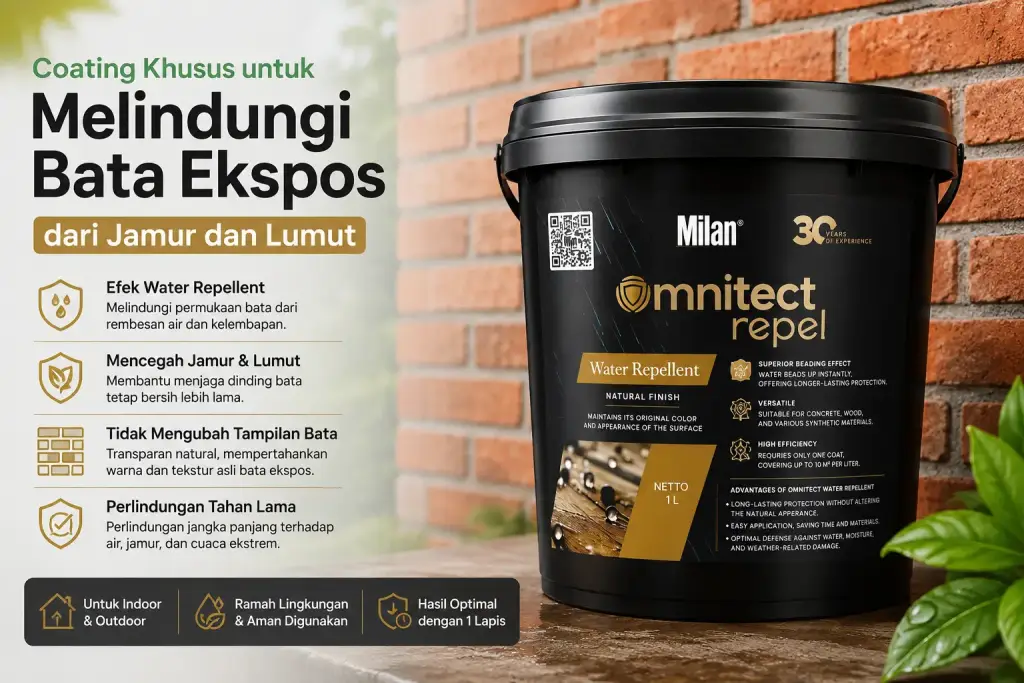
Milan Omnitect Water Repellent membantu memberikan perlindungan terhadap air pada permukaan material. Efek water repellent membuat air lebih sulit meresap sehingga permukaan material dapat lebih terlindungi dari paparan kelembapan.
Produk ini juga dapat digunakan pada berbagai material, termasuk beton, kayu, batu, dan material sintetis. Untuk dinding bata ekspos, perlindungan semacam ini dapat membantu menjaga tampilan permukaan agar tetap lebih bersih dan tidak mudah mengalami masalah akibat paparan air.
Selain perlindungan terhadap air, Milan Omnitect Water Repellent juga menawarkan efek seperti daun talas (lotus leaf effect) pada permukaan. Karakter ini membantu air lebih mudah membentuk butiran dan mengalir dari permukaan, sehingga air tidak mudah menetap terlalu lama.
Panduan Pemakaian Coating Bata Ekspos dari Milan Omnitect Water Repellent
1. Pastikan Permukaan Bersih, Kering, dan Tidak Rusak
Sebelum aplikasi, pastikan permukaan dinding bata ekspos sudah bersih dan kering dari debu, minyak, lumut, jamur, maupun kotoran lainnya. Jika terdapat retakan atau kerusakan pada permukaan, perbaiki terlebih dahulu agar proses aplikasi dapat dilakukan dengan optimal.
2. Aduk Produk hingga Merata
Sebelum digunakan, aduk Milan Omnitect Water Repellent hingga merata. Langkah ini penting untuk memastikan kandungan produk tercampur dengan baik sebelum diaplikasikan pada permukaan bata ekspos.
3. Aplikasikan secara Merata pada Seluruh Permukaan
Milan Omnitect Water Repellent dapat diaplikasikan menggunakan kuas, roller, atau sprayer. Oleskan secara merata ke seluruh permukaan dinding bata ekspos dan pastikan tidak ada area yang terlewat.
4. Just Use One Layer
Aplikasikan produk sebanyak satu lapis untuk mendapatkan perlindungan optimal. Pastikan lapisan diaplikasikan secara merata sehingga seluruh permukaan yang membutuhkan perlindungan telah terlapisi dengan baik.
5. Biarkan Lapisan Mengering dan Meresap Sempurna
Setelah aplikasi selesai, biarkan Milan Omnitect Water Repellent mengering dan meresap dengan sempurna. Hindari menyentuh atau mengganggu permukaan selama proses pengeringan agar lapisan dapat bekerja secara optimal.
6. Hindari Air dan Hujan Selama Proses Pengeringan
Selama lapisan masih dalam proses pengeringan, pastikan permukaan tidak terkena air atau hujan. Perlindungan dari paparan air selama proses ini membantu memastikan hasil aplikasi dan perlindungan Milan Omnitect Water Repellent tetap maksimal.
Cegah Dinding Bata Ekspos Bangunan Kusam dengan Perlindungan dari Milan Omnitect Water Repellent!
Bata ekspos yang cantik jangan sampai kalah sama lumut. Kalau Milanians ingin mempertahankan karakter natural dinding sekaligus memberikan perlindungan tambahan dari air, saatnya pilih perlindungan yang memang dirancang untuk menghadapi masalah tersebut.
PT Indocipta Wisesa menghadirkan Omnitect Water Repellent sebagai solusi perlindungan permukaan yang membantu menjaga material dari paparan air dan kelembapan.
Attendance Milan Omnitect Water Repellent bukan sekadar sebagai pelindung biasa, tapi juga membantu menjaga tampilan material alaminya, meskipun sudah bertahun-tahun digunakan.
Tertarik membuat dinding bata ekspos tetap tampil natural tanpa membiarkannya cepat kusam? Klik banner di bawah dan temukan perlindungan yang tepat dari Milan Omnitect Water Repellent!