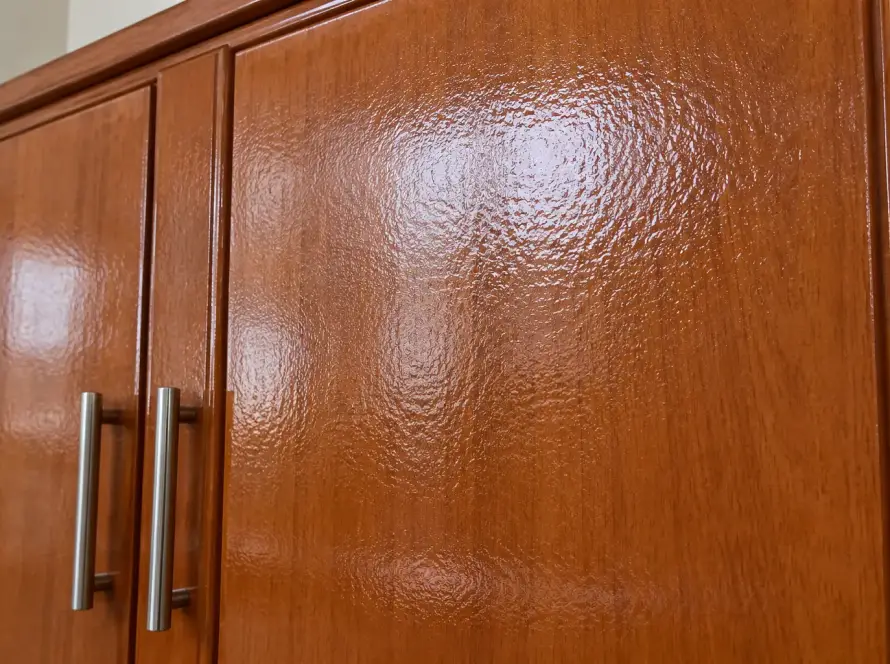
Have you spent hours finishing wood, only to find that while the result initially looked smooth, small bubbles began to appear on the surface shortly afterward? Problems like this with wood finishing can be particularly frustrating, especially when a project is nearing completion or is even ready to be handed over to the customer.
In fact, a bubbly finish does more than just detract from the aesthetic appeal. If left unaddressed, the finish coat can lose its adhesion, peel off easily, and even require the work to be redone from scratch. Naturally, this results in higher costs in terms of materials, time, and labor.
The good news is that bubbling in wood finishes can actually be prevented if Milanians know the cause from the start. Even if bubbles have already appeared, there are still several steps you can take to restore the finish to its best condition.
The Main Causes of Bubbles in Wood Finishes
1. The Wooden Surface Is Still Dirty and Dusty
Fine dust, sanding dust, hand oils, and even glue residue clinging to the wood’s surface can impair the adhesion of the finish coat. When the coating is applied, air becomes trapped between the wood’s surface and the paint layer, causing bubbles to form.
2. The Wood Is Still Damp
High moisture content in the wood is one of the most common causes of bubbling in wood finishes. When the wood still retains moisture, water vapor escapes as the finish begins to dry. This vapor pushes the coating layer from beneath, causing bubbles to form.
3. Applying the Coating Too Thickly
Many people think that a thicker coat will produce a better color. In fact, a coat that is too thick causes the surface to dry too quickly, while the underlying layer remains wet. As a result, the trapped solvent builds up pressure and causes bubbles to form in the finish.
4. Improper Mixing of Ingredients
The ratio of paint, thinner, hardener, or other additives must follow the technical instructions. A mixture that is too thick or too thin can interfere with the solvent evaporation process. In addition, stirring too quickly can introduce too much air into the material, increasing the risk of bubbles.
5. Incorrect Application Technique; Not in Accordance with Technical Instructions
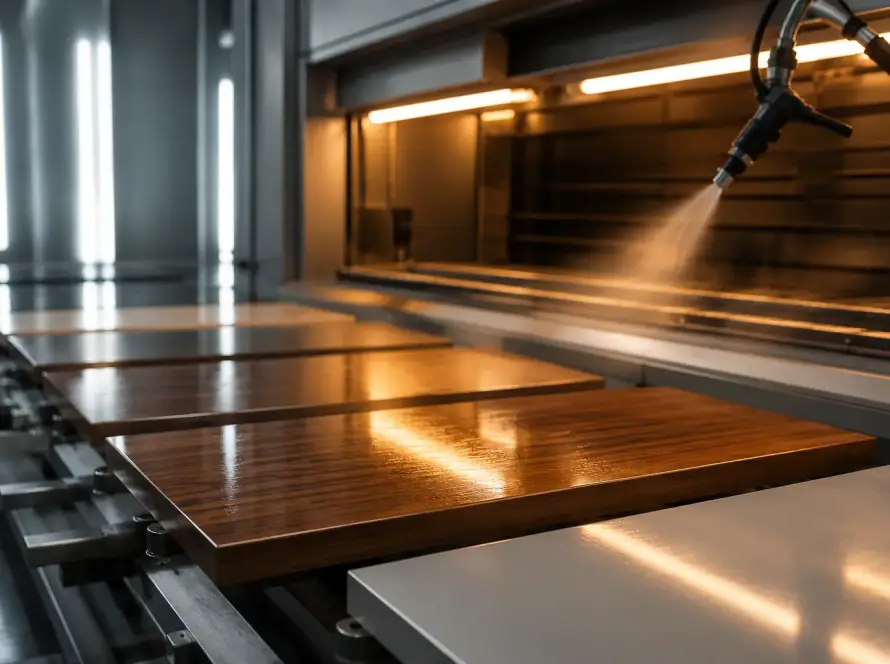
Spraying from too close a distance, improper air pressure, or erratic spray gun movements can result in an uneven finish. These conditions cause air to become trapped within the coating layer, making it more likely for bubbles to form on the wood finish.
6. The Base Coat Has Not Dried Completely
Each coat of finish needs time to dry before moving on to the next step. If the next coat is applied too soon, the solvent from the underlying coat will not have had time to evaporate completely. As it evaporates, the solvent will push up the top coat, causing bubbles to form.
7. Wood Has Large, Deep Pores
Some types of wood have large pores, which make it easier for air to become trapped inside them. If the pores are not first sealed with wood filler or sanding sealer, the air will escape during the finishing process and cause the surface to become uneven.
8. Improper Use of Thinner
Not all thinners are suitable for every type of finish. Using a thinner that evaporates too quickly or is incompatible with the finishing material can interfere with the coating formation process. As a result, bubbles, pinholes, and a rough surface are more likely to occur.
9. Unfavorable Weather During Application
Excessively high temperatures cause the solvent to evaporate too quickly, while high humidity slows down the drying process. Both of these conditions can potentially cause bubbles in the wood finish, especially if the work is done in an open area without temperature control or air circulation.
See Also: 9 Tips for Finishing Wood to Ensure a Surface Free of Stains and Orange Peel
How to Fix Bubbles in a Wood Finish
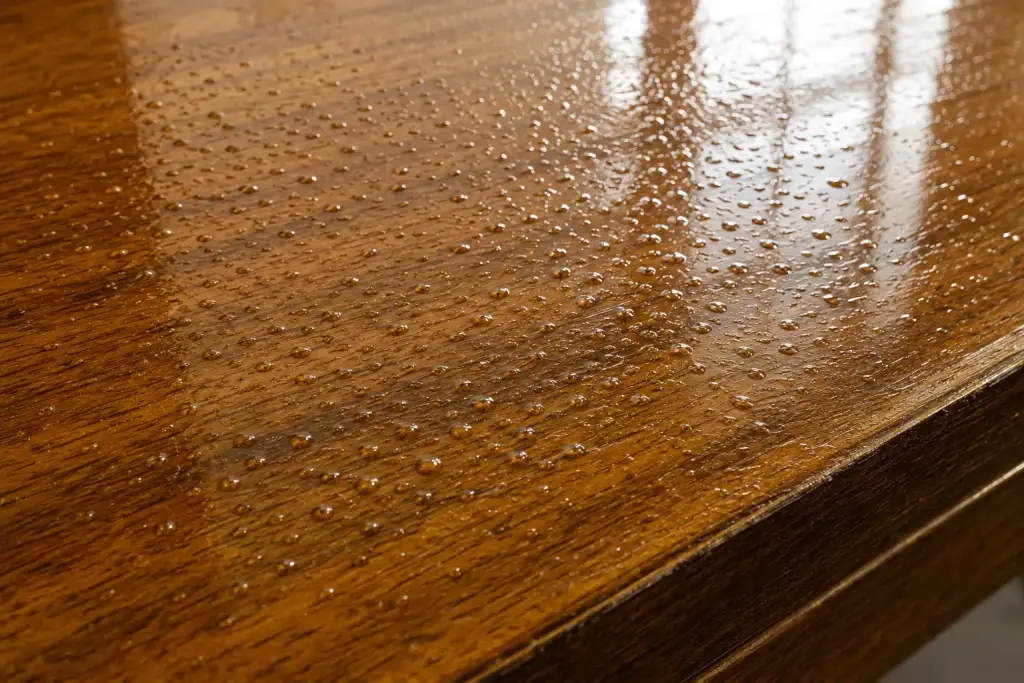
1. While the Finish Is Still Wet, Do Not Apply Another Coat
If a new bubble appears and the finish coat is still wet, do not immediately apply a new coat to cover it.
That method will actually make the problem worse because air is still trapped inside the layer. Let the drying process finish first, then assess the extent of the damage before making repairs.
2. Once the Bubble Has Dried, Sand It Down and Reapply
For small, dried-out bubbles, sand them down until the surface is smooth again.
After the dust has been removed, reapply a thin, even coat of finish according to the instructions. This method is usually effective enough to restore the finish’s appearance.
3. If the bubbles get bigger and the coating peels off, repeat the finishing process from the beginning
If the bubbles have caused the coating to peel or lose its adhesion, the best solution is to remove the entire finish layer down to the wood surface.
After that, repeat the finishing process—starting with surface preparation, applying filler, sanding the sealer, and applying the top coat—to ensure the best possible result.
Tips for Preventing Bubbles in Wood Finishes
1. Make Sure the Wooden Surface Is Clean
Before you begin applying the finish, clean the entire wood surface of dust, oil, glue residue, and other debris. A thoroughly clean surface will ensure that the finish adheres more effectively and minimize the formation of bubbles.
2. Sand the Wood Using Sandpaper of Gradually Increasing Grit
Use sandpaper in stages, for example, starting with a coarse grit and moving on to a finer grit. This technique helps smooth the surface while reducing scratches that can cause unevenness in the finish.
3. Apply Primer to Minimize Pores
Wood with large pores requires a primer to prevent air from escaping during the finishing process. The primer also helps improve the adhesion of the next coat while creating a smoother surface.
For best results, Milanians can use Milan Wood Filler to fill the pores of the wood before the finishing process. With the pores more thoroughly sealed, the risk of bubbles forming in the wood finish is reduced, while also producing a smoother surface.
4. Use the Right Tools
Make sure that the spray gun, brush, or roller you use is clean and suitable for the type of finish. Adjust the spray gun’s air pressure according to the recommendations so that the material is applied evenly without trapping too much air.
5. Apply the Paint According to the Instructions; Don’t Apply It Too Thickly
Always apply the finish in several thin coats rather than one thick coat. This allows the solvent to evaporate more easily, resulting in a smoother and more durable finish.
For professional results, Milanians can use Milan Melamine Lacquer (ML) 252 as a topcoat. This product is designed to produce a smooth, even finish and provide optimal protection when applied according to the technical instructions.
6. Allow Sufficient Drying Time
Don’t rush to apply the next coat. Make sure each coat is allowed to dry for the recommended amount of time. This simple step has a significant impact on the final quality of the finish and can reduce the risk of bubbles and other finish defects.
See Also: A Guide to Wood Finishing to Keep the Grain's Natural Color Visible
Product Recommendations to Help Prevent Bubbles in Wood Finishes

1. Milan Wood Filler
Milan Wood Filler It helps seal the wood’s pores, resulting in a smoother surface before the finishing process begins. This product is ideal for use on wood with large pores, as it produces a smoother finish and reduces the risk of bubbles.
2. Milan Melamine Sanding Sealer (MSS 251)
Milan Melamine Sanding Sealer (MSS 251) It acts as an intermediate layer that enhances adhesion while helping to create a smoother surface. Using a sanding sealer also makes the sanding process easier before the top coat is applied.
3. Milan Melamine Lacquer
As a final layer, Milan Melamine Lacquer It provides protection while delivering a clear, smooth, and even finish. When applied according to the instructions, this product helps achieve a professional-quality finish.
4. Milan Acqua Stain
For Milanians who want water-based wood stain, Milan Acqua Stain is the right choice. The wood retains its natural color, and the application process is easy, yielding consistent results.
5. Milan Wood Stain
Milan Wood Stain It provides a rich wood stain while preserving the natural grain pattern. This product is ideal for use as a staining step before applying a sealer and topcoat.
Prevent Wavy Wood Surfaces with Finishing Products from Milan!
No one wants to have to redo the finishing process just because a bubble appears in the final stage. Rather than wasting time, effort, and materials, it’s better to start with a finishing system that’s specifically designed to deliver optimal results.
Milan offers a complementary line of wood finishing products, ranging from Wood Filler, Sanding Sealer, Wood Stain, Acqua Stain, and Melamine Lacquer, so that each stage of the finishing process can proceed more efficiently.
Click the banner below to find wood finishing products that meet the needs of Milanians’ projects.
If you're still unsure about which product to choose or need guidance on how to use it, don't hesitate to consult directly with Milan's team of experts because we’re here to help ensure that Milanians’ wood finishes are smoother, more durable, and bubble-free.