Have you ever been confused when choosing wood paint and come across two options: water-based and solvent-based? At first glance, both serve to protect and beautify wooden surfaces. However, once applied, the results, application process, and durability can vary significantly.
Many Milan residents end up choosing paint based solely on price or store recommendations, even though it may not necessarily meet the project’s needs. As a result, the color may not look its best, the paint may have a strong odor, or the paint may even peel off quickly.
To avoid making the wrong choice, it’s important to fully understand the differences between water-based and solvent-based wood paints. By understanding the characteristics of each, Milanians can determine the most suitable type of paint—whether for indoor furniture, doors, door frames, or various other wood finishing needs.
What Are Water-Based and Solvent-Based Wood Paints?
Water-based wood paint is a type of paint that uses water as its primary solvent. Because it does not contain many organic chemicals, this type of paint has a much milder odor, dries quickly, and has a lower VOC (Volatile Organic Compounds) content.
Currently, water-based paint is increasingly being used for home furniture, interior decor, and wood products that require a clean, eco-friendly finish.
Meanwhile, solvent-based wood paint uses thinner or a chemical solvent as a mixing medium. This type of paint has been used for a long time because it is known for its strong adhesion and high resistance to various weather conditions.
However, the presence of chemical solvents makes the odor stronger and requires more careful handling during the painting process.
See Also: A Basic Introduction to Water-Based Paint: Everything You Need to Know
What Is the Difference Between Water-Based and Solvent-Based Wood Paint?
1. Solvents Used
The most fundamental difference between water-based and solvent-based wood paint lies in the solvent used. Water-based paint uses water, making it easier to clean up after application.
Meanwhile, solvent-based paint requires thinner both as a solvent and as a cleaner for painting tools.
This also affects storage, safety during use, and operating costs during the painting process.
2. Odor Level During Application
Water-based paint has a much milder odor, making it more comfortable to use indoors. Users don’t have to worry too much about a strong, lingering odor.
In contrast, solvent-based paint gives off a fairly strong, characteristic thinner odor. Therefore, painting should be done in an area with good air circulation to ensure a comfortable working environment.
3. Safety and Environmental Impact
From a safety perspective, water-based paint is superior because it has a lower VOC content. This makes it safer to use on home furniture, in children’s rooms, and in areas that are frequently used on a daily basis.
Solvent-based paint contains more chemical compounds, so it requires the use of a mask, gloves, and adequate ventilation during application.
4. Paint Drying Time
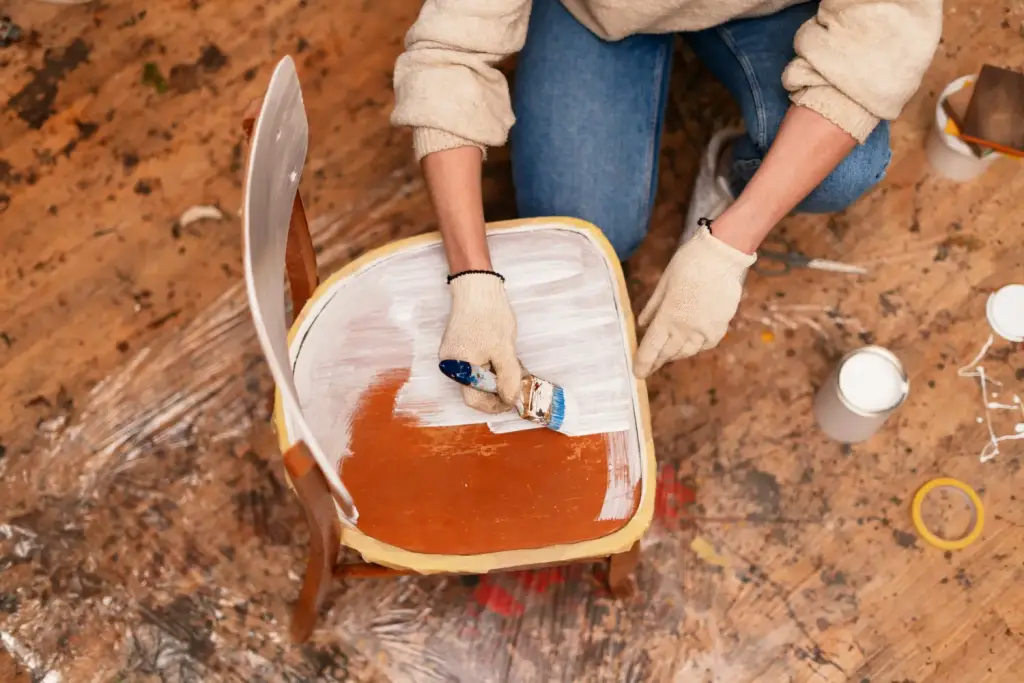
Water-based paint is known for its relatively fast drying time. Under normal conditions, the paint surface can dry in just a few hours, making the finishing process more efficient.
In contrast, solvent-based paint usually takes longer to dry because the chemical solvents must evaporate completely before the coat fully cures.
5. Color Changes in Materials
One of the advantages of water-based paint is that it better preserves the wood’s natural color. The paint finish tends to be clear, so the wood’s natural grain remains clearly visible.
Unlike solvent-based products, some of which may experience yellowing over time, especially in clear or light colors.
6. Paint Application Process
The difference between water-based and solvent-based wood paint is evident in the application process. Water-based paint is relatively easier to apply using a brush, roller, or spray gun. Paint splatters are also easier to clean up with just water before they dry.
Solvent-based paint, on the other hand, requires mixing with thinner in the correct proportions to ensure optimal results. Incorrect mixing can affect both the viscosity and the final finish.
7. Weather Resistance
Solvent-based paint has long been known for its excellent resistance to heat, rain, and high humidity, which is why it is often used on exterior surfaces.
However, thanks to technological advancements, many modern water-based paints now also offer excellent weather resistance—provided that high-quality products are used and applied according to the instructions.
8. Final Results on the Material
Water-based paint produces a more natural look with vivid colors and wood grain that remains beautifully visible. In addition, the surface feels smoother once dry.
On the other hand, solvent-based paints generally produce a thicker coat with a fairly strong glossy finish, making them suitable for specific applications.
9. Suitable for Applications
If Milanians prioritize comfort, safety, and natural results, then water-based finishes are the best choice for furniture, cabinets, tables, chairs, doors, and even interior decor.
Meanwhile, solvent-based coatings remain the preferred choice for projects that require a very durable coating for outdoor areas or environments with more extreme operating conditions.
What Are the Advantages and Disadvantages of Water-Based Wood Paint?
| Advantages | Disadvantages |
| Milder odor | Requires a clean surface for optimal results |
| Low VOC content and more environmentally friendly | Some products require multiple coats |
| Quick-drying | The prices of premium products are generally slightly higher |
| Easy to clean with water | Be sure to follow the app's instructions for best results |
| Colors are more vivid and natural | Not all products have the same weather resistance |
| It doesn't turn yellow easily | It’s important to choose high-quality products for outdoor use |
See Also: Switch Now! 6 Benefits of Eco-Friendly Wood Paint for Your Home & Furniture
What Are the Advantages and Disadvantages of Solvent-Based Wood Paint?
| Advantages | Disadvantages |
| Strong adhesive strength | The smell is very pungent |
| Resistant to extreme weather | Higher VOC content |
| Suitable for outdoor use | Requires thinner during application |
| The layers tend to be thick | The drying time is relatively longer |
| Widely used in industrial projects | The tool must be cleaned with thinner |
| There is a wide variety of finishing options | May cause yellowing in some types of paint |
When Is the Best Time to Use Water-Based Wood Paint?
Water-based wood paint is suitable for use on home furniture, kitchen sets, dining tables, cabinets, interior doors, wooden toys, and various decorative items that frequently come into contact with household members.
In addition to being more pleasant to use because it has minimal odor, it also produces sharper colors and preserves the beauty of the wood’s natural grain.
One of the water-based wood paints that delivers premium results is Milan Acqua Stain which is claimed to be environmentally friendly. Thanks to special nanoparticle pigment technology, this wood stain produces a translucent finish that enhances the wood grain.

What’s more, Milan Acqua Stain is also equipped with technology that resists mold, mildew, and insects. As a result, Milanians furniture lasts longer.
When Is It Best to Use Solvent-Based Wood Paint?
Solvent-based wood paint is more suitable for projects that require a very durable protective coating in environments with significant weather exposure.
For example, wooden fences, gazebos, pergolas, and other outdoor wooden structures that are frequently exposed to heat and rain.
However, during the application process, it is important to ensure proper ventilation and to use personal protective equipment to stay safe while painting.
Which Is Better, Water-Based or Solvent-Based Wood Paint?
The answer depends on the needs of the Milanians’ project. If you prioritize safety, comfort, a practical application process, natural colors, and environmental friendliness, then water-based wood paint is the more modern and efficient choice.
Conversely, if a project requires high durability in outdoor conditions with exposure to extreme weather, solvent-based paint remains a viable alternative worth considering.
Most importantly, choose high-quality products to ensure the finish is long-lasting and meets your expectations. Don’t just follow the crowd or give in to FOMO—the results could be a disaster!
Want to Get the Best Results for Your Furniture with Vibrant Colors? Use Water-Based Wood Paint from Milan Acqua Stain!
Understanding the differences between water-based and solvent-based wood paints is an important first step for Milanians before choosing a type of furniture finish, so that the results meet their expectations.
Of course, Milanians know that not all types of paint offer optimal results. So, be sure to choose a wood paint with proven results.
If you're looking for an eco-friendly, water-based wood stain Milan Acqua Stain The solution. Its formula provides maximum protection for wood against extreme weather and direct UV rays.
There are dozens of color options available, Milan Acqua Stain can be tailored to meet the needs and expectations for the final finish of Milanians projects. Using just a spray or brush, Milanians can achieve a perfect finish, even in every crevice of the wood.
So, let’s go get Milan Acqua Stain products through Contact the Milan Indonesia Expert Team by clicking the banner below!