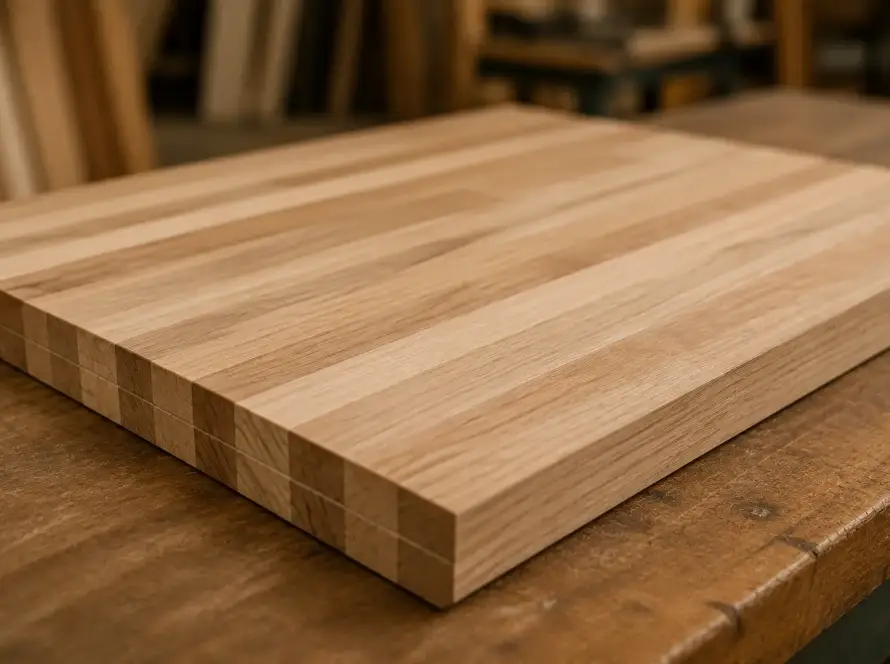
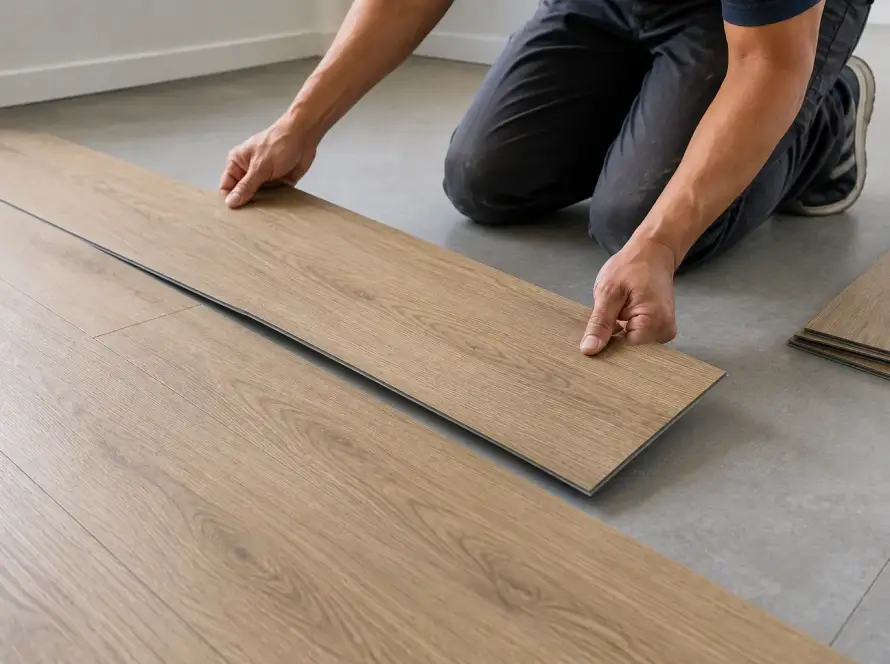
Kalau bicara soal kayu kuat untuk konstruksi, nama jati mungkin langsung muncul di kepala, Milanians. Memang, jati terkenal kuat dan awet hingga puluhan tahun jika dirawat dengan benar.
Tapi ternyata, ada banyak jenis kayu lain yang punya tingkat kekerasan dan ketahanan luar biasa, bahkan beberapa di antaranya jauh lebih keras daripada jati.
Menariknya, istilah jenis kayu terkuat di dunia untuk konstruksi tidak selalu berarti kayu dengan angka Janka paling tinggi.
Kekuatan kayu juga dipengaruhi kepadatan, ketahanan terhadap benturan, kadar air, stabilitas dimensi, hingga ketahanannya terhadap rayap dan pembusukan. Jadi, pemilihannya perlu disesuaikan dengan kebutuhan konstruksi.
Alasan Konstruksi Membutuhkan Jenis Kayu yang Kuat
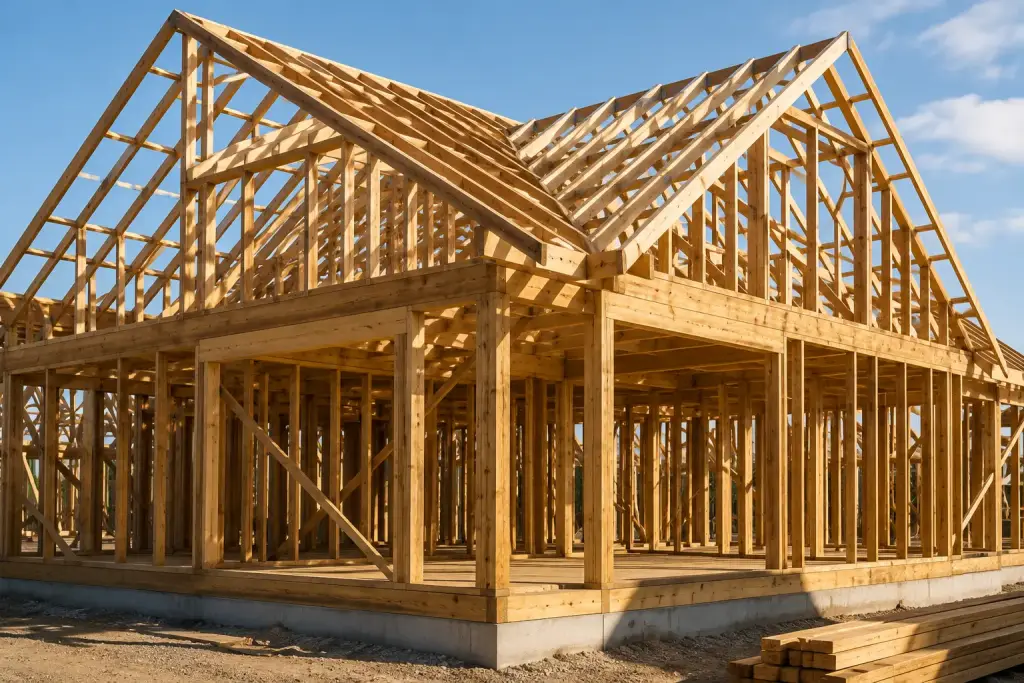
Kayu pada konstruksi tidak hanya berfungsi sebagai material pelengkap. Pada bagian tertentu, kayu bisa menerima beban, tekanan, benturan, gesekan, dan perubahan kondisi lingkungan.
Tak heran, jika penggunaan kayu dengan kekuatan yang sesuai sangat penting untuk menjaga keamanan dan umur bangunan.
Kayu yang kuat juga lebih mampu menahan kerusakan akibat penggunaan jangka panjang. Material dengan tingkat kekerasan tinggi cenderung lebih tahan terhadap goresan, penyok, dan keausan.
Namun, kekuatan tetap harus disesuaikan dengan fungsi. Kayu yang sangat keras belum tentu menjadi pilihan paling praktis untuk semua bagian bangunan.
Salah satu parameter yang sering digunakan untuk membandingkan kekerasan kayu adalah Janka hardness. Pengujian ini mengukur gaya yang dibutuhkan untuk menekan bola baja ke dalam permukaan kayu. Semakin tinggi angkanya, semakin tinggi pula ketahanan kayu terhadap penyok dan keausan.
See Also: 9 Facts About Teak Wood for Furniture—Why It’s a Favorite and Why Its Price Is Sky-High
Kayu Keras vs Kayu Lunak, Mana yang Lebih Cocok untuk Konstruksi?
Secara umum, kayu keras (hardwood) berasal dari kelompok pohon berdaun lebar, sedangkan kayu lunak (softwood) umumnya berasal dari kelompok konifer. Istilah ini tidak selalu berarti semua hardwood pasti lebih kuat daripada softwood, tetapi banyak hardwood memang memiliki kepadatan dan kekerasan yang lebih tinggi.
Kayu keras seperti Ipe, Cumaru, dan Lignum Vitae memiliki karakteristik yang membuatnya cocok untuk aplikasi yang membutuhkan ketahanan terhadap tekanan, gesekan, dan cuaca. Kekurangannya, material yang sangat keras biasanya lebih berat dan lebih sulit dipotong, dibor, dipaku, atau direkatkan.
Sementara itu, kayu lunak seperti pinus cenderung lebih ringan dan mudah dikerjakan. Material seperti ini bisa tetap digunakan untuk konstruksi selama kelas kekuatan, desain struktur, kadar air, dan perlindungannya sesuai.
Jadi, bukan sekadar memilih kayu yang paling keras, tetapi memilih kayu yang paling sesuai dengan fungsi konstruksinya.
Jenis Kayu Terkuat di Dunia untuk Konstruksi
1. Australian Buloke
Australian Buloke (Allocasuarina luehmannii) sering disebut sebagai salah satu kayu dengan tingkat kekerasan tertinggi yang diketahui.
- Janka Hardness: sekitar 5.060 lbf atau 22,5 kN
- Berat kering: sekitar 1.100 kg/m³
- Characteristics: sangat padat, keras, dan tahan terhadap keausan
- Suitable for: komponen berat, lantai, konstruksi khusus, dan pekerjaan yang membutuhkan ketahanan tinggi
Kepadatan yang sangat tinggi membuat Australian Buloke sangat sulit dikerjakan menggunakan alat biasa. Jadi, kekuatannya luar biasa, tetapi pengolahan menjadi tantangan tersendiri.
2. Lignum Vitae
Lignum Vitae (Guaiacum officinale dan kerabatnya) merupakan kayu yang terkenal sangat padat, keras, dan memiliki ketahanan alami yang tinggi.
- Janka Hardness: sekitar 4.500 lbf
- Berat kering: dapat mencapai lebih dari 1.000 kg/m³
- Characteristics: sangat padat, berminyak, tahan gesekan dan kelembapan
- Suitable for: bantalan, bushing, komponen mesin, serta aplikasi khusus
Karakteristiknya yang tahan terhadap gesekan membuat Lignum Vitae lebih banyak digunakan untuk kebutuhan khusus daripada konstruksi bangunan umum. Tak heran, jika Lignum Vitae termasuk dalam jenis kayu terkuat di dunia untuk konstruksi.
3. Ipe
Ipe (Handroanthus spp.) adalah kayu keras tropis yang sangat populer untuk decking dan konstruksi eksterior.
- Janka Hardness: sekitar 3.500–3.700 lbf
- Berat kering: sekitar 1.000–1.100 kg/m³
- Characteristics: sangat keras, padat, awet, dan tahan terhadap cuaca
- Suitable for: decking, jembatan, lantai, tangga, dan konstruksi luar ruangan
Ipe menjadi pilihan menarik ketika konstruksi membutuhkan material yang tahan terhadap lalu lintas, kelembapan, dan perubahan cuaca.
4. African Blackwood
African Blackwood (Dalbergia melanoxylon) dikenal sebagai kayu yang sangat padat dan keras.
- Janka Hardness: sekitar 3.670 lbf
- Berat kering: sekitar 1.200 kg/m³
- Characteristics: sangat padat, stabil, tahan aus
- Suitable for: komponen presisi, pekerjaan khusus, dan material dengan tuntutan ketahanan tinggi
Karena bernilai tinggi dan memiliki keterbatasan ketersediaan, African Blackwood bukan pilihan umum untuk struktur bangunan besar.
5. Cumaru
Cumaru (Dipteryx odorata) adalah kayu tropis Amerika Selatan yang dikenal sangat keras dan awet.
- Janka Hardness: sekitar 3.300 lbf
- Berat kering: sekitar 1.000 kg/m³
- Characteristics: keras, padat, tahan aus, dan relatif tahan terhadap lingkungan luar
- Suitable for: decking, lantai, tangga, jembatan, dan konstruksi eksterior
Cumaru menjadi alternatif menarik untuk area yang membutuhkan ketahanan mekanis sekaligus daya tahan terhadap kondisi lingkungan.
6. Greenheart
Greenheart (Chlorocardium rodiei) merupakan kayu tropis yang terkenal karena kekuatan dan keawetannya.
- Janka Hardness: sekitar 1.600–1.700 lbf
- Berat kering: sekitar 1.000 kg/m³
- Characteristics: kuat, berat, awet, dan tahan terhadap lingkungan basah
- Suitable for: konstruksi kelautan, tiang, jembatan, dan struktur luar ruangan
Keunggulan utama Greenheart bukan hanya kekerasannya, tetapi juga kemampuannya bertahan dalam kondisi lingkungan yang berat.
7. Schinopsis Brasiliensis
Schinopsis brasiliensis merupakan sebuah spesies tanaman berbunga dalam famili jambu mete, pohon ini berasal dari Brasil.
- Janka Hardness: sekitar 4.800 lbf
- Berat kering: dapat berada di kisaran 1.000 kg/m³
- Characteristics: sangat keras, berat, dan tahan terhadap keausan
- Suitable for: struktur berat, tiang, lantai, dan konstruksi yang membutuhkan material tahan lama
Karena sangat keras dan padat, proses pemotongan serta pengeborannya membutuhkan peralatan yang sesuai. Alasan inilah yang membuat Schinopsis Brasiliensis termasuk jenis kayu terkuat di dunia untuk konstruksi.
8. Schinopsis Balansae
Schinopsis balansae dikenal sebagai quebracho colorado chaqueño, terutama berasal dari kawasan Gran Chaco di Argentina, Paraguay, dan Bolivia.
- Janka Hardness: sekitar 4.570 lbf
- Berat kering: sekitar 1.000 kg/m³
- Characteristics: sangat keras, berat, padat, dan awet
- Suitable for: tiang, bantalan, lantai, jembatan, dan konstruksi berat
Kayu ini juga dikenal memiliki ketahanan yang baik terhadap penggunaan berat, sehingga cocok untuk aplikasi yang menuntut daya tahan tinggi.
9. Piptadenia Macrocarpa
Piptadenia macrocarpa, yang juga dikenal sebagai angico, merupakan kayu keras dari Amerika Selatan.
- Janka Hardness: dapat berada di kisaran 3.840 lbf
- Berat kering: sekitar 900–1.000 kg/m³
- Characteristics: keras, padat, kuat, dan tahan aus
- Suitable for: lantai, balok, tiang, struktur, serta aplikasi yang membutuhkan ketahanan mekanis
Kepadatan tinggi membuat kayu ini mampu menghadapi beban dan gesekan, tetapi pengerjaannya membutuhkan alat yang tajam dan sesuai.
See Also: 5 Facts About Ulin Wood You Need to Know Before Using It in Construction
Berapa Lama Kayu Konstruksi yang Kuat Bisa Bertahan?
Tidak ada angka pasti yang berlaku untuk semua jenis kayu. Umur kayu konstruksi sangat bergantung pada jenis kayu, kadar air, kualitas pengeringan, desain konstruksi, paparan hujan dan matahari, ventilasi, serta perlindungan dari rayap dan jamur.
Kayu dengan ketahanan alami tinggi dapat bertahan puluhan tahun jika digunakan dan dirawat dengan benar. Sebaliknya, kayu yang kuat sekalipun dapat mengalami kerusakan lebih cepat jika terus-menerus berada dalam kondisi lembap, terkena air tanpa perlindungan, atau memiliki sambungan yang buruk.
Jadi, Milanians jangan hanya melihat angka kekuatan kayu. Kualitas material dan cara pemasangan sama pentingnya dengan jenis kayunya.
Ciri-ciri Kayu Berkualitas dan Kuat untuk Material Konstruksi Bangunan
Tidak semua jenis kayu kuat termasuk yang berkualitas sebagai material konstruksi material. Meskipun Milanians sudah tahu jenis kayu terkuat di dunia untuk konstruksi, tapi memahami ciri-cirinya cukup penting sebelum memilih dalam pengerjaan proyek bangunan.
- Serat kayu rapat dan relatif konsisten
- Tidak memiliki retak besar atau pecah
- Tidak mengalami pembusukan
- Bebas dari lubang serangan hama yang signifikan
- Kadar air sesuai dengan kebutuhan penggunaan
- Tidak mengalami perubahan bentuk berlebihan
- Memiliki kepadatan dan kelas kekuatan yang sesuai
- Hasil pengeringan atau seasoning baik
- Dimensi material stabil
- Memiliki ketahanan terhadap lingkungan sesuai lokasi pemasangan
Tips Memilih Jenis Kayu yang Cocok untuk Material Konstruksi
1. Tentukan Bagian Konstruksi
Kayu untuk rangka, lantai, tangga, kusen, decking, atau elemen dekoratif memiliki kebutuhan berbeda. Tentukan terlebih dahulu fungsi dan beban yang akan diterima sebelum memilih jenis kayu terkuat di dunia untuk konstruksi.
2. Perhatikan Hasil Uji Kekuatan dan Keawetan
Jangan hanya mengandalkan nama jenis kayu. Perhatikan data seperti Janka hardness, modulus of elasticity, modulus of rupture, densitas, serta kelas keawetan jika tersedia. Data tersebut membantu menentukan apakah material sesuai dengan kebutuhan.
3. Hindari Kayu yang Sudah Retak atau Rusak
Kayu dengan retak besar, pecah, lubang hama, atau tanda pembusukan sebaiknya tidak digunakan pada bagian penting konstruksi. Kerusakan tersebut dapat mengurangi kemampuan material dalam menerima beban.
4. Sesuaikan dengan Kondisi Lingkungan
Untuk area luar ruangan atau lokasi yang sering terkena air, pilih kayu yang memiliki ketahanan terhadap kelembapan, jamur, rayap, dan cuaca. Kayu untuk area indoor memiliki kebutuhan perlindungan yang berbeda.
5. Cek Kadar Air Material Kayu
Kadar air yang terlalu tinggi dapat meningkatkan risiko penyusutan, pemuaian, perubahan bentuk, dan masalah pada sambungan. Kayu sebaiknya dikondisikan sesuai lingkungan penggunaannya sebelum dipasang.
6. Pertimbangkan Kemudahan Pengerjaan
Kayu yang sangat keras memang menarik dari sisi ketahanan, tetapi bisa lebih sulit dipotong, dibor, dipaku, dan direkatkan. Pastikan alat, teknik pengerjaan, serta sistem sambungannya mampu mengakomodasi karakter material.
See Also: Can Wet Wood Be Glued? Here Are the Types of Glue Suitable for High Moisture Content
Faktor yang Memengaruhi Kekuatan dan Keawetan Kayu pada Konstruksi
Kekuatan kayu dipengaruhi oleh jenis dan kepadatan kayu, arah serat, ukuran serta posisi bagian kayu, kadar air, cacat alami, dan kondisi pembebanan. Dua potong kayu dari spesies yang sama pun belum tentu memiliki performa identik.
Sementara itu, keawetan sangat dipengaruhi oleh kelembapan, paparan air, temperatur, sinar matahari, jamur, rayap, dan kualitas perlindungan permukaan. Karena itu, desain konstruksi harus membantu kayu tetap kering dan memiliki sirkulasi udara yang baik.
Hal lain yang sering dianggap sepele adalah sambungan. Kayu yang kuat tetap bisa bermasalah jika sambungannya lemah. Sambungan yang tidak tepat dapat mengalami pergeseran, terbuka, atau kehilangan kekuatan ketika menerima beban berulang.
Bagaimana Cara agar Bangunan Konstruksi dari Kayu Tetap Berdiri Kokoh dan Tahan Lama?
Mulailah dari material yang tepat, kemudian pastikan desain, pemotongan, pemasangan, dan sambungannya dilakukan dengan benar. Hindari membuat sambungan pada bagian kayu yang sudah retak atau rusak karena titik tersebut berpotensi menjadi area lemah.
Pada sambungan kayu, pemilihan metode penyambungan harus disesuaikan dengan beban dan kondisi penggunaan. Untuk kebutuhan tertentu, penggunaan lem berkualitas dapat membantu menghasilkan ikatan yang kuat dan lebih stabil.
Jika Milanians ingin membuat sambungan kayu kuat, menggunakan Milan PU Adhesive 805 menjadi pilihan terbaik. Perekat ini dirancang khusus untuk merekatkan kayu hanya dalam waktu 5 menit dengan daya rekat kuat. Cocok untuk kebutuhan konstruksi maupun manufaktur.
Lem yang Cocok untuk Material Kayu Konstruksi dengan Daya Rekat Kuat
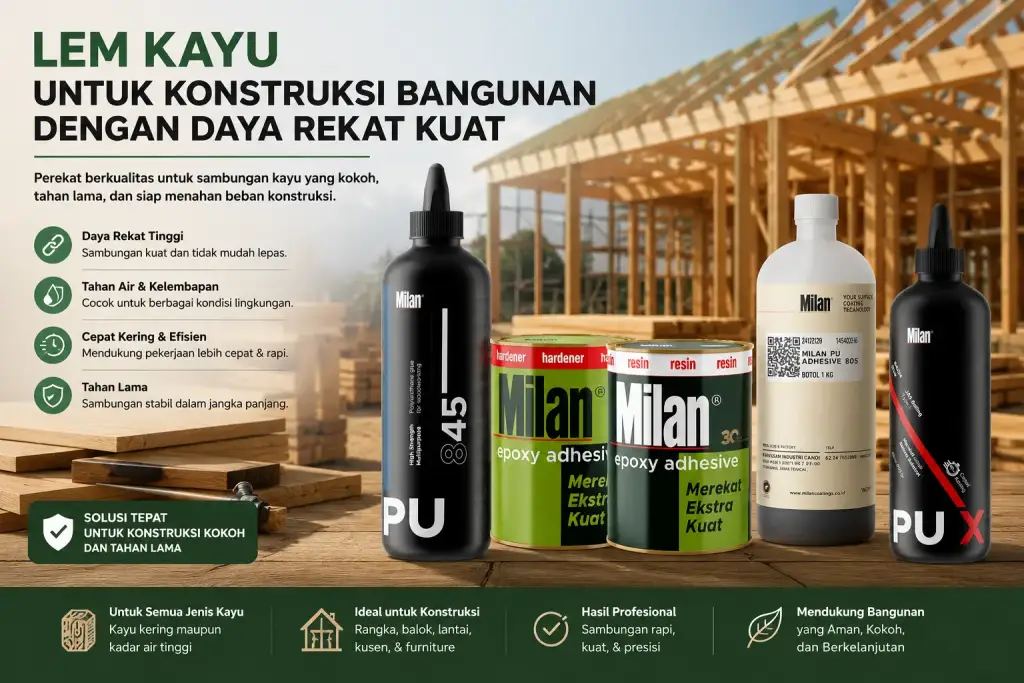
1. Milan PU Adhesive 845
Milan PU Adhesive 845 merupakan lem polyurethane satu komponen yang ditujukan untuk kebutuhan perekatan material kayu, termasuk kayu dengan kadar air relatif tinggi.
Karakter PU membuatnya cocok dipertimbangkan untuk kebutuhan sambungan kayu yang membutuhkan daya rekat kuat dan ketahanan terhadap kondisi penggunaan yang menantang.
2. Milan Lem Epoxy
Milan Epoxy Glue dapat menjadi pilihan ketika membutuhkan sistem adhesive dua komponen dengan daya rekat tinggi.
Lem epoxy cocok dipertimbangkan untuk pekerjaan yang membutuhkan ikatan kuat pada sambungan dan perbaikan komponen kayu, dengan pemilihan formulasi yang disesuaikan terhadap aplikasinya.
3. Milan PU X Glue
Milan PU X Glue dirancang untuk perekatan kayu dengan kadar air lebih tinggi. Karakter ini membuatnya relevan untuk pekerjaan kayu ketika material belum berada pada kondisi kadar air rendah seperti yang dibutuhkan adhesive konvensional tertentu.
4. Milan Lem PU 805
Milan PU Adhesive 805 merupakan adhesive polyurethane satu komponen yang dapat digunakan untuk merekatkan berbagai material, termasuk kayu.
Produk ini dapat dipertimbangkan untuk kebutuhan konstruksi dan fabrikasi yang membutuhkan proses perekatan cepat serta ikatan yang kuat pada material yang sesuai.
Cegah Bangunan Konstruksi Roboh Menggunakan Lem Berkualitas dari Milan!
Kayu kuat saja belum cukup. Sambungan yang tepat dan perekat berkualitas ikut menentukan seberapa kokoh konstruksi kayu dapat bertahan dalam penggunaan jangka panjang.
Jadi, jangan biarkan konstruksi yang sudah menggunakan material berkualitas justru bermasalah karena sambungannya tidak optimal.
Milanians bisa pilih lem kayu dari Milan yang sesuai dengan jenis material dan kebutuhan pekerjaan agar setiap sambungan mendapatkan dukungan daya rekat maksimal.
Ada Lem PU dan Lem Epoxy Milan yang dirancang merekatkan material kayu lebih kuat, tahan lama, presisi, rapi, dan membuat struktur bangunan kokoh.
Tertarik menggunakan? Segera konsultasikan kebutuhan proyek Milanians bersama Tim Ahli Milan dengan klik banner di bawah ini!