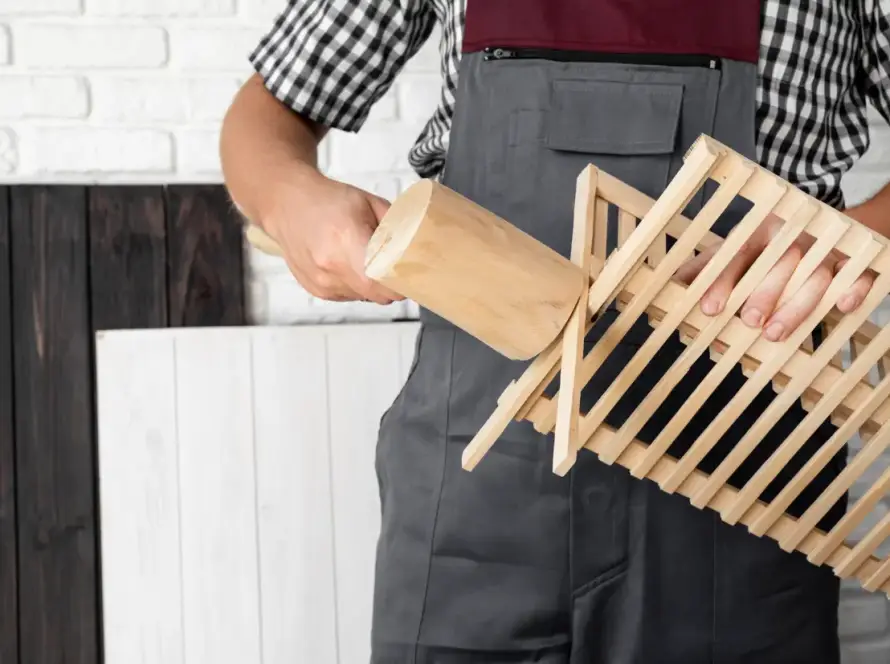
In the world of woodworking, choosing the right adhesive is crucial to the quality of a wood product’s finish. Adhesives not only bond two materials together, but also play a key role in maintaining the strength of the construction, the neatness of the joints, and the product’s long-term durability. This is why more and more professionals are beginning to Understanding Aliphatic Adhesives as an Adhesive Solution High-performance solutions for a wide range of wood industry needs.
For Milanians looking for a wood adhesive that offers strong bonding power, clean joints, and better performance than regular wood glue, aliphatic glue is a viable option worth considering. Here’s a detailed explanation.
Understanding Aliphatic Adhesives
Understanding aliphatic adhesives means understanding one of the types of professional adhesives widely used in the woodworking, furniture, and wood-based manufacturing industries. Aliphatic glue is a special resin-based adhesive designed to create strong bonds on various types of wood with better bond strength than conventional wood glue.
One of the main advantages of aliphatic adhesives is its ability to penetrate the pores of the wood, resulting in a strong and even bond. Because of these characteristics, this adhesive is often used in laminating, finger jointing, edge gluing, and the assembly of furniture components that require high precision.
In addition to having good adhesive strength, aliphatic adhesives also is known to be more resistant to heat and certain types of solvents. This makes it ideal for use on wood products that will be exposed to more challenging environmental conditions than those typically encountered in indoor settings. It’s no wonder, then, that for wood-related projects, Milanians have come to rely on aliphatic adhesives to achieve the best results.
The Difference Between Aliphatic Glue and White Wood Glue (PVA)
1. Adhesive Strength
Aliphatic adhesives are designed to produces a stronger and more stable connection on various types of wood. For this reason, many woodworking professionals choose aliphatic adhesives for projects that require high structural strength.
Meanwhile, PVA glue is generally used more often for light-duty applicationsn or simple woodworking projects that do not involve heavy loads over the long term.
2. Heat Resistance
When learning about aliphatic adhesives, Milanians also need to understand that this type of adhesive has better heat resistance than regular PVA glue. The connection does not weaken easily when exposed to higher temperatures.
This advantage is particularly important for furniture, cabinets, or wood products located in environments with fairly extreme temperature fluctuations.
3. Finishing Results
Aliphatic adhesives are known to be capable of produces a cleaner joint and has minimal blemishes. These characteristics help ensure a neater result when painting, coating, or finishing wood.
On the contrary, some Some types of eucalyptus wood glue sometimes leave a residue which can affect the final appearance if not cleaned properly before the finishing process is carried out.
4. Applications
PVA glue is commonly used for household purposes, simple crafts, or minor furniture repairs. Meanwhile, Aliphatic resins are more widely used in industry furniture, wood manufacturing, finger joints, laminated panels, and professional cabinet production.
Due to its superior performance, aliphatic adhesive is the top choice for projects that require industrial-grade quality standards.
5. Drying Time
Compared to regular white wood glue, Aliphatic glues generally have a faster drying time. This helps improve production efficiency because subsequent processing steps can be carried out more quickly.
For industries with high production targets, drying speed is one of the key factors that can boost productivity.
See Also: High-Quality Vinyl Adhesive for the Modern Furniture and Interior Design Industries
Types of Woodworking Projects Suitable for Aliphatic Glue
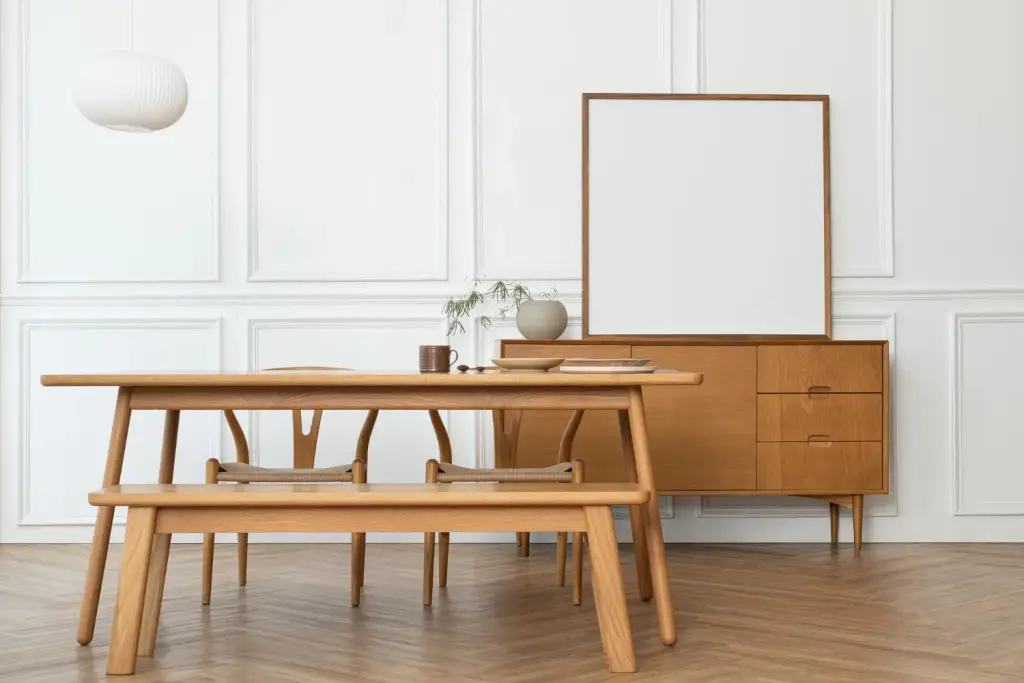
1. The Modern Furniture Industry
The furniture industry requires strong, durable joints because the products are intended for long-term use. Aliphatic adhesives are very Ideal for making tables, chairs, cabinets, shelves, and a variety of other furniture items premium products that require high quality.
2. Wooden Crafts and Decorations, from Artisans to Large-Scale Factories
For woodworkers, understanding aliphatic adhesives is one of the best solutions, since the quality of the joints is a key factor in determining a product’s value. Aliphatic adhesives help produces a neat joint so that the decorative details remain clearly visible.
3. Cabinet and Kitchen Set Manufacturing
Cabinetry and kitchen sets require an adhesive that can withstand daily use and temperature fluctuations in the kitchen. Aliphatic adhesive provides strong adhesion to wood panels, plywood, and other components so that the structure remains sturdy over the long term.
Why Do Professional Woodworkers Choose Aliphatic Glue?
The main reason professionals choose aliphatic adhesives is a combination of power, speed, and the quality of the final result. In the modern woodworking industry, production efficiency must go hand in hand with the quality of the products produced.
When a wood joint has strong adhesion, is durable, and remains neat after finishing, the risk of repairs or product claims can be minimized. This is why more and more craftsmen and furniture manufacturers are turning to aliphatic adhesives as the professional standard.
In addition, aliphatic adhesives are also capable of ensuring consistent results in both small- and large-scale production processes, thereby helping to maintain product quality.
See Also: Understanding HPL Adhesive: A Strong Bonding Solution for Premium Interior Furniture
Recommendations for High-Quality Aliphatic Glues for Professional Woodworkers
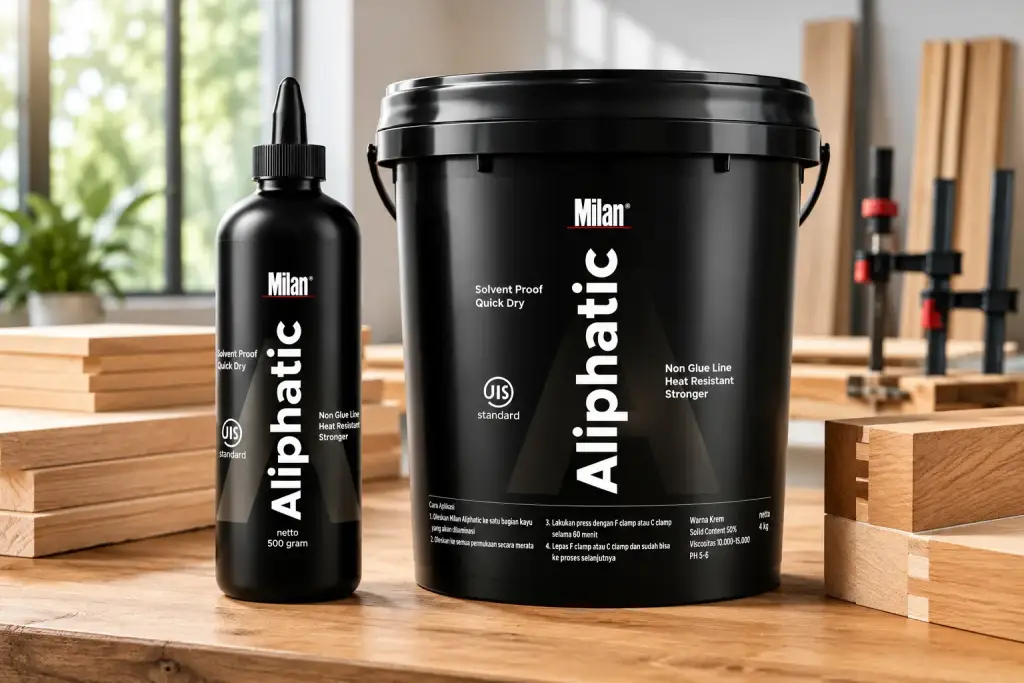
For Milanians looking for high-quality aliphatic adhesives, Milan Aliphatic Glue is the right choice for a wide range of professional woodworking needs.
Milan Aliphatic is a high-performance wood adhesive designed for laminating and finger-jointing applications. This product has strong adhesive properties and produces precise, clean joints on various types of wood.
In addition, Milan Aliphatic is designed to meet the needs of industries that require consistent quality in every production process. With its stable performance, this product can help improve the quality of the final product while boosting production efficiency.
Why Should You Use Aliphatic Adhesive from Milan?
1. Solvent- and Heat-Resistant
Milan Aliphatic is designed to have good resistance to heat and solvents, so The connection remains strong under various operating conditions.
2. Leaves No Stains
One of the key advantages of Milan Aliphatic is clean joint. The adhesive does not easily leave stains that could interfere with the wood finishing process.
3. Strong and Long-Lasting Adhesion
With its special formulation, Milan Aliphatic Adhesive is capable of producing a strong bondt on various types of wood so that the joints are more durable and long-lasting.
4. Suitable for a Variety of Industrial Needs
From furniture and laminated panels to finger joints and a wide range of other woodworking needs, Milan Aliphatic is able to provide consistent and reliable performance.
5. Precise and Neat Joints
For Milanians who prioritize product quality, Milan Aliphatic helps produce precise joints, minimal gaps, and a more professional appearance after the finishing process is complete.
How to Use Milan Aliphatic Adhesive for Strong, Long-Lasting Bonds
1. Apply Milan Aliphatic to the Wood Surface
Apply Milan Aliphatic to one of the pieces of wood to be joined or laminated. Make sure the wood surface is clean, dry, and free of dust, oil, or dirt so that the adhesive can work effectively.
2. Spread the Adhesive Evenly Over the Entire Joint Area
Spread Milan Aliphatic by evenly distributed across the entire surface to be bonded. Even coating helps produce a stronger bond and minimizes the risk of gaps or areas that do not bond properly.
3. Perform the Pressing Process Using a Clamp
Join the two pieces of wood together, then press them using F Clamp or C Clamp for about 60 minutes. Consistent pressure will help the glue penetrate the pores of the wood and create a stronger bond.
4. Remove the Clamp and Proceed to the Next Step
Once the clamping process is complete, remove the F-clamp or C-clamp from the joint area. The glued wood is ready to move on to the next stage, such as cutting, sanding, finishing, or further assembly as required for production.
Strong Bonds Are No Accident—They’re the Result of Choosing the Right Adhesive. Use Milan Aliphatic Adhesive for Your Milanians Projects!
Don’t let the quality of your wood products suffer due to suboptimal use of adhesives. Milan Aliphatic Glue This professional wood glue features strong adhesive strength, is heat- and solvent-resistant, leaves no stains on wood surfaces, and produces precise, long-lasting joints.
Ideal for furniture, finger joints, laminates, cabinets, kitchen sets, and a wide range of industrial-scale woodworking applications.
Don’t hesitate! Experience the strong wood bond for yourself with Milan Aliphatic Glue. Click the banner below to order the product or consult with a team of experts Milan, Indonesia!