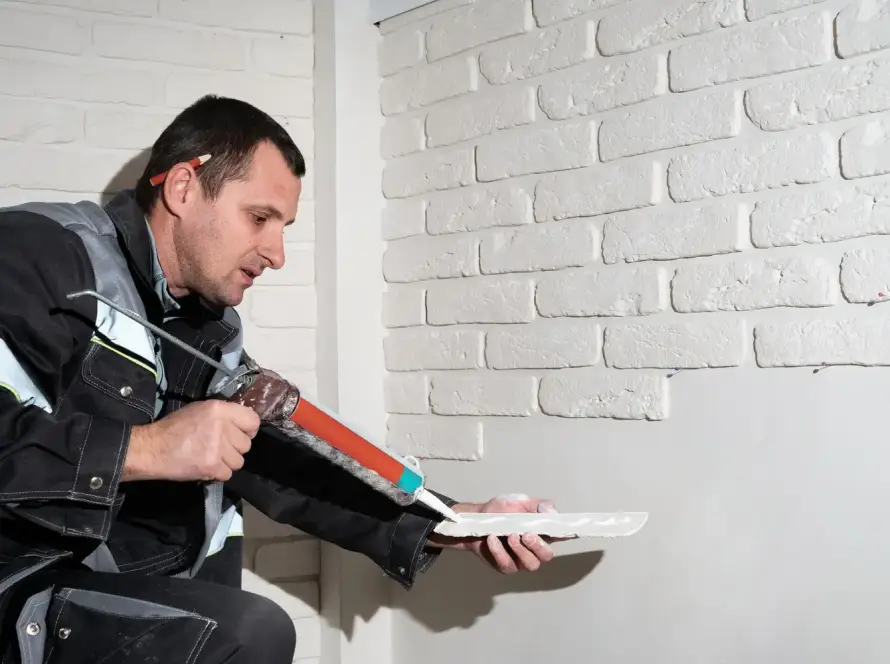
Have you ever felt like you’ve used epoxy adhesive, but the result still comes off easily or doesn’t bond perfectly? In fact, the problem isn’t with the product itself, but rather with improper application of the epoxy adhesive. From the mixing process to the condition of the material’s surface and the curing time, all of these factors affect the bond strength.
So, Milanians need to understand how to use epoxy glue correctly to ensure the best possible bond—one that’s strong and long-lasting.
What Is Epoxy Adhesive and How Does It Work?
Epoxy glue is a type of two-component adhesive consisting of a resin and a hardener. These two components must be mixed together before use. Once mixed, a chemical reaction occurs that creates a very strong bond between various types of materials.
Unlike ordinary adhesives, which simply dry through evaporation, epoxy hardens through a curing process, resulting in higher adhesive strength and resistance to impact, water, certain chemicals, and temperature changes.
This is why epoxy adhesive must be used correctly to ensure the curing process proceeds perfectly. The more precise the mixing and application, the greater the resulting bond strength.
What Materials Is Epoxy Adhesive Suitable For?
- Metals: such as iron, steel, aluminum, and stainless steel. This adhesive creates a strong bond, making it suitable for repairing and joining metal components.
- Wood: It provides high adhesion while helping to fill small gaps on surfaces, making it commonly used in the furniture, crafts, and wood construction industries.
- Ceramics: It adheres well to hard surfaces, so the bond it creates is more durable than that of ordinary all-purpose glue.
- Glass: Smooth glass surfaces can still be bonded effectively with epoxy as long as they are free of dust and oil.
- Concrete: It adheres strongly to porous surfaces. It is widely used in construction projects and structural repairs.
- Stone: Its high adhesive strength keeps the materials bonded together even when subjected to stress or changes in weather.
See Also: What Is Epoxy Adhesive? Its Functions and Advantages for Modern Industry
What Tools and Materials Do You Need to Prepare Before Using Epoxy Adhesive?
Before you begin applying epoxy adhesive, make sure you have all the tools and materials on hand so that the application process goes more smoothly.
- Epoxy adhesive (resin and hardener).
- A small container for mixing the two components.
- Spatula or mixing spoon.
- Gloves to keep your hands clean.
- A clean cloth for wiping down the surface of the material.
- Use fine-grit sandpaper if necessary to smooth the surface.
- Clamps to hold the material in place during the curing process.
- A weight to use if clamps are not available.
What Is the Best Epoxy Adhesive for All Materials and Maximum Bond Strength?
Before learning how to use epoxy glue properly, Milanians need to know which products are high-quality and offer maximum adhesive strength. This is because not all products—even those from well-known brands—provide a strong, long-lasting bond.
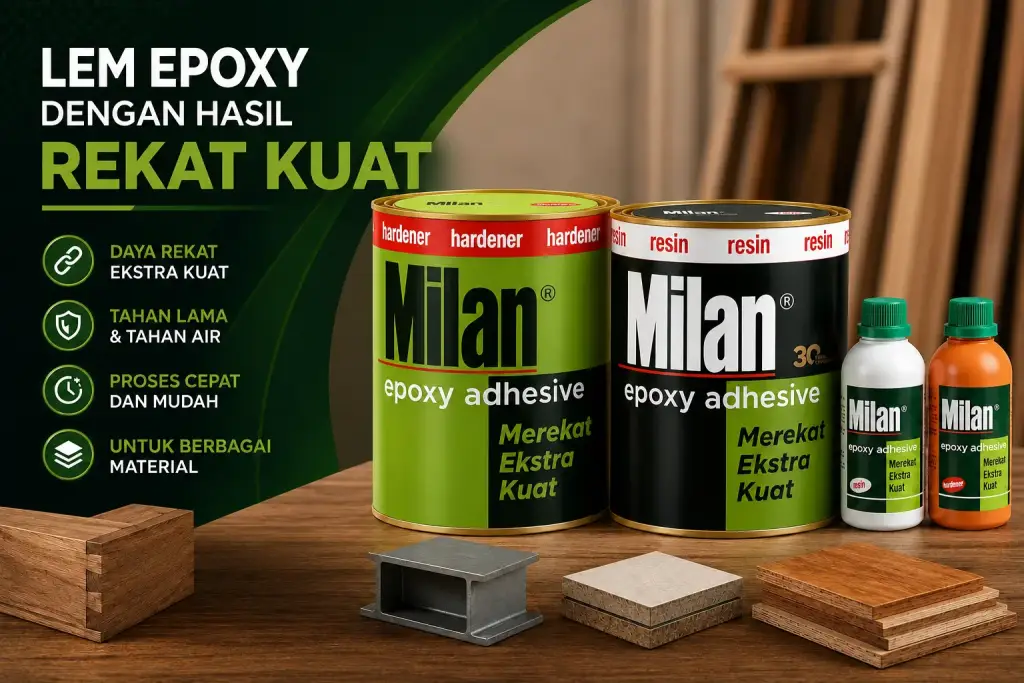
However, it’s different PT Indocipta Wisesa which features Milan Epoxy Adhesive With a perfect formula for bonding various types of materials at once, such as wood, metal, ceramics, glass, and concrete. Suitable for construction, furniture, interior design, and more.
What’s more interesting is that, Milan Epoxy Adhesive It is resistant to water, solvents, and even chemicals. It’s no wonder that many people use it for exterior applications due to its resistance to various environments and extreme weather conditions.
Other advantages of Milan Epoxy Adhesive over other products include:
- It has very strong adhesive strength.
- Suitable for various types of materials.
- Easy to apply.
- The mixing ratio of resin to hardener is 1:1.
- Creates a strong joint.
- Long-lasting once hardened.
- Suitable for both household and industrial use.
See Also: 6 Characteristics of the Best Epoxy Adhesives for Industrial and Household Needs
How Do You Use Milan Epoxy Adhesive Correctly?
1. Clean the Surface of the Material to Remove Dirt
The first step in using epoxy adhesive is to ensure that the entire surface is free of dust, oil, rust, water, and other contaminants. A clean surface will help the epoxy bond effectively, resulting in much stronger adhesion.
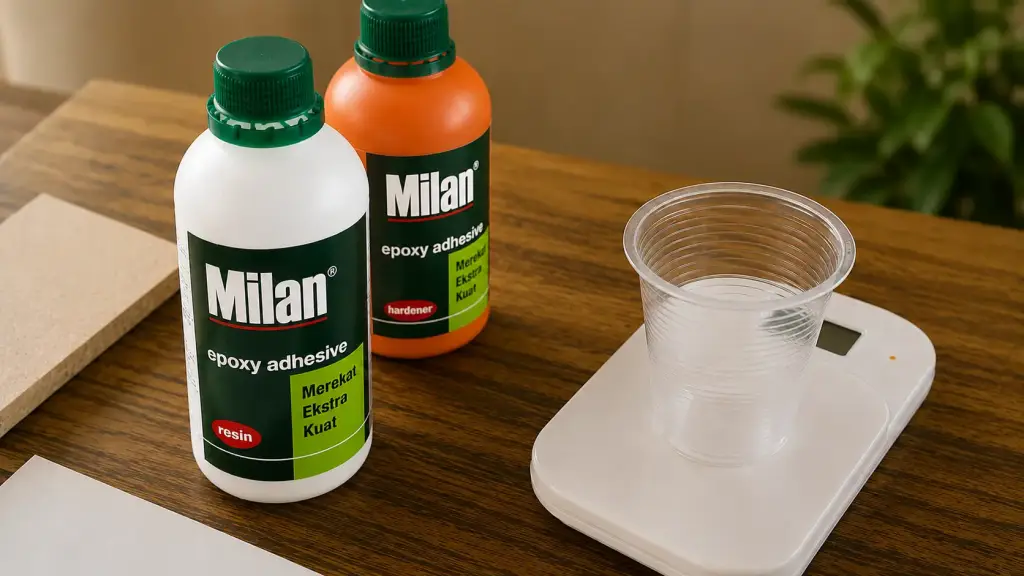
2. Mix the resin and hardener in a 1:1 ratio
Pour equal amounts of resin and hardener into a container. The 1:1 ratio is very important because it determines the curing process. Incorrect proportions can cause the epoxy to not harden properly or, conversely, to become brittle.
3. Stir the mixture until it is well blended and turns gray
Stir the two components slowly until they are thoroughly mixed. Make sure there are no separate layers remaining. A homogeneous mixture usually turns gray, indicating that it is ready for use.
4. Apply the adhesive to one or both surfaces of the material
Use a spatula or other tool to apply the epoxy evenly. For materials with uneven surfaces, applying the epoxy to both sides can help increase the contact area, resulting in a stronger bond.
5. Bring the Two Surfaces Together and Press Firmly
After applying the epoxy, immediately press the two materials together before the adhesive begins to harden. Apply sufficient pressure so that the entire surface adheres without leaving any air pockets.
6. Use Clips or Weights for Maximum Adhesion
To prevent the material from shifting during the curing process, use clamps or weights. This step helps create a tighter and stronger bond, especially with large pieces of material.
7. Let it dry for about 4 hours until the adhesive has fully cured
Once the bonding process is complete, avoid moving or applying any load to the material. Allow the epoxy to harden for about 4 hours to ensure optimal curing and achieve maximum bond strength.
Common Mistakes to Avoid When Using Epoxy Adhesive
The most common mistake when using epoxy adhesive is mixing the resin and hardener in the wrong proportions. In addition, many users rush to use the material before the epoxy has fully cured, which reduces its adhesive strength.
Not only that, but applying epoxy to a surface that is still dirty, dusty, or oily also makes it difficult for the adhesive to bond properly. Stirring the mixture unevenly can also cause some of the epoxy to not cure properly, making the joint more prone to coming apart.
Achieve Perfect Bonding Results on All Materials with Milan Epoxy Adhesive!
If Milanians want perfect bonding results for all materials, don’t hesitate to use Milan Epoxy Adhesive. This product was created to meet the needs of Milanians.
Designed with high-quality components and compliant with EN 204 (B4/D4) requirements, Milan Epoxy Adhesive This is able to fill gaps in the material more effectively, so the joints don't come apart easily.
Contact the Milan Indonesia Expert Team for more detailed information about Milan Epoxy Adhesive before using it. Click the banner below to connect with us!