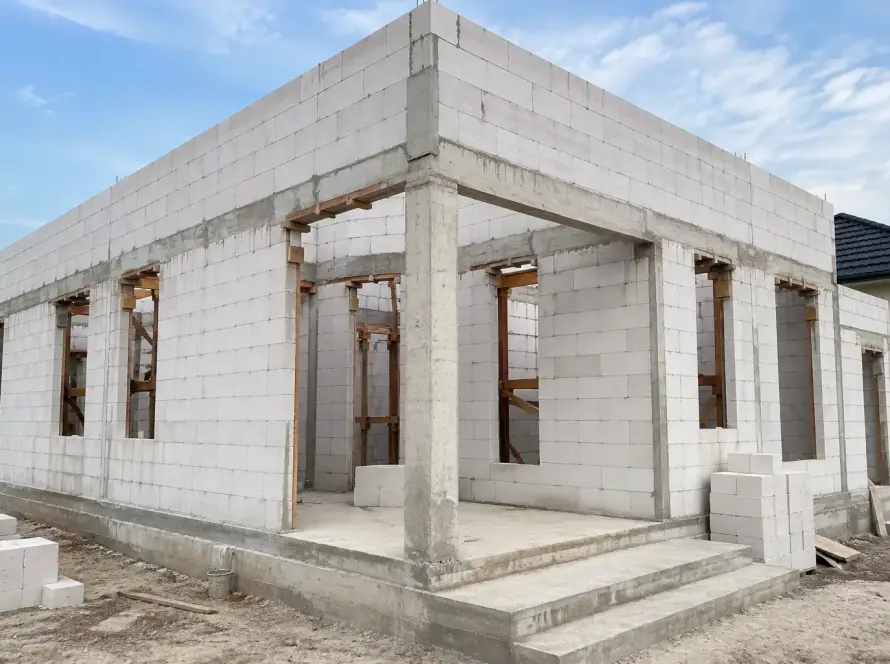
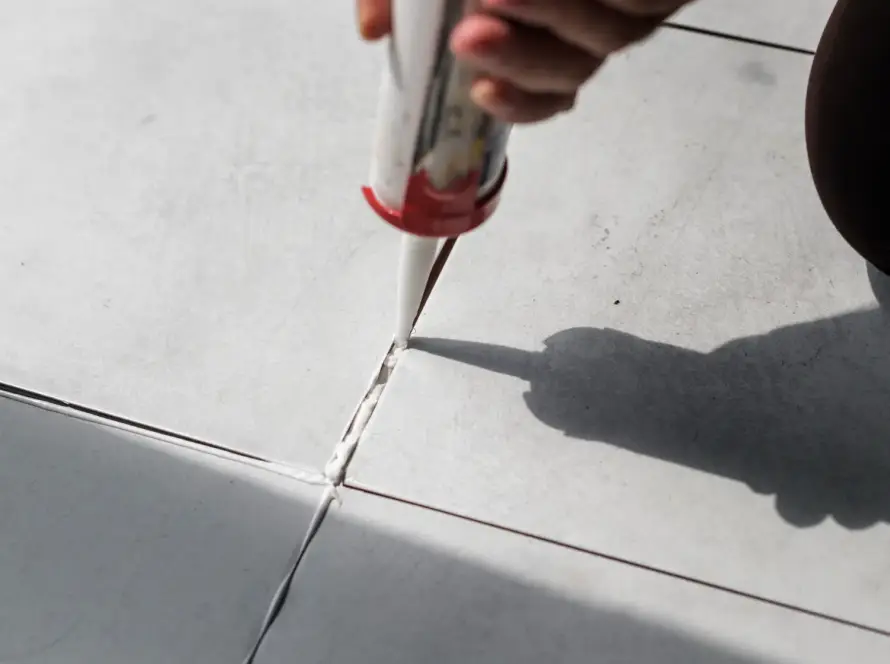
When choosing an adhesive for a construction project, it turns out that strength alone isn’t enough. Many people only realize after the installation is complete that the material isn’t adhering properly or, in fact, comes loose easily after some time. One of the causes is choosing the wrong type of adhesive.
Epoxy and polyurethane (PU) adhesives are often chosen for construction projects. However, both types of adhesives have their own advantages and disadvantages, which Milanians should consider based on the project’s needs.
Don’t just pick one at random—and definitely don’t choose one just because of FOMO. That’s because every project requires a different type of adhesive—depending on the materials and the desired results.
So, before starting a construction project, Milanians can understand the difference between epoxy adhesive and PU adhesive to avoid choosing the wrong type of adhesive. That way, the resulting material joints will be stronger and more durable.
What Are Epoxy Adhesives and PU Adhesives?
Epoxy glue is a two-component adhesive consisting of a resin and a hardener. These two components must be mixed together before use to trigger a chemical reaction that produces an extremely strong bond.
Once cured, epoxy adhesive has high mechanical strength and is resistant to chemicals, water, heat, and heavy pressure.
Because of these characteristics, epoxy adhesives are widely used in construction, manufacturing, structural repairs, and the installation of concrete, metal, stone, ceramics, and wood—all of which require long-term bond strength.
Meanwhile, PU glue, or polyurethane adhesive, is a polyurethane-based adhesive that is generally available in a one-component formulation. This glue works by utilizing moisture in the air or the moisture content of the material, allowing it to cure naturally.
PU adhesive is more flexible than epoxy. In addition to its high adhesive strength, this adhesive can accommodate changes in material dimensions caused by temperature or humidity, making it ideal for use on wood, WPC, panels, aluminum, and various other construction materials.
See Also: 7 Ways to Use PU Wood Glue for Strong and Long-Lasting Bonds
Are PU Adhesive and Epoxy Adhesive the Same Thing?
No. Although both are used as adhesives in construction projects, the differences between epoxy adhesive and PU adhesive lie in their composition, flexibility, curing methods, and the types of materials they are best suited for.
Epoxy adhesives prioritize structural strength and resistance to heavy loads. Meanwhile, PU adhesives offer a combination of high bonding strength and greater flexibility, allowing them to accommodate material movement caused by changes in weather or humidity.
For this reason, the choice of adhesive should be based on the project’s specific needs, not just on its strength.
What Is the Difference Between Epoxy Adhesive and PU Adhesive?
1. Ingredients Used
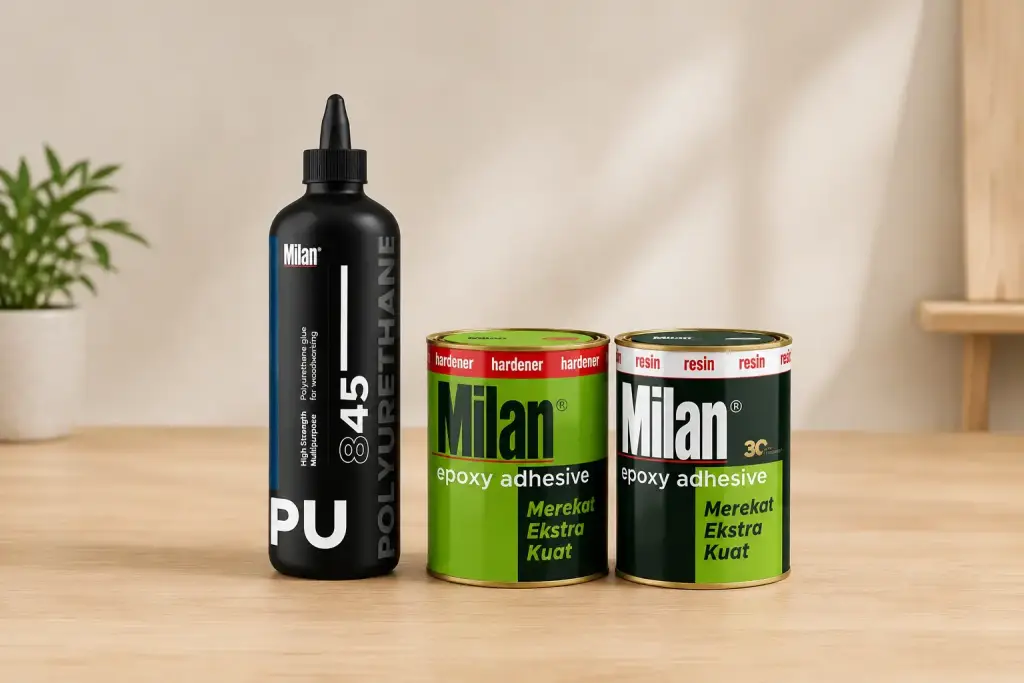
The most fundamental difference lies in their composition. Epoxy adhesive consists of two components—resin and hardener—which must be mixed in a specific ratio before application.
Meanwhile, PU adhesives generally use a single polyurethane-based component, making them more convenient and ready to use without any mixing required.
2. Adhesion to Materials
In terms of bond strength, epoxy adhesives are known for their extremely high adhesive strength, particularly for permanent structural joints. These adhesives are capable of bonding hard materials with exceptional strength, which is why they are frequently used in construction, industry, and manufacturing.
PU adhesive also has high bonding strength, but its main advantage lies in its ability to bond materials that expand or contract due to changes in temperature and humidity.
3. Resistance to Weather Changes
The difference between epoxy adhesive and PU adhesive can be seen in terms of weather resistance. Epoxy adhesive has excellent resistance to water, oil, chemicals, and moisture. However, due to its rigid nature, the bond may crack if it is constantly subjected to material movement.
In contrast, PU adhesive is more flexible, so it can withstand changes in weather, vibrations, and material expansion without losing its adhesive strength.
4. Ease of Application
PU adhesive is easier to apply because most types are available as single-component products, so they’re ready to use.
On the other hand, using epoxy adhesive requires mixing the resin and hardener in the correct ratio. If the ratio is incorrect, both the curing process and the adhesive strength may be reduced.
5. What Materials Is It Suitable For?
Epoxy adhesive is suitable for use on hardwood, concrete, metal, ceramic, natural stone, and even some types of engineering plastics that require a permanent bond.
Meanwhile, PU adhesive is ideal for wood, plywood, MDF, finger joints, laminates, WPC, aluminum, and various construction materials that require a degree of flexibility after the bonding process is complete.
6. Ability to Fill Material Gaps
One of the advantages of epoxy adhesive is its ability to effectively fill voids or gaps on the surface of a material, resulting in a tighter bond.
PU adhesive can also expand during the curing process, allowing it to fill small gaps. However, for larger voids, epoxy typically provides better results.
7. Drying Time
The working time of epoxy adhesive depends on the type of hardener used. Once cured, the bond becomes very strong and permanent.
On the other hand, PU adhesives generally cure more quickly, especially when they react with moisture in the air. This makes both production and construction processes more efficient.
When Is the Best Time to Use Epoxy Adhesive?
Given the differences between epoxy and PU adhesives outlined above, Milanians should certainly be able to answer this question, right? Yep, epoxy adhesive is ideal for construction projects that require high bonding strength.
For example, concrete repairs, metal fabrication, the production of premium furniture, wood laminating, and industrial applications that require resistance to heavy loads.
If Milanians are looking for a strong, waterproof, chemical-resistant bond with a long service life, then epoxy adhesive is the right solution.
To meet this need, PT Indocipta Wisesa has introduced the best epoxy adhesives under the Milan brand, which has been a trusted provider of adhesive solutions since 1994. There are two epoxy adhesive products that Milanians can use, namely:
- Milan Epoxy Adhesive: It has high adhesive strength, making it suitable for construction projects involving materials such as wood, glass, steel, and aluminum.
- Milan Epoxy Non-Glue Line: A special epoxy adhesive for bonding wood joints that produces a neater joint without a visible glue line.
See Also: 7 Ways to Use Epoxy Adhesive Correctly for Optimal Bonding Results
When Is the Right Time to Use PU Adhesive?
Polyurethane adhesive is best suited for use when the material still contains moisture, is subject to dimensional changes due to temperature, or requires some flexibility after the bonding process is complete.
This product is widely used in the wood industry, in the manufacture of doors, windows, finger joints, laminates, panels, and flooring, as well as in various modern construction applications.
If Milanians need an adhesive that’s practical, quick to apply, and remains strong under various environmental conditions, then PU adhesive is the ideal choice.
Need high-quality PU adhesive with strong bonding power? PT Indocipta Wisesa has developed an innovative polyurethane adhesive that bonds perfectly to a variety of materials, namely:
- Milan PU 805: Suitable for a variety of materials, such as wood, WPC panels, aluminum, glass, and even building filler, with a bonding time of just 2–5 minutes.
- Milan PU Adhesive X: specifically designed for wood with high moisture content to ensure optimal adhesion.
- Milan PU 845: the best solution for wood with a moisture content of approximately 18–40%, which is commonly used in the wood processing industry.
Which Is Better Suited for Construction Projects?
There is no single, definitive answer because it all depends on the type of work being done.
If a project requires a permanent bond with very high strength—especially for metal, concrete, or heavy-duty construction—then epoxy adhesive is the better choice.
However, if a project involves wood, panels, WPC, or materials that are susceptible to dimensional changes due to humidity or temperature, PU adhesives typically perform better because they remain both strong and flexible.
Understanding the differences between epoxy glue and PU glue will help Milanians choose the right type of adhesive to ensure their projects yield the best possible results and are both efficient and long-lasting.
What Factors Should Be Considered Before Choosing Between Epoxy Adhesive and PU Adhesive?
Before deciding on a type of adhesive, there are a few things you should consider. The first is the type of material to be bonded, since each material has different surface characteristics.
Second, consider the environmental conditions—whether the area is damp, exposed to heat, or outdoors.
In addition, consider the need for joint flexibility. If the joint must be able to follow the movement of the material, PU adhesive is a more suitable choice.
Conversely, if structural strength and joint stiffness are the top priorities, epoxy adhesive is the recommended choice.
Finally, choose the adhesive based on your application. If you need a practical and quick solution, PU adhesive offers ease of use. However, if maximum bond strength is your top priority, using epoxy adhesive will provide better results.
What Are the Advantages of Using Epoxy Adhesive and Milan PU Adhesive?
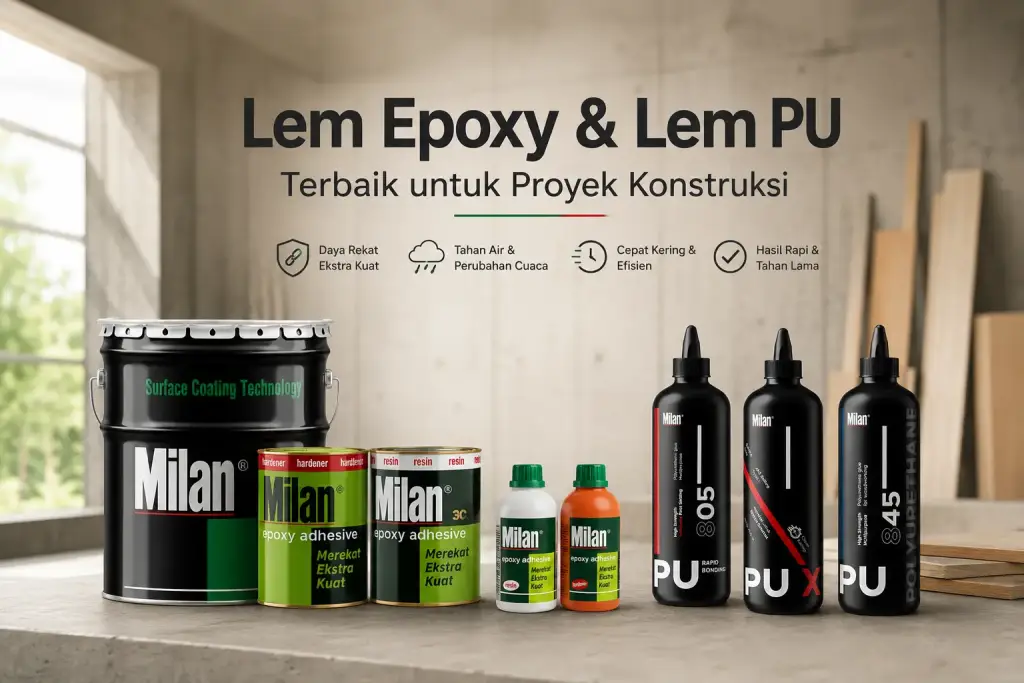
1. Milan Epoxy Adhesive
Milan Epoxy Adhesive It is a two-component adhesive that provides extremely high bonding strength on a variety of materials, such as wood, metal, concrete, ceramic, and stone.
This product offers good resistance to water, moisture, and chemicals, making it suitable for construction and industrial applications that require strong, permanent joints.
2. Milan Non-Glue-Line Epoxy
Milan Non-Glue Line Epoxy Specially designed for the woodworking industry, which prioritizes the aesthetic quality of joints.
Its advantage is that it produces cleaner joints without a noticeable glue line, making it ideal for premium furniture, wood laminates, finger joints, and various wood-based products with high aesthetic value.
3. PU Adhesive 845 Milan
PU Adhesive 845 Milan is a high-quality polyurethane adhesive specially formulated for wood with a moisture content of approximately 18–40%.
This adhesive provides strong bonding even when used on materials with high moisture content, making it suitable for a variety of woodworking and construction processes.
4. X Milan PU Adhesive
Milan PU Adhesive X Designed to deliver optimal performance on wood with a moisture content above 12%.
Its advantages include the ability to form strong, durable bonds and to accommodate changes in the wood’s dimensions caused by environmental conditions, making it widely used in the furniture and woodworking industries.
5. Milan 805 PU Adhesive
PU 805 Milan is a premium single-component polyurethane adhesive that bonds quickly and can bond a variety of materials, such as wood, WPC panels, aluminum, glass, and even building filler.
With a setting time of about 2–5 minutes, this product is very helpful in improving the efficiency of both production processes and construction work without compromising the strength of the bond.
Need a Strong Adhesive for Your Construction Project? Use Milan’s Epoxy & PU Adhesives!
Information about the differences between epoxy adhesive and PU adhesive is indeed important for Milanians who want to undertake construction projects. However, be careful not to choose the wrong type of adhesive, as this can negatively impact the final result of the joint, potentially causing the bond to not last very long.
If you want to achieve strong bonding strength with these adhesives, simply use the epoxy and PU adhesives from PT Indocipta Wisesa. Through its brand—Milan—PT Indocipta Wisesa has been addressing the needs and challenges associated with various types of adhesives since 1994.
Thirty years of experience have proven that PT Indocipta Wisesa truly prioritizes and relies on product quality.
So, if you’re still unsure about which type of adhesive to choose and use, consult with Milan’s team of experts about your construction project needs. Click the banner below to get in touch!