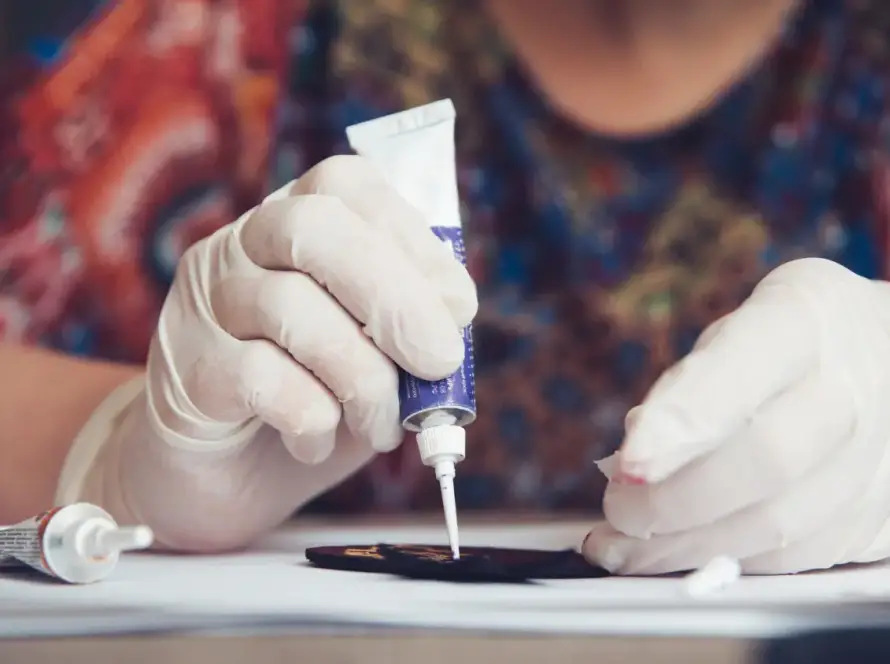
Polyurethane (PU) adhesives are often the go-to choice in the woodworking industry, such as for furniture manufacturing. The reason is simple:, This glue has strong adhesive strength and produces neat joints, which also increases the product’s resale value.
However, to achieve this, Milanians must understand the proper way to use wood PU adhesive. It’s not just about knowing the application technique, but also understanding the characteristics of this adhesive to ensure optimal bonding results.
Therefore, don’t use PU adhesive carelessly. Follow the proper usage guidelines in the following section!
What Is PU Adhesive and Why Is It So Widely Used?
Polyurethane (PU) glue is a polyurethane-based adhesive that provides strong and long-lasting adhesion to a variety of materials, especially wood.
Unlike regular wood glue, PU glue reacts with moisture in the air and within the material to form a stronger, more durable bond.
One reason why many industries use PU adhesive is its high adhesion to solid wood, plywood, MDF, particle board, and some non-wood materials. In addition, this adhesive is able to maintain the strength of the bond even when exposed to changes in temperature or humidity.
When Is the Best Time to Use PU Adhesive for Wood?
PU adhesive is ideal for a variety of applications that require high-strength bonds and long-term durability. Typically, this type of adhesive is widely used for wood lamination process, finger jointing, edge bonding, including the manufacture of furniture that requires high durability.
In addition, PU adhesive is the ideal choice when the material will used in environments with fluctuating humidity levels. Compared to conventional adhesives, polyurethane adhesives offer better resistance to water, heat, and weather changes.
PU adhesive is also suitable for use when there are small gaps in wood joints. The adhesive’s tendency to expand slightly during the curing process helps fill the gaps, making the joints tighter and stronger. Therefore, understanding how to use PU wood adhesive is an important step in achieving optimal results.
Mistakes to Avoid When Using PU Adhesive
1. The Surface Is Still Dusty and Dirty
Dust, oil, and sawdust residue can reduce direct contact between the adhesive and the material. As a result, the bond strength is not optimal. Before you begin using PU wood adhesive, Make sure all surfaces are completely clean so that the glue can adhere properly.
2. Using Wooden Materials in Damp or Wet Conditions
Wood that is too damp can interfere with the curing process of polyurethane adhesive. This condition has the potential to causes the connection to be less secure and is unstable in the long term. Ideally, use wood with a moisture content that meets industry standards to ensure optimal bonding results.
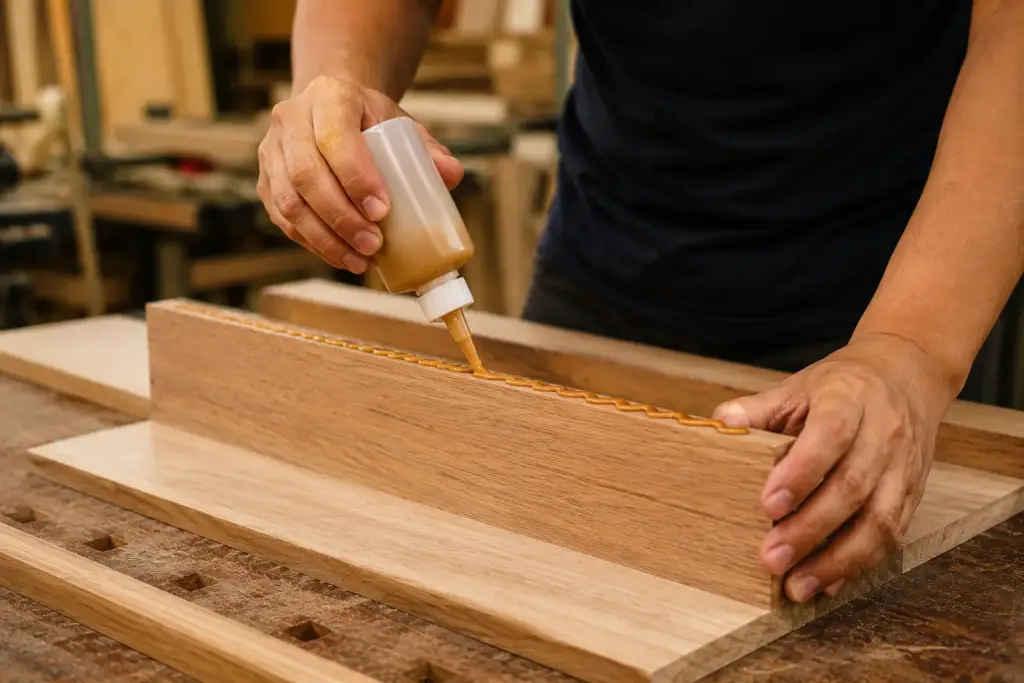
3. Applying Adhesive Incorrectly According to the Technical Instructions
Using not enough glue may cause some areas not to adhere properly, whereas excessive use In fact, it leads to a waste of material. Therefore, always follow the technical instructions for use to ensure even distribution of the adhesive and achieve an optimal bond.
4. The Pressure Applied to the Glue Is Still Insufficient
After the adhesive is applied, pressure must be applied to both materials using clamps or a press. Sufficient pressure helps bond the surfaces together perfectly, so that the curing process proceeds more effectively and produces maximum adhesive strength.
5. Glue Is Not Stored in a Safe Place
PU adhesive is sensitive to air and humidity. If The package is not sealed tightly or if stored in a hot, humid area, the glue’s quality may deteriorate before use. Store the product in a cool, dry, and tightly sealed place to maintain its performance.
See Also: Find the Right Eco-Friendly Wood Adhesive Solution for Your Industrial Needs
Characteristics of High-Quality PU Adhesives for the Wood Processing Industry
1. Super-Strong Adhesion to Materials
High-quality PU adhesive can create a very strong bond on various types of wood, including both hardwoods and softwoods. The connection is now more secure so that it can support heavy loads and withstand long-term use.
2. Resistant to Heat, Humidity, and Temperature Changes
High-quality products has high stability when used in environments with fluctuations in temperature and humidity. This is particularly important for furniture, doors, door frames, and wood panels used in both indoor and semi-outdoor areas.
3. Fills Gaps in Wood, Creating Strong and Neat Joints
One of the advantages of polyurethane adhesive is its ability to fill small gaps at joints. This characteristic helps creates a stronger bond so that the quality of the final product is improved.
For industrial or workshop needs, Milanians can use Milan PU X whose formula is capable of providing maximum bonding strength in a variety of woodworking applications, even on materials with a moisture content above 12%.
4. Chemical Resistance
A good PU adhesive is not only mechanically strong, but also has resistance to various mild chemicals which are commonly encountered during the finishing process and in everyday use. This ensures that the joints remain stable and are not prone to damage over the long term.
5. Easy to Apply
High-quality glue has the right viscosity, making it easy to spread evenly on a wooden surface. The application process is faster, more efficient use of adhesive, and more consistent bonding results. Ease of application also helps boost productivity, especially in large-scale production processes.
Recommendations for High-Quality PU Wood Glue for Strong Bonds
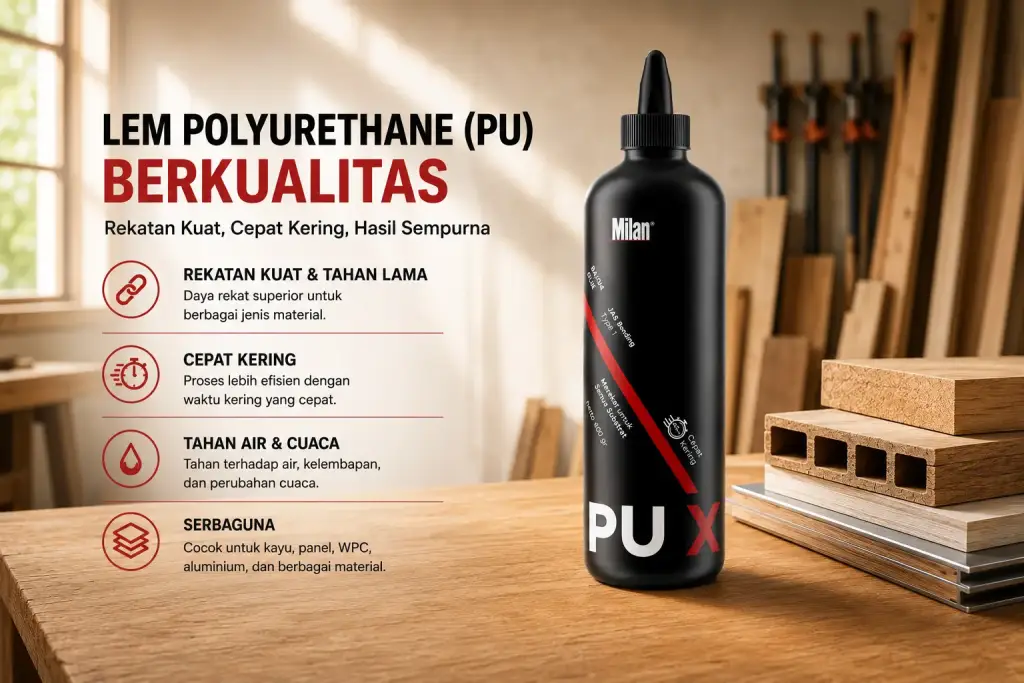
There are many brands that produce PU wood adhesives, but are they all high-quality? Oh, certainly not, Milanians! So, Milanians need to be able to choose premium-quality PU wood adhesives that meet the needs of various industries.
Here are some recommendations you can try: Milan PU X which is specifically designed to bond wood with a moisture content above 12%. Even in damp conditions, Milan PU X can bond wood materials firmly, filling gaps completely.
In addition to its excellent adhesive strength, Milan PU X can also help fill small gaps at joints and is resistant to heat, moisture, and temperature changes. These characteristics make it suitable for use in laminate, finger joints, wood panels, furniture, doors, door frames, and various other woodworking needs.
By understanding how to use PU wood glue and choosing the right product, Milanians can create stronger, neater, and more durable joints, thereby improving the overall quality of their finished products.
See Also: Best Polyurethane Adhesives: Strong Wood Adhesive Solutions for Industrial Needs
7 Ways to Use Milan PU X Wood PU Adhesive for Strong, Long-Lasting Joints
1. Clean the Wooden Surface
Make sure both surfaces of the wood to be glued are free of dust, oil, and other debris. A clean surface helps the glue adhere more effectively and produces a strong bond.
2. Make Sure the Wood Surface Is Flat
Check both sides of the wood to make sure they have a flat surface. Gaps or differences in surface level It should not exceed 0.5 mm so that the joints bond perfectly.
3. Prepare the Wood’s Moisture Content Properly
Moisten one of the wood surfaces with a damp cloth, but do not make it too wet. Then, wipe off any excess water. Recommended moisture content (MC) ranges from 18% to 40% to aid in the adhesive curing process.
4. Apply Milan PU X Evenly
Apply Milan PU X evenly to the dry wood surface. Use as needed Since the glue will expand as it cures, there’s no need to apply it too thickly.
5. Join the Parts and Press the Joint Firmly
Press the two wooden surfaces together, then Press using a clamp with strong pressure until a small amount of glue oozes out of the joint. After that, immediately wipe away the excess glue with a dry cloth or paint thinner. If the glue has dried, scrape it off with a chisel to keep the surface smooth.
6. Wait Until the Glue Is Completely Dry
Let the joints dry before moving on to the staining or finishing stage. Sand off any remaining adhesive from the surface to be stained. The clamp can be removed after 45–55 minutes, while the ideal time for the bond strength test is 12 hours. Drying time can be affected by temperature, humidity, and the porosity of the material.
7. Store the Product Properly After Use
Because Milan PU X dried out due to exposure to moisture, Clean the bottle cap and nozzle with a dry cloth after use. Remove any remaining air from the bottle before sealing it tightly, then store it in a cool, dry place away from direct sunlight or other heat sources to maintain the glue’s quality.
Achieve Stronger Wood Bonds with Milan PU X—Order Now!
Do you often find that your wood joints come apart easily even though you’ve followed the correct instructions for using PU wood glue? If so, the problem isn’t with the application process—it might be the product you’re using.
To prevent this from happening again, it’s time to switch to Milan PU X which is the best polyurethane adhesive with strong bonding power, even for wood with a moisture content above 12%.
As a flagship product of PT Indocipta Wisesa, Milan PU X is designed to provide a strong, durable, and clean bond for a wide range of applications, including both interior and exterior projects.
Still hesitant to give it a try? Discuss Milanians’ needs with the Milan Indonesia team first Before trying PU X Glue, click the banner below!