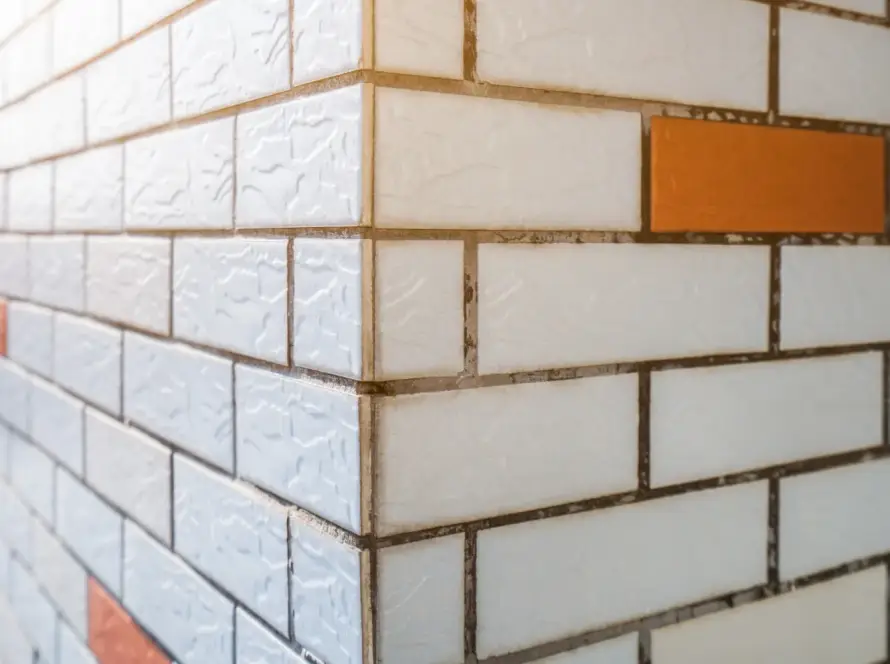
Do you often see buildings that are still new, but whose Hebel walls are already starting to crack? This could be because Common mistakes when installing lightweight bricks that are often overlooked unskilled laborers, which can cause walls to crack easily, become uneven, and even reduce the building’s structural integrity—even shortly after it was built.
In fact, aerated concrete or lightweight bricks are often chosen as building materials because The result is a neater, more precise wall, and installation is quick. Unfortunately, from the very beginning, contractors have often made mistakes when installing lightweight bricks.
So, for Milanians who are building a house, hotel, or other project, it’s best to first understand the common mistakes made when installing lightweight bricks so that the walls will last for the long term.
Why Do Lightweight Brick Walls Crack Easily After Installation?
1. The Adhesive Used Is Inappropriate
One reason walls may crack easily after installation could be that the wrong adhesive was used. Lightweight bricks have different water absorption rates and characteristics than red bricks, so requires a special adhesive with high bonding strength. If an unsuitable adhesive is used, the bond between the bricks becomes weak, making them more prone to cracking when subjected to loads or changes in weather.
2. Extreme Temperature Changes
Repeated temperature changes can causes the material to expand and contract. If the brick joints lack sufficient flexibility or the adhesive is unable to accommodate changes in the material’s dimensions, hairline cracks through to large cracks may appear in the wall.
3. Incorrect Application Techniques and Failure to Follow Instructions
Mistakes made when installing lightweight bricks can also cause walls to crack easily. For example, applying the adhesive incorrectly, uneven thickness, or Laying bricks too quickly can reduce their bond strength. In addition, imprecise brick placement causes uneven load distribution, thereby increasing the risk of cracking.
4. Improper Use of Adhesives
Using not enough adhesive causes the joints not to bond perfectly. Instead, the layer adhesive that is too thick In fact, it increases the risk of shrinkage as it dries. This condition is often the cause of cracks in lightweight brick joints.
5. Poor-Quality Bricks
Lightweight bricks that are irregularly sized, brittle, or do not meet quality standards will be more difficult to install properly. Differences in the dimensions of bricks It also causes the joint thickness to be inconsistent, thereby reducing the strength of the wall.
6. Suboptimal Drying Process
The adhesive needs time to cure in order to reach its maximum strength. If the wall is subjected to a load, exposed to vibrations, or plastered before the adhesive has completely dried, The joints become more prone to cracking.
See Also: The Facts Behind the Need for Special Adhesives for Lightweight Bricks
8 Mistakes When Installing Lightweight Bricks That Cause Walls to Crack Easily
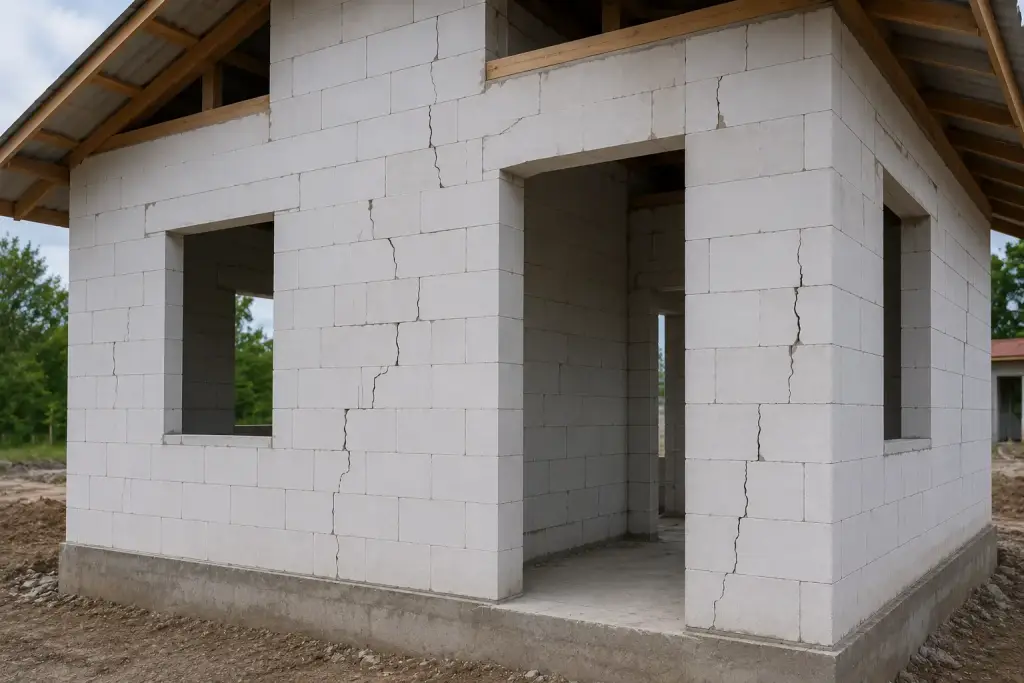
1. Failing to Prepare Before Installation
A work surface that hasn’t been cleaned, incomplete tools, or bricks whose condition hasn’t been checked can hinder the installation process. Inadequate preparation This often results in uneven joints and suboptimal adhesion.
2. The Foundation Is Still Unstable
Lightweight brick walls require a foundation that is truly strong and stable. If the foundation is still settling or shifting, Cracks will appear even though the adhesive used is of good quality.
3. Non-Interlocking Brick Layout
The best way to lay lightweight bricks is Arrange them in an alternating pattern so that each layer interlocks with the next. If the vertical joints are aligned in a straight line, the load distribution becomes less even, making the wall more prone to cracking.
4. A Dirty Material Surface Hinders Adhesion
Dust, oil, mud, or debris on the surface of a brick can reduces the adhesive's ability to bond effectively. Cleaning the surface before installation is a simple step that is often overlooked.
5. Use of Adhesive Not in Accordance with the Instructions
A common mistake when installing lightweight bricks is using the adhesive incorrectly. Diluting the adhesive too much or using the wrong water-to-adhesive ratio can reduce the adhesive strength. Therefore, always follow the manufacturer’s instructions for use to ensure optimal installation results.
6. Installation of Lightweight Bricks Without Cross Joints
Cross-bracing serves to distribute the load across the entire wall surface. If each layer is installed parallel to one another without a crisscross pattern, Weak spots will form, increasing the likelihood of cracks at the joints.
7. Mistakes When Cutting Lightweight Bricks
Unprecise cutting results in bricks of inconsistent size. As a result, the gap becomes too wide or too narrow thereby reducing the overall strength of the wall structure.
8. Applying Plaster Too Quickly
Many workers are trying to meet deadlines, so they apply plaster immediately after the bricks have been laid. However, the mortar needs time to set completely. Plastering too soon can interferes with the adhesive bonding process and causes cracks.
Other Consequences of Making Mistakes When Installing Lightweight Bricks
In addition to causing cracks, mistakes made when installing lightweight bricks can also lead to various other problems, such as The walls become uneven, gaps appear between the bricks, the plaster peels off easily, water seeps in during the rainy season, and the structural strength of the walls decreases.
In the long run, repair costs will inevitably be higher because some parts will need to be dismantled and reinstalled. Therefore, using high-quality materials and proper installation techniques is a crucial investment in ensuring the building’s longevity.
5 Ways to Avoid Mistakes When Installing Lightweight Bricks to Ensure Your Walls Last a Long Time
1. Make Sure the Foundation Surface Is Level
Before installation begins, make sure the foundation surface is level. An uneven surface will building a slanted brick wall causing the joints to become uneven and prone to cracking.
2. Use a Special Adhesive for Lightweight Bricks
Using a special adhesive for lightweight bricks is one of the most effective ways to reduce the risk of cracking. This type of adhesive has high adhesive strength, a thinner application thickness, and the ability to produce stronger joints than regular cement mortar.
To get the best possible results, Milanians can use Milan Lightweight Brick Adhesive, a special adhesive designed for installing lightweight bricks that provides optimal adhesion, is easier to apply, and helps create strong, neat joints.
Milan Lightweight Brick Adhesive Project: Magelang’s Aloon-Aloon Uses Milan Lightweight Brick Adhesive, an Adhesive Solution for High-Quality Construction
3. Avoid Applying Too Thick a Layer of Adhesive
The thickness of the adhesive should follow the usage recommendations. A layer that is too thick can shrinks as it dries thereby increasing the risk of cracks in the brick joints.
4. Lay the Lightweight Bricks in a Staggered Pattern
Use a staggered or half-bond laying pattern so that the vertical joints do not fall in a straight line. This technique This makes the load distribution more even while also increasing the strength of the walls.
5. Perform the Curing Process Optimally According to the Instructions
After installation is complete, allow the adhesive to dry for the recommended amount of time before proceeding with the next step. Optimal curing helps the adhesive reach maximum strength so that the connection lasts longer.
Can Cracked Lightweight Brick Joints Be Repaired?
Yes. Cracked lightweight brick joints can still be repaired. if the damage has not yet affected the wall's main structure.
Small cracks can usually be repaired by cleaning the damaged area, removing the weakened adhesive, and then reapplying the appropriate adhesive before refinishing.
However, if the cracks are caused by a general installation error, partially demolishing the wall is often a more effective solution to prevent the problem from recurring.
What Is the Best Adhesive Solution to Prevent Lightweight Brick Joints from Cracking Easily?

One of the most important factors in reducing the risk of cracking is choosing an adhesive that is specifically designed for the characteristics of lightweight bricks. A high-quality adhesive provides strong adhesion, ensures consistent joint thickness, and helps maintain the long-term stability of the wall.
One of the recommendations is Milan Lightweight Brick Adhesive As a modern, ready-to-use adhesive, it dries quickly—in just 5 minutes—and offers strong bonding power. This product is also designed to be weather- and water-resistant, helping to prevent cracking caused by exposure to extreme weather conditions.
Why Choose Milan Lightweight Brick Adhesive?
There’s a good reason why Milan Lightweight Brick Adhesive is the solution for preventing cracks in walls. This is because the product offers a variety of advantages that make it ideal for construction needs, including:
- Specially formulated for installing lightweight bricks.
- Strong and long-lasting adhesion.
- Produces thinner, neater seams.
- Easy to apply by both tradespeople and contractors.
- Helps reduce the risk of cracks at the joints.
- It is more efficient to use than regular cement mortar.
- Suitable for a variety of residential and commercial construction projects.
- Helps create stronger, more precise walls.
- Supports a faster installation process.
- Providing high-quality adhesive solutions for optimal construction results.
Guide to Using Milan Lightweight Brick Adhesive to Prevent Walls from Cracking Easily
1. Prepare the Lightweight Brick Surface
Make sure the surface of the lightweight bricks is level by tapping them with a hammer if necessary. Clean the entire surface of dust, moss, oil, and other debris so that the adhesive can bond effectively.
2. Apply Milan Lightweight Brick Adhesive Correctly
Apply Milan Lightweight Brick Adhesive to the surface of the bricks in two straight, evenly spaced lines. Make sure to apply the adhesive as needed to ensure optimal adhesion.
3. Lay the Bricks and Seal the Joints
Immediately place the next lightweight brick after the adhesive has been applied. Then press it firmly into place using a rubber mallet so that the adhesive spreads evenly across the entire joint surface.
4. Wait Until the Adhesive Dries
Let the joints set for about 5 minutes so that the Milan Lightweight Brick Adhesive can begin to dry and form a strong bond before continuing with the next step of the installation process.
5. Repeat the Process Until Installation Is Complete
Follow the same application steps for each course of bricks until the entire installation process is complete to ensure a sturdy, neat, and durable wall.
Prevent Cracked Walls! Use Milan Lightweight Brick Adhesive Today
A small mistake when installing lightweight bricks can lead to much higher repair costs down the road. Don’t take the risk of using the wrong adhesive. Choose Milan Lightweight Brick Adhesive which is specifically designed to provide strong adhesion, neater joints, and help create sturdy, long-lasting walls.
Click the banner below right now To view product details and consult with the Milan Indonesia team of experts about your Milanians project needs!