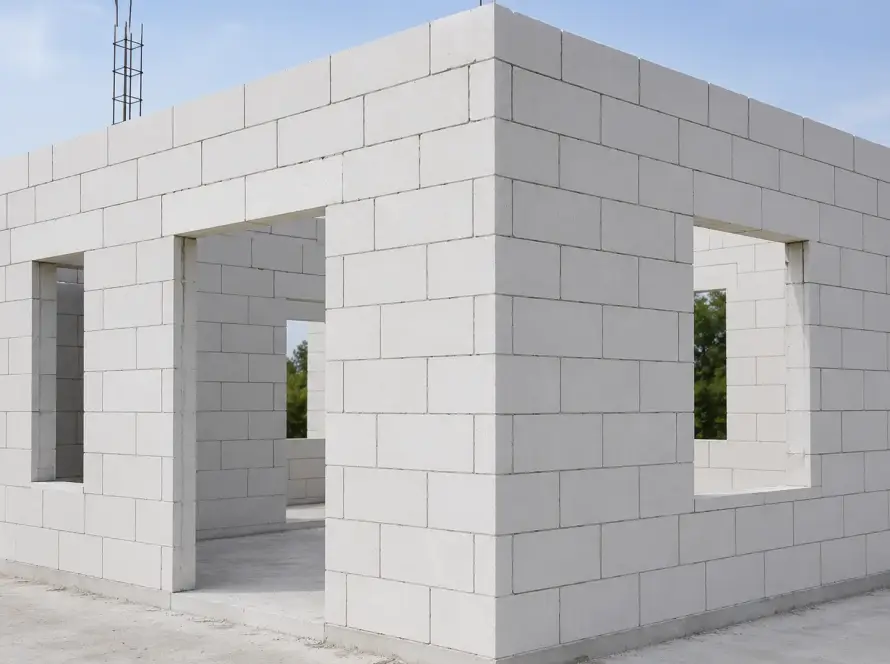
The use of lightweight bricks, or “hebel,” is becoming increasingly popular due to their lighter weight, precise dimensions, and ability to speed up the construction process. However, many people still believe that ordinary cement mortar can be used to install lightweight bricks. In fact, this material requires A special adhesive for lightweight bricks to ensure that the finished structure remains strong, neat, and durable.
Milanians who are building houses, buildings, warehouses, or commercial projects choose a special adhesive for lightweight bricks, which is an important step in maintaining the long-term quality of a building. The right adhesive not only improves adhesion but also minimizes the risk of cracking and material waste.
Why Do Lightweight Bricks Require a Special Adhesive?
Lightweight brick or Hebel has different characteristics than red brick. This material has a smoother surface, precise dimensions, and a different water absorption rate. Therefore, the use of a special adhesive for lightweight bricks is a necessity, not just an option.
This adhesive is formulated with a blend of high-quality cement, finely graded silica sand, and various additives that provide high bonding strength even in very thin layers. The adhesive is typically only about 2–3 mm thick, allowing for more precise installation compared to conventional cement mortar.
In addition to producing a stronger joint, a thin layer of adhesive also helps reduce shrinkage during the drying process. As a result, the likelihood of cracks forming in the walls is reduced, and the final surface appears smoother, making both the plastering and finishing processes easier.
See Also: The Best Lightweight Brick Adhesive for Stronger, More Precise Construction
Differences Between Special Adhesives for Lightweight Bricks and Regular Cement
Many people still believe that regular cement can replace the function of a special adhesive for lightweight bricks. In fact, the two have different functions and formulations.
Ordinary cement is a base material that still needs to be mixed with sand, water, and even other aggregates as required for the construction project. The quality of the final result is greatly influenced by the accuracy of the mix composition on-site.
On the contrary, Special adhesive for lightweight bricks, also known as mortar, is a material used to bond materials together in the form of a ready-to-use paste. It has stronger adhesive strength, dries quickly, and is resistant to weather and heat.
In addition, specialized adhesives require a much thinner layer than regular cement. This results in more efficient use of materials, faster completion of the work, and neater joints.
Characteristics of High-Quality Adhesives for Lightweight Bricks
1. Super Strong Adhesion
The main characteristic of adhesive specifically designed for lightweight bricks is its high bonding strength, which ensures that each layer of bricks bonds firmly together. A high-quality adhesive can maintain the strength of the bond over the long term while also helping to reduce the risk of shifting or cracking in the walls.
2. Easy to Apply and Quick-Drying
High-quality products are generally available in the form of instant mortar, so they simply need to be mixed with water without the need for additional sand. The consistency of the mortar becomes more stable and easier to level using a notched trowel, and it has an efficient drying time, allowing construction work to proceed more quickly.
3. Water- and Weather-Resistant
A good adhesive must be able to withstand changes in temperature and humidity, as well as exposure to water. This durability is essential for maintaining the strength of wall joints—both indoors and outdoors—thereby extending the building’s lifespan.
4. Suitable for Various Construction Needs
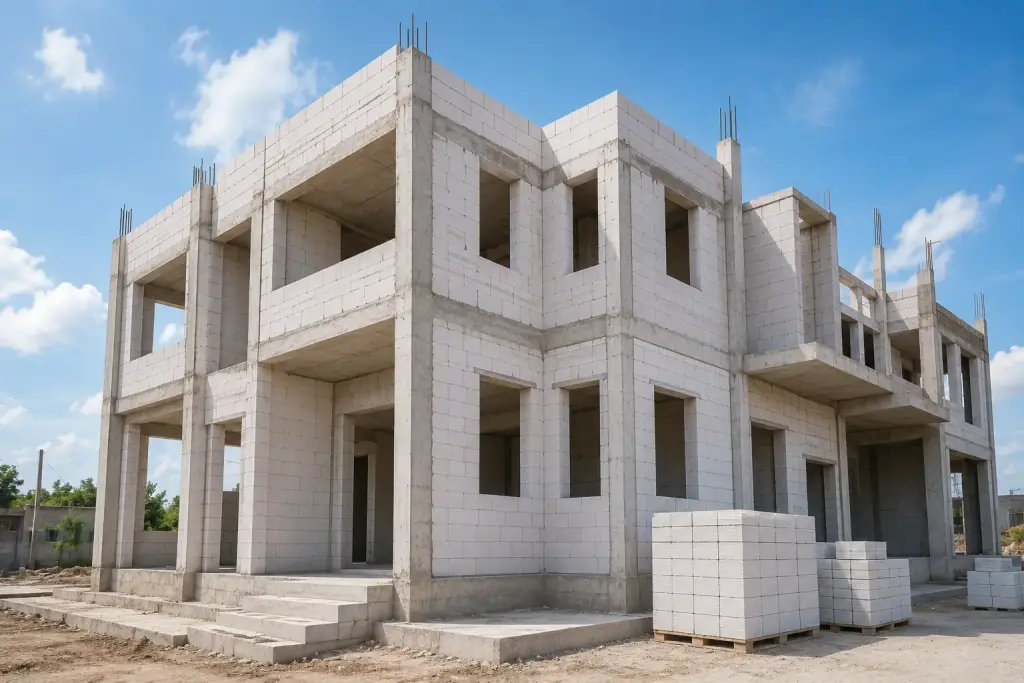
High-quality adhesives are not only suitable for residential construction, but also Can be used in apartments, retail units, office buildings, warehouses, schools, hospitals, and various other commercial projects that uses lightweight brick as the primary material.
5. Complying with Applicable Standards
Be sure to choose an adhesive specifically designed for lightweight bricks that meets applicable quality standards. Products that have undergone testing ensure quality, consistent performance, and safe use in various types of construction projects.
Risks of Using the Wrong Adhesive with Lightweight Bricks
Using regular cement or an unsuitable adhesive may seem more economical at first, but it actually has the potential to increase repair costs down the road.
The most common risks are The appearance of hairline cracks at wall joints due to suboptimal adhesion. In addition, the uneven thickness of the mortar causes the wall surface to become uneven, requiring more plaster and finishing.
Improper use of adhesives can also lead to material waste, longer construction times, and even a decline in the quality of a building’s non-structural elements. Therefore, the selection of adhesives specifically designed for lightweight bricks should be tailored to the characteristics of the materials used.
When Should Specialty Adhesives Be Used in Construction Projects?
Basically, adhesive specifically designed for lightweight bricks should Used whenever a project uses lightweight brick as wall material.
This product is highly recommended from the very beginning of the installation process to ensure that each joint has uniform thickness and results in a more stable wall structure. It is also ideal for projects that prioritize time efficiency, a clean finish, and material savings.
Whether for new home construction, renovations, multi-story buildings, or industrial complexes, the use of specialized adhesives will yield better results than using conventional cement mixtures.
See Also: Fiber-Cement Siding: A Wall Protection Solution with a Natural Look
Do All Types of Lightweight Bricks Require a Special Adhesive?
Not all, but It is best to bond the Hebel using a special adhesive to ensure a strong and durable joint. Each type of lightweight brick has different characteristics, so a special adhesive is still needed to ensure a neater finish.
Lightweight bricks, whether made from AAC (Autoclaved Aerated Concrete) or CLC (Cellular Lightweight Concrete), have precise dimensions, so installation using A thin adhesive layer is much more effective than a thick cement mortar. In fact, many manufacturers of lightweight bricks also recommend using special mortar or adhesive to ensure that the walls perform in accordance with the material specifications.
Recommendations for High-Quality Special Adhesives for Lightweight Bricks
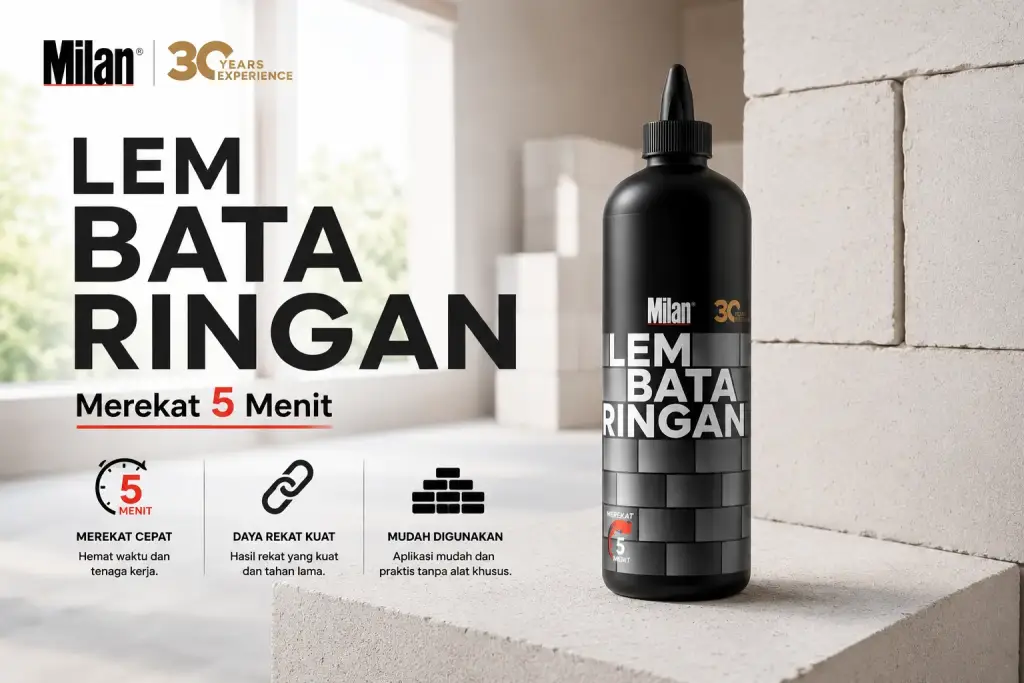
Specialized adhesive for lightweight bricks is the solution for keeping joints neat and strong. However, not all brands of lightweight brick adhesive are high-quality and strong. Therefore, choosing the right lightweight brick adhesive is the most important step in ensuring a building’s long-term structural integrity.
Milanians can use Lightweight Brick Adhesive from Milan, which has strong adhesive properties and dries quickly—in just 5 minutes.
In addition, the application process is more convenient because you simply mix it with water according to the specified measurements without needing to add sand.
Milan’s Lightweight Brick Adhesive also helps speed up the installation process, reduce material waste, and ensure a more precise finish. With its consistent quality, this product is suitable for a wide range of construction projects, from residential homes to commercial buildings.
Guide to Using Milan Lightweight Brick Adhesive for Strong Joints
1. Prepare the Lightweight Brick Surface
Make sure the surface of the lightweight bricks is level and clean before installation. If necessary, level the surface with a hammer, then remove any dust, moss, oil, or dirt to ensure maximum adhesion.
2. Apply Lightweight Brick Adhesive
Apply Milan Lightweight Brick Adhesive to the surface of the brick by forming two straight, evenly spaced lines running lengthwise. Make sure there is enough adhesive to create a strong bond.
3. Place the Bricks and Press Them Together
Immediately place the next lightweight brick after the adhesive has been applied. Then press it firmly into place using a rubber mallet so that the adhesive spreads evenly across the entire joint.
4. Wait Until the Adhesive Dries
Let it sit for about 5 minutes Allow the Milan Lightweight Brick Adhesive to dry and develop strong bonding strength before proceeding with the next installation step.
5. Continue Laying the Bricks
Repeat the same application steps for each course of bricks until the entire wall is installed neatly, precisely, and with a strong bond.
Still Looking for a Special Adhesive for Lightweight Bricks? You’ll Find the Answer Here!
Choosing the right adhesive specifically designed for lightweight bricks is an investment in the long-term quality of your building. Don’t let the use of an unsuitable adhesive compromise the strength of your walls, slow down the installation process, or increase repair costs down the road. Use a solution that’s specifically formulated to ensure a stronger, neater, and more durable construction.
Milanians can use special Hebel adhesive from Milan Lightweight Brick Adhesive which has been proven to have strong adhesive strength and dries quickly—in just 5 minutes.
As a flagship product of PT Indocipta Wisesa, Milan’s lightweight brick adhesive formula is specially designed to help create an optimal bond, ensuring that each brick layout is more precise and durable.
Don’t hesitate! Get the best lightweight brick adhesive from Milan today. Click the banner below to purchase products or schedule a consultation with the Milan Indonesia team of experts!