Do you often get frustrated because the walls in your home quickly become dull and moldy, even though they were just repainted? Of course, that’s really annoying, isn’t it?
That’s why, to prevent such incidents from happening again, Milanians need to understand the common mistakes in exterior painting that cause walls to quickly become dull and develop mold, both during the preparation and application processes.
This understanding helps Milanians achieve exterior paint finishes on their walls that are more durable and long-lasting. As a result, the exterior walls of Milanians’ homes remain clean, bright, and aesthetically pleasing.
Why Does Exterior Paint Fade So Quickly Even Though It Was Just Painted?
Many people assume that paint that fades quickly is always due to the quality of the product. In fact, the cause is much more complex than that.
Exposure to ultraviolet (UV) rays, rain with a certain level of acidity, extreme temperature fluctuations, and air pollution can accelerate the degradation of the paint layer if it is not adequately protected.
In addition to environmental factors, the painting process itself plays a crucial role. Walls that are still dusty, lack a primer, or are painted while damp result in suboptimal paint adhesion. As a result, the paint layer is more prone to fading, peeling, and becoming a breeding ground for moss and mold.
Minor mistakes during application are often not immediately noticeable. However, within a few months, the paint color begins to change, black spots appear, and the wall surface looks dull even though the building is still relatively new.
Is It Important to Choose Special Exterior Paint for Building Walls?
It’s very important. Exterior paint is specifically designed to withstand outdoor conditions that are much harsher than those encountered indoors. Its formula offers better resistance to UV rays, rain, humidity, temperature fluctuations, and the growth of mold and mildew.
Using interior paint for outdoor areas will cause the paint to deteriorate more quickly because it lacks protection against extreme weather. In contrast, high-quality exterior paint keeps colors vibrant, strengthens the protection of wall surfaces, and extends the life of the building.
Therefore, choosing the right exterior paint is a long-term investment because it can reduce maintenance and repainting costs.
See Also: Fiber-Cement Board Paint: A Wall Protection Solution with a Natural Look
Exterior Painting Mistakes That Cause Walls to Fade and Grow Mold Quickly
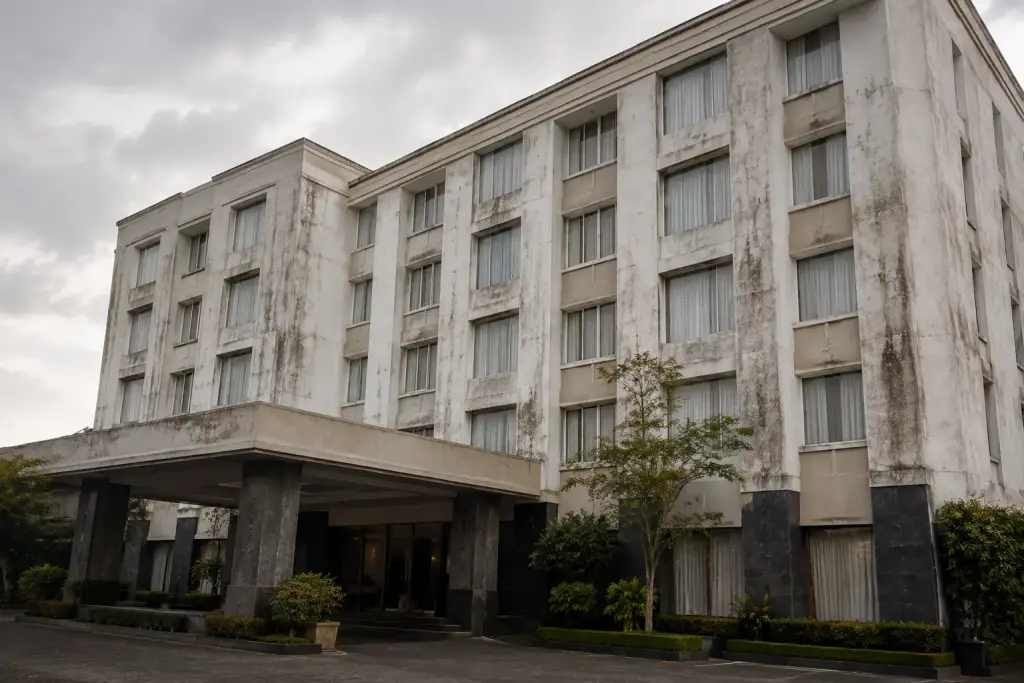
1. The Wall Surfaces Are Still Dirty and Dusty
Dust, oil, cement residue, and other contaminants will impair the paint’s adhesion to the wall surface. As a result, the paint layer won’t adhere properly, making it more prone to peeling, cracking, or fading. Before painting, make sure the entire surface has been cleaned and is completely ready to receive a new coat of paint.
2. Skipping the Primer
Primer serves to seal the pores in the wall, improve adhesion, and ensure a more even color finish. Without primer, the topcoat will be absorbed more deeply into the wall, resulting in a less-than-optimal finish and reduced durability.
3. Choosing Paint That Doesn’t Meet Your Needs and Is of Poor Quality
One common mistake when choosing exterior paint—one that causes walls to quickly lose their luster and develop mold—is selecting a product based solely on price without considering its quality. Low-quality paint generally has shorter color retention, absorbs water easily, and is less resistant to sunlight.
To get the best possible protection, Milanians can use Milan Omnitect Exterior Wall Paint. This paint is specially formulated for exterior surfaces and offers high resistance to extreme weather, UV rays, and rain, while helping to keep colors vibrant for longer.
In addition, it has excellent adhesion, providing optimal protection for wall surfaces and helping to reduce the risk of mold and mildew growth.
4. The Walls Are Still Wet or Damp
Walls that aren’t completely dry will retain moisture. When paint is applied, that moisture will cause the paint layer to bubble, crack, or even peel. Damp conditions also provide an ideal environment for mold growth.
5. Inappropriate Equipment Used
Brushes, rollers, and spray guns each serve different purposes. Using the wrong tool can result in an uneven coat of paint, visible brush strokes, or varying paint thickness across different sections of the wall. Therefore, use the appropriate tools based on the type of surface and application recommendations.
6. Apply One Coat After Another Without a Break
Each coat of paint needs time to dry before the next coat is applied. If this process is rushed, the underlying coat will not have dried completely, which can cause wrinkling, cracking, and a significant reduction in adhesion.
7. Incorrect Application Techniques
Applying paint too thickly in a single coat or using inconsistent painting strokes are among the common mistakes in exterior painting that can result in a bumpy surface and uneven color. Proper painting techniques will help create a stronger, more durable protective coating.
8. Applying Paint During the Rainy Season
High humidity prolongs the drying process. In fact, rain that falls before the paint is completely dry can damage the paint layer, causing streaks, peeling, and even reducing the protective quality of the wall.
9. Lack of Regular Maintenance
Many people think the job is done once the painting is finished. In fact, regular maintenance is still necessary to prevent dust, moss, mold, and stains from accumulating and damaging the paint finish. Simple maintenance can significantly extend the life of the paint.
See Also: 8 Mistakes When Installing Lightweight Bricks That Cause Walls to Crack Easily
How to Care for Exterior Paint to Keep It Bright and Long-Lasting
1. Clean the Walls Regularly to Prevent Dust and Dirt from Accumulating
Dust and pollution that accumulate over time can make the paint look dull. Cleaning the walls periodically with clean water or a soft cloth will help keep them looking clean and bright.
2. If Stains or Mold Have Already Appeared, Clean Them Immediately with a Cleaner
If left untreated, mold will continue to grow and damage the paint finish. Use a cleaning solution specifically designed for the type of stain to remove the mold without damaging the painted surface.
3. Avoid Damp and Wet Wall Areas
Make sure that drains, gutters, and pipes are not leaking. Water that constantly comes into contact with walls will increase humidity, thereby accelerating the growth of moss and mold.
4. Repair Damaged Wall Areas Immediately
Small cracks can allow water to seep into the walls. If not repaired promptly, the damage will spread and accelerate the deterioration of the paint layer.
5. Re-coat or Repaint to Provide Maximum Protection
Over time, the protective paint coating will deteriorate due to exposure to the elements. Re-coating the building as needed will help maintain protection against UV rays, rain, and moisture.
If Milanians want to repaint, they can use Milan Exterior Wall Paint which is claimed to provide long-term protection for a building’s exterior walls, maintain the color’s durability, offer good coverage, and help reduce the risk of moss and mold growth, keeping the building looking clean and attractive.
Recommendations for Exterior Wall Paint with Maximum Protection Against Extreme Weather
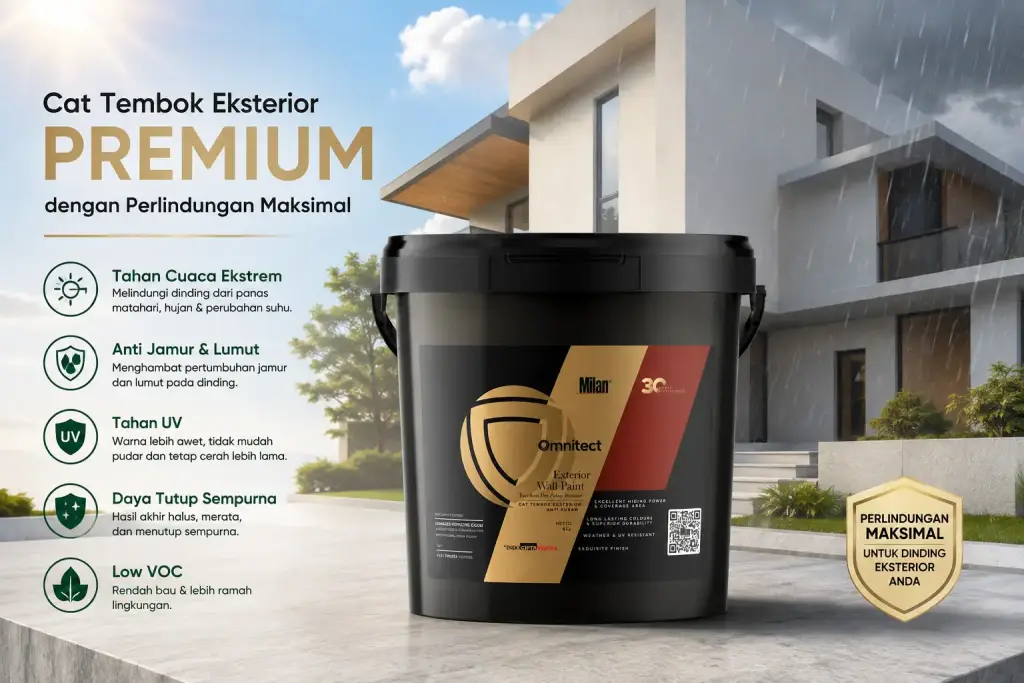
If Milanians are looking for high-quality exterior paint, Milan Omnitect Exterior Wall Paint is the right choice for various types of buildings, such as homes, buildings, offices, and schools.
Milan Exterior Wall Paint has been formulated to withstand the sun’s heat, heavy rain, temperature fluctuations, and high humidity commonly found in Indonesia.
With strong adhesion and good color retention, Milan Omnitect Exterior Wall Paint helps keep buildings looking vibrant for a longer period of time.
In addition to producing an attractive finish, this paint also helps protect wall surfaces from fading, moss, and mold, making maintenance more cost-effective.
Advantages of Milan Omnitect Exterior Wall Paint
There’s a good reason to use Milan Exterior Wall Paint. That’s because this paint has a special formulation that helps keep building walls free from dullness and mold over the long term, when used properly.
Here are some of the advantages Milan Omnitect Exterior Wall Paint, including:
- Specially formulated for exterior building surfaces.
- UV-resistant.
- Resistant to extreme weather.
- It has strong adhesive properties.
- The color lasts longer and doesn't fade easily.
- Helps reduce the growth of mold and mildew.
- Good coverage.
- The final result is neater and more even.
- Suitable for various types of exterior walls.
- Helps keep the building looking clean and attractive.
- Easy to apply.
- Provides long-term protection for wall surfaces.
Prevent Mold on Building Walls with Milan Omnitect Exterior Wall Paint!
Don’t let exterior paint mistakes cause your home’s walls to quickly become dull and moldy, which can detract from the building’s aesthetic appeal. It’s time for Milanians to switch to high-quality coating products that offer maximum protection—one of which is Milan Omnitect Exterior Wall Paint.
Backed by modern technology, Milan Exterior Wall Paint It helps prevent moss and mold from growing on walls. The paint’s finish is also smoother and more durable, helping to maintain the building’s aesthetic appeal.
So, Milanians shouldn't hesitate any longer to use Milan Omnitect Exterior Wall Paint. Consult with the Milan Experts team regarding your Milanians building wall needs by Click the banner below!