Understanding how to use HPL adhesive correctly is an important step in ensuring that your High Pressure Laminate (HPL) installation looks neat, is strong, and is durable. Mistakes when applying the adhesive often result in the HPL peeling off easily, air bubbles forming, or the surface not adhering properly.
For Milanians who are working on creating furniture, kitchen sets, desks, cabinets, or other interior design projects, choosing high-quality glue and using the proper application techniques will yield far better results.
What Is HPL Adhesive?
HPL adhesive is a special adhesive used to bond High Pressure Laminate (HPL) sheets to various substrates such as MDF, plywood, particle board, blockboard, and wood.
This type of adhesive is designed to provide high adhesion and long-lasting performance, and to keep the HPL layer firmly attached even after prolonged use.
Unlike ordinary adhesives, HPL adhesive has properties that allow the lamination process to proceed more smoothly.
After being applied to both surfaces, the adhesive will undergo a drying process (flash-off) before the two materials are bonded together. This step ensures that the laminate is stronger, smoother, and less prone to bubbles.
Advantages of HPL Adhesive
- Extremely strong adhesive strength
- Suitable for various types of boards
- Easy to apply with a roller
- Faster installation process
- The lamination results are neater
- Durable
- Has good coverage
- Reducing the risk of HPL peeling
See Also: Understanding HPL Adhesive: A Strong Bonding Solution for Premium Interior Furniture
Types of HPL Adhesives Commonly Found on the Market
1. Solvent-Based HPL Adhesive
Solvent-based HPL adhesive is a type of adhesive that uses chemicals. This adhesive is known for its high bonding strength and relatively fast drying time, making it widely used by the furniture industry and professional craftsmen.
2. Water-Based HPL Adhesive
Unlike solvent-based adhesives, this type of adhesive is water-based, making it more environmentally friendly and producing significantly less odor than solvent-based adhesives.
In addition to being more convenient to use indoors, this type of glue is also easier to clean up while it’s still wet.
3. Yellow Glue
Yellow glue is a versatile synthetic adhesive that provides strong bonding for a variety of materials, such as wood, paper, and HPL laminate.
However, the quality of the lamination depends heavily on the product formulation used, so it is important to choose a high-quality yellow adhesive to prevent the HPL from peeling off easily.
How Long Does HPL Adhesive Take to Dry?
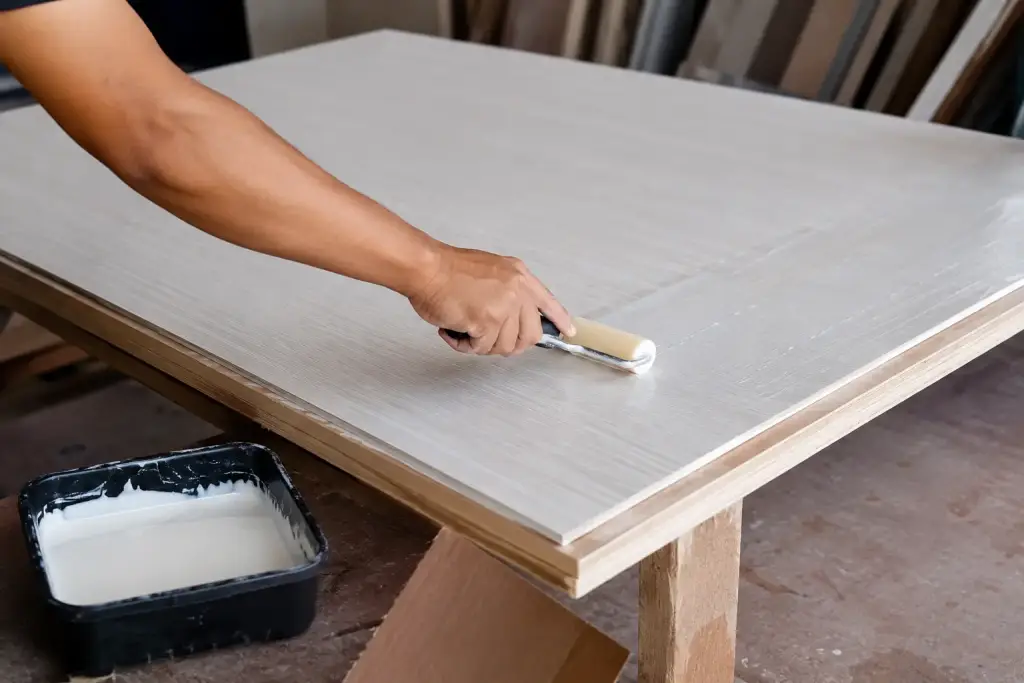
The drying time for HPL adhesive depends on the type of adhesive, room temperature, humidity, and application thickness.
Generally, HPL adhesive takes about 10–20 minutes to reach a semi-dry state, or “flash-off,” which is when the surface of the adhesive is no longer wet but still feels sticky to the touch.
This stage is the best time to bond the two surfaces of the material. If they are bonded too quickly, the water or solvent content will not have evaporated completely, resulting in suboptimal adhesion. Conversely, if they are left for too long until they are completely dry, the adhesive’s ability to form a bond may also be reduced.
Factors Affecting the Bond Strength of HPL Adhesives
1. Surface Condition of the Material: Must Be Clean Before Bonding
Dust, oil, wood chips, and other debris can interfere with the bonding process. A dirty surface prevents the adhesive from bonding properly, which can cause the HPL to peel off easily. Therefore, make sure that the entire surface of the board and the HPL has been cleaned before beginning the application process.
2. Quality of Materials Used
Panel material that is too damp, brittle, or has an uneven surface will affect the quality of the lamination. It is best to use panels with a smooth, even surface and the appropriate moisture content so that the adhesive can work effectively.
3. Choosing the Right Type of HPL Adhesive: Is It High-Quality?
The choice of adhesive is one of the most important factors in determining the strength of the laminate. A high-quality adhesive will provide stronger adhesion, make the application process easier, and minimize the risk of HPL peeling off over the long term.
For Milanians looking for professional results, Milan HPL Adhesive is the right choice. This includes water-based HPL adhesive with a flash-off system, Milan HPL Glue Designed to provide high adhesion, a more convenient application process, and a neat lamination finish on various types of boards.
4. Application Techniques and Adhesive Application Thickness
The adhesive must be applied evenly across the entire surface. A layer that is too thin can reduce adhesion, while a layer that is too thick will prolong the drying process and may cause bubbles to form. Use a roller to ensure a more consistent distribution of the adhesive.
5. Drying Time: Not Too Fast or Too Long
Determining the right time before bonding the two surfaces is an important part of using HPL adhesive. Make sure the adhesive has reached the flash-off stage so that the bond can perform optimally. Avoid bonding the materials when the adhesive is still too wet or has already dried out too much.
See Also: Causes of HPL Laminate Bubbling After Installation
Recommended HPL Adhesives with Strong Bonding Strength and Neat Results
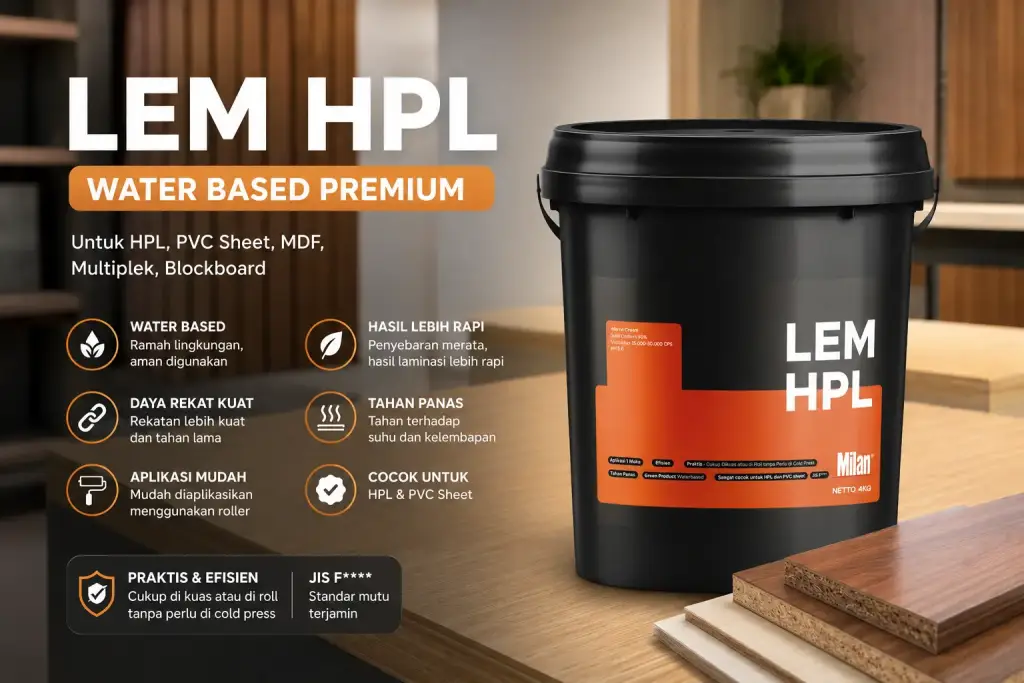
Before learning how to use HPL adhesive, Milanians need to know which products offer strong adhesion for various materials.
The answer is in Milan HPL Glue Since it falls into the category of water-based adhesives, this type of adhesive provides strong bonding with a low odor and is environmentally friendly.
The advantage of Milan HPL Adhesive is that users only need to apply it to one side of the surface and can immediately affix the material without waiting for it to become partially dry.
Not only that, but there are still many advantages to Milan HPL Adhesive that should be considered as the adhesive of choice for Milanians’ projects, including:
- Water-based
- Flash Off System
- High adhesive strength
- Easy to apply
- Suitable for various types of boards
- The lamination results are neater
- The glue is distributed more evenly
- Suitable for both industrial and furniture applications
How to Use Milan HPL Adhesive for Neater and Stronger Results
1. Prepare the Tools for Applying HPL Adhesive
Gather all the necessary tools, such as a roller, a container for adhesive, a clean cloth, a wooden block, a cutter or router, and the HPL sheets to be installed. Thorough preparation will speed up the installation process and minimize errors during application.
2. Wipe the Surface of the Board with a Clean Cloth
Make sure the surface of the board is completely free of dust, oil, and sawdust. Use a clean, dry cloth to ensure that no debris interferes with the bonding process. This simple step has a significant impact on the quality of the final result.
3. Pour the HPL Adhesive into the Roller
Pour an appropriate amount of Milan HPL Adhesive into the roller tray. Avoid pouring the adhesive directly onto the board, as this can result in uneven adhesive distribution. The roller will help create a more consistent adhesive layer.
4. Apply the Adhesive Evenly Across the Entire Surface of the HPL
Apply the adhesive evenly to the surface of the board and the back of the HPL using a roller. Make sure the entire area is covered with adhesive without missing any spots so that the entire surface has the same adhesive strength.
5. Apply the HPL Sheet
Once the adhesive has reached the flash-off stage, slowly apply the HPL sheet, starting from one side and working toward the other. This technique helps minimize the formation of air bubbles, which can affect the final appearance.
6. Smooth It Out with a Wooden Trowel & Let It Dry
Use a wooden block to apply even pressure across the entire HPL surface. Apply pressure from the center toward the outer edges to allow any trapped air to escape. Afterward, let it sit until the bonding process is completely finished, following the recommended drying time.
7. Trim the Board to the Desired Size
Once the entire surface has bonded properly, trim the edges using a specialized cutter or a router. This finishing process will give the furniture a more precise, clean, and professional look, resulting in a finish that is both aesthetically pleasing and durable.
Want Your HPL Laminate to Adhere Perfectly? Use Milan HPL Adhesive for a Neater Finish!
Simply understanding how to use HPL adhesive isn’t enough. If Milanians want their HPL panels to bond perfectly, one key factor is using a high-quality adhesive.
Therefore, Milanians can use Milan HPL Adhesive – which is designed with a “flash-off” system, meaning it can be applied without having to wait for the adhesive to become semi-dry.
Designed to address the needs and challenges of modern industry, PT Indocipta Wisesa Through its Milan brand—it offers an innovative, water-based HPL adhesive that is environmentally friendly and safe to use.
So, don’t hesitate to use Milan HPL Adhesive. Discuss your needs with Milan’s team of experts by Click the banner below!