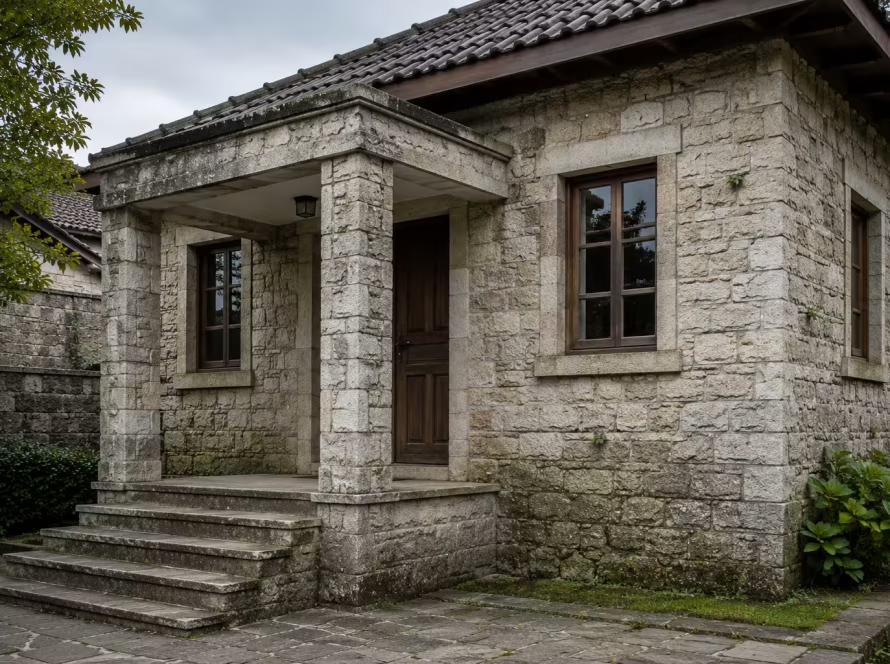
Heritage buildings possess irreplaceable historical, cultural, and architectural value. It’s no wonder, then, that finding ways to protect heritage buildings without altering their original appearance has become a major concern for building owners, cultural heritage site managers, and restoration contractors alike. Proper maintenance not only preserves the structural integrity of the building, but also maintaining the visual elements that define its identity.
From there, Choosing the right protection system is much better rather than undertaking major renovations that risk compromising the building’s authenticity. With the right methods and the use of protective paint, Heritage buildings can be preserved without altering their original facades.
Why Is It Important to Preserve the Appearance of Heritage Buildings?
Heritage buildings are generally constructed using natural materials such as natural stone, exposed brick, lime plaster, and wood, which have characteristics that differ from those of modern materials. Over time, The material will deteriorate due to exposure to rain, UV rays, pollution, moss, mold, and rising humidity.
If left untreated, minor damage such as fine cracks or open pores can develop into more serious structural damage. Not only diminishes the aesthetic value, Such conditions can also significantly shorten the lifespan of a building.
Therefore, efforts to protect heritage buildings without altering their original appearance must prioritize the preservation of materials without obscuring the textures, natural colors, or architectural details that characterize these buildings.
The Challenge of Preserving Heritage Buildings Without Altering Their Facades
Heritage buildings cannot be maintained using ordinary paint or coatings. Many products actually form a thick layer that alters the material’s original color, creates an excessive gloss, or even prevents the surface from “breathing.”.
In addition, The use of incompatible materials can cause moisture to become trapped inside the walls. This results in peeling, mineral salt deposits (efflorescence), and even moss growth, all of which further accelerate the deterioration.
This is why protecting heritage buildings without altering their original appearance requires specialized protective products that can keep the materials dry without changing the building’s visual character.
5 Ways to Protect Heritage Buildings Without Altering Their Original Appearance

1. Identify Damage to Building Materials Early On
Conduct routine inspections of all parts of the building, especially areas frequently exposed to rain and direct sunlight. Check for small cracks, discoloration, moss growth, or areas that are starting to become brittle.
Early intervention is much easier, and the repair costs are lower than those for fixing damage that has already spread.
2. Clean Building Materials Carefully and Gently
Use a soft-bristled brush and clean water to remove any dust, moss, or dirt that has accumulated. Avoid using harsh chemicals or high-pressure equipment, as these can damage the surfaces of natural stone, exposed brick, or original, aged plaster.
3. Use Specialized Building Protective Paint
The most effective way to protect heritage buildings without altering their original appearance is to use a transparent protective coating that repels water while preserving the color and texture of the materials through water-repellent coating.
Water-repellent products work by penetrating the pores of the material, providing protection from within without forming a film on the surface. The recommendation is Milan Omnitect Water Repellent that are equipped with technology effects of taro leaves, which prevents water from seeping in easily and preserves its natural appearance.
See Also: What Is a Water-Repellent Coating and Its Benefits for Buildings
4. Prevent Areas of the Building from Becoming Damp
Make sure the drainage system, gutters, and downspouts are working properly. Constant moisture is the main cause of moss and mold growth, as well as damage to the materials of heritage buildings. Good air circulation also helps keep the building dry.
5. Use the Right Materials to Repair Damaged Parts
If there are any parts that need to be repaired, use materials that characteristics that closely resemble those of the original material. The use of different materials can result in variations in expansion rates, water absorption, and visual appearance, thereby diminishing the authenticity of heritage buildings.
So, What Is the Best Solution for Preserving the Authenticity of Heritage Buildings?
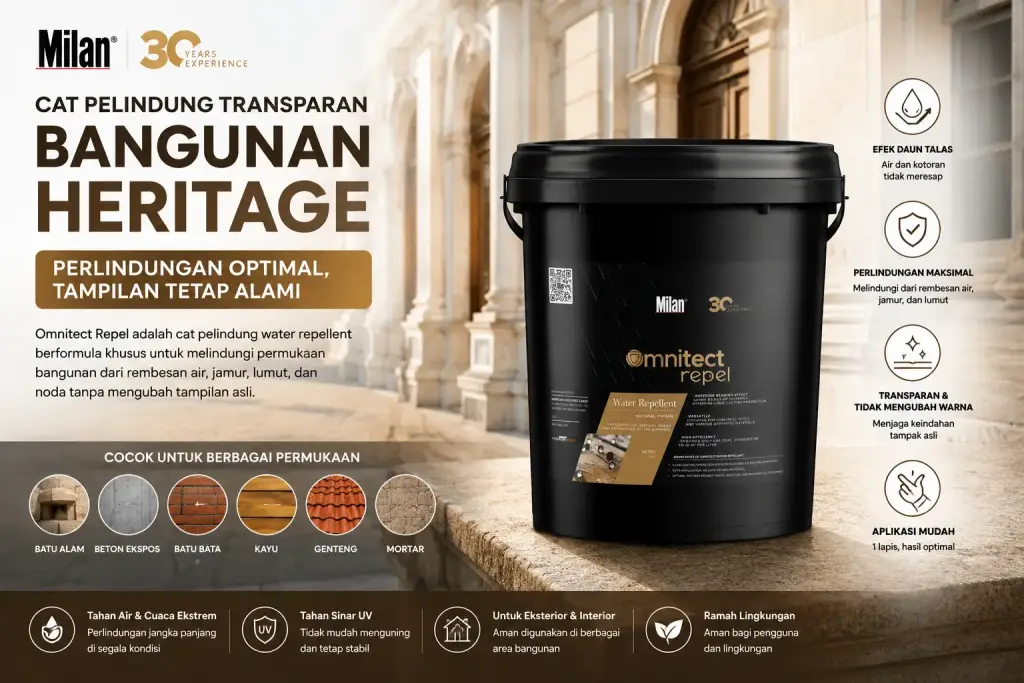
The best solution isn't to repaint the entire building, but rather provides protection that preserves its original appearance. Specialized building protective paint based on water-repellent It can protect natural stone, exposed brick, concrete, and various porous materials from rainwater without altering the color or texture of heritage buildings.
One recommendation that Milanians can use is Milan Omnitect Water Repellent. This product is designed as a transparent protective cover that helps reduce water absorption on the building's surface so that the risk of mold, mildew, and moisture-related damage can be minimized.
As a result, the authenticity of heritage buildings is preserved for longer, and their appearance remains unchanged. As proof, Milan Omnitect Water Repellent is capable of provides protection for the Courtyard Ismaya heritage building in Semarang. Because it can penetrate the pores, Milan Omnitect Water Repellent brings out the natural color and texture of the bricks.
Read More: Milan Omnitect Repel for the Ismaya Courtyard in Semarang
Guide to Using Milan Omnitec Water Repellent to Protect the Appearance of Heritage Buildings
1. Prepare the Building Surface Properly
Before applying Milan Omnitect Water Repellent, make sure the entire surface of the heritage building is clean and dry. Remove any dust, oil, moss, mold, and other debris so that the protective solution can penetrate the material’s pores as thoroughly as possible.
2. Repair Any Damage Before Application
Check for cracks, peeling, or other damage to the building’s surface. Make any necessary repairs first to ensure optimal protection and a neat finish without compromising the material’s authenticity.
3. Stir the Product and Apply It Evenly
Stir Milan Omnitect Water Repellent until it is thoroughly mixed before use. Next, apply it evenly using a brush, roller, or sprayer until the entire surface of the building is well-coated, ensuring no areas are missed.
4. Just Use One Layer
Milan Omnitect Water Repellent is designed to provide optimal protection with just one application. Be sure to apply the coating evenly so that the entire area receives maximum protection against water and moisture.
5. Let It Dry Completely
After application, allow the protective coating to dry and fully penetrate the material. During the drying process, keep the surface away from water or rain to ensure maximum and long-lasting protection.
Milan Omnitect Water Repellent: A Specialized Protective Coating to Preserve the Original Appearance of Heritage Buildings
Don’t let heritage buildings lose their historical value just because of the wrong choice of coating. Milan Omnitect Water Repellent is here provides a transparent protective coating that preserves the material's natural appearance It also helps reduce the risk of damage caused by water, mold, and extreme weather. It is suitable for use on a variety of porous materials without altering the building’s original character.
Don’t hesitate! See for yourself the level of protection that Milan Omnitect Water Repellent provides for heritage buildings. Click the banner below to place an order or consult with us about choosing the right protective paint!