Choosing the right wood glue for furniture production isn’t just about achieving strong adhesion. In large-scale furniture manufacturing, The quality of the adhesive will affect production efficiency, joint strength, the rejection rate, and customer satisfaction with the final product.
Not only that, but the use of wood glue in the furniture industry also speeds up the production process while ensuring consistent results for every unit produced. Therefore, it is important to choose a glue that is suitable for the material’s properties, the production method, and the intended use of the furniture.
Are Milanians looking for recommendations on wood glue for large-scale furniture production? If so, don’t worry—Milanians will find all the information they need in the discussion below!
Why the Furniture Industry Must Choose High-Quality Wood Glue
In furniture production, wood joints are among the components that bear the heaviest loads. If the adhesive’s bonding strength is not optimal, the joints can easily come apart, crack, or delaminate after a certain period of use. These conditions will inevitably increase repair costs.
In addition, The use of high-quality adhesive also affects the efficiency of the production process. Adhesive with the right setting time helps speed up the pressing process, thereby increasing production capacity without compromising the quality of the final product.
Equally important, wood glue that is resistant to heat, moisture, and solvents will makes furniture more durable even when used in various environmental conditions. Therefore, choosing the right wood adhesive for furniture production is a long-term investment for the industry.
Criteria for the Best Wood Glue for Large-Scale Furniture Production
1. Super-Strong and Long-Lasting Adhesion
Furniture production requires adhesives capable of creating strong bonds in various types of joints, such as panel laminating, finger joints, and frame construction. High adhesive strength will reduce the risk of the connection coming loose during the finishing process, shipping, and everyday use, so that product quality is maintained.
2. Resistant to Moisture and Heat
Furniture is often placed in rooms with fluctuating humidity and temperature levels. Therefore, the glue must able to maintain its adhesive strength even when exposed to humid air or relatively high temperatures. This durability helps extend the life of the furniture and maintain the stability of the joints.
3. Remains Stable Despite Temperature Changes
Wood is a material that can shrink due to temperature changes. High-quality glue must have good flexibility so that it can accommodate the wood’s natural movement. without causing the joint to crack or break. This is especially important for furniture used in various regions with different climatic conditions.
4. Already Resistant to Solvents
During the finishing process, furniture generally comes into contact with various types of thinners, coatings, and other chemicals. Adhesives that are resistant to solvents will helps maintain the strength of the joint so that it does not easily deteriorate during the production process or after the furniture has been used.
5. Easy to Apply and Quick-Drying
In industry, production time is a key factor in productivity. An adhesive that is easy to apply, has stable viscosity, and dries quickly will streamline workflows. As a result, the assembly process has become more efficient, production capacity has increased, and operating costs have been reduced.
Mistakes to Avoid When Choosing Wood Glue for Furniture

1. Not Considering the Type of Wood Used
Each type of wood has different pore characteristics, moisture content, and density. Using the wrong adhesive can result in suboptimal bonding strength. Therefore, Make sure to choose the type of adhesive based on the material's properties. used in the production process.
2. Ignoring the Functional Needs of Furniture, Whether for Interior or Exterior Use
Outdoor furniture requires greater resistance to moisture and weather changes. Meanwhile, indoor furniture still requires consistent joint strength for long-term use. Choosing the right adhesive based on the furniture's function will improve its quality the product as a whole.
3. Tempted by Low Prices, People Buy Right Away Even Though the Quality Isn’t Guaranteed
A lower price does seem like a good deal at first. However, if the glue is of poor quality, Production costs may actually increase due to a high number of defective products, damaged joints, or rework. It’s better to choose a high-quality adhesive that has been proven to deliver consistent production results.
4. Not Paying Attention to the Materials Used
The composition of the ingredients in an adhesive greatly affects its performance. High-quality adhesives generally have stronger bonding strength, better resistance to heat and moisture, and greater stability during the production process. Therefore, always check the technical specifications before purchasing a product.
Tips for Optimizing the Use of Wood Glue to Make Production More Efficient
1. Use the Type of Adhesive That Best Suits Your Production Needs
Every production process has different requirements, ranging from laminating, finger jointing, and assembling to veneering. Using an adhesive specifically designed for these applications will produces a stronger joint while also improving work efficiency.
2. Apply the Glue According to the Recommended Amount; Do Not Use Too Much
Using too much glue doesn’t always make the bond stronger. On the contrary, excess glue actually prolongs the drying time, increases material waste, and makes the cleanup process take longer. Use the recommended amount of glue for best results.
3. Use the Right Application Tools
Rollers, brushes, nozzles, and glue spreaders each serve different functions. Using the appropriate application tool will helps the glue spread more evenly so that the entire surface of the wood has consistent adhesion.
4. Follow the Applicable SOPs
Standard Operating Procedures (SOPs) help maintaining consistent production quality. Everything from preparing the wood surface, the amount of adhesive used, the open time, to the pressing process must be carried out according to procedure to ensure the joint has maximum strength.
5. Store the Glue According to the Instructions Provided
Improper storage can reduce the quality of the glue before it is used. Store the product in a clean, dry place away from direct sunlight immediately so that the adhesive’s properties remain stable during storage.
Recommendations for Wood Glue for Large-Scale Furniture Production
Now you know that choosing the right wood glue is crucial for furniture production, right? It’s no wonder that Milanians are also looking for recommendations on the right wood glue for large-scale furniture production.
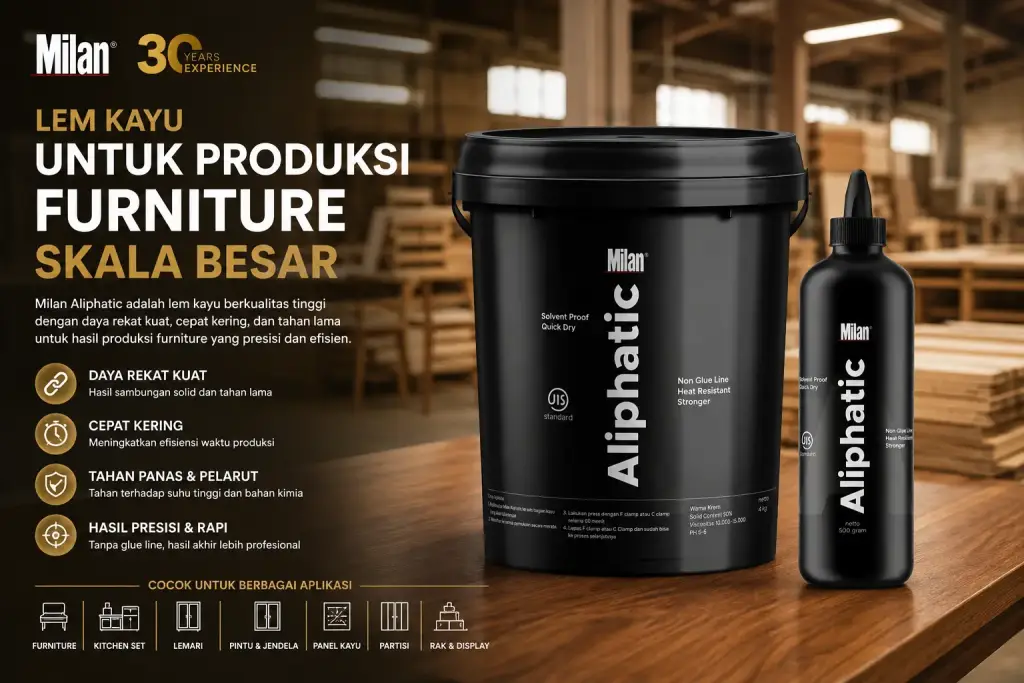
The best solution is for Milanians to use the product Aliphatic Wood Glue, Milan which is specifically designed to provide high bonding strength for various processes, such as panel lamination, finger joints, and the joining of wood components.
Milan Aliphatic It offers the advantages of super-strong adhesion and resistance to heat, moisture, and solvents, so The connection remains secure even with long-term use. In addition, the drying time is relatively short, which helps increase productivity and speed up the production process at the factory.
The formula is also easy to apply and produces clean joints with consistent quality in every production run. This combination of performance features makes Milan Aliphatic the ideal wood adhesive for furniture production in industries that prioritize efficiency, joint strength, and the quality of the final product.
See Also: Understanding Aliphatic Glue: A Professional Adhesive for Woodworking
Steps for Using Milan Aliphatic as a Wood Glue for Large-Scale Furniture Production
1. Make sure the wood surface is clean and ready for gluing
Before beginning the lamination process, make sure the surfaces of the wood to be bonded are free of dust, oil, and dirt so that the adhesive can bond effectively.
2. Apply Milan Aliphatic to One of the Wood Surfaces
Apply Milan Aliphatic to one of the wooden surfaces to be laminated using the appropriate application tool to ensure a smooth and neat finish.
3. Spread the Glue Evenly Over the Entire Joint Area
Spread the adhesive evenly over the entire surface to be bonded. An even layer of adhesive helps create a strong, consistent bond across the entire joint.
4. Press the pieces together using an F-clamp or C-clamp for 60 minutes
Join the two pieces of wood together, then clamp them using an F-clamp or C-clamp for about 60 minutes to ensure the glue bonds properly.
5. Remove the Clamp and Proceed to the Next Production Stage
Once the pressing process is complete, remove the F-clamp or C-clamp. The wood joint is now ready to move on to the next production step, such as sanding, finishing, or assembly, as needed.
Want Faster Furniture Production and Stronger Joints? Use Milan Aliphatic!
Here are some recommendations for wood glues suitable for large-scale furniture production that Milanians can choose from: Milan Aliphatic. This product is designed to provide strong adhesion for joints in all types of furniture and is resistant to both solvents and heat.
Don’t let the wrong choice of adhesive hinder Milanians’ business productivity. Contact the Team Milan, Indonesia now To get a free consultation, product recommendations tailored to your production needs, and the best offers with Click the banner below!