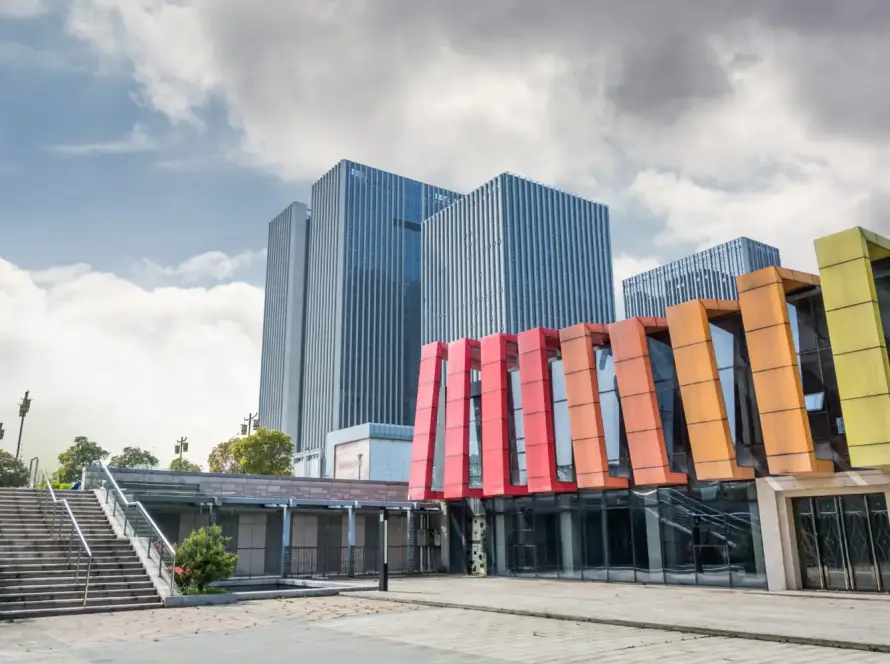
Memilih material dinding rumah bukan cuma soal mana yang terlihat bagus. Milanians juga perlu mempertimbangkan ketahanan, perawatan, kondisi lingkungan, sampai gaya rumah yang ingin ditampilkan.
Dua material yang cukup sering dipertimbangkan adalah fiber cement dan kayu. Keduanya punya karakter yang berbeda.
Fiber cement menawarkan tampilan yang lebih rapi dan fleksibel untuk berbagai konsep, sedangkan kayu punya daya tarik tersendiri dari serat dan karakter alaminya.
Lalu, dalam perbandingan fiber cement vs kayu untuk dinding rumah, mana yang sebenarnya lebih tepat?
Jawabannya tidak selalu sama untuk setiap rumah. Pilihan terbaik bergantung pada lokasi pemasangan, kebutuhan desain, anggaran, serta finishing yang digunakan.
Mengenal Karakteristik Fiber Cement dan Kayu untuk Dinding Rumah
Fiber cement merupakan material berbentuk papan yang dibuat dari campuran semen dan serat. Material ini banyak digunakan sebagai panel dinding karena bentuknya stabil dan dapat diaplikasikan untuk kebutuhan interior maupun eksterior dengan sistem pemasangan yang sesuai.
Dari sisi tampilan, permukaannya dapat diberi finishing dengan berbagai warna atau efek visual sehingga bisa disesuaikan dengan konsep rumah modern, minimalis, industrial, hingga gaya yang mengutamakan tampilan natural.
Beberapa karakteristik fiber cement untuk dinding rumah antara lain:
- Berbentuk papan dengan permukaan relatif seragam
- Dapat digunakan untuk interior dan eksterior
- Bisa diberi berbagai jenis finishing
- Memiliki tampilan modern dan rapi
- Dapat dibuat menyerupai karakter material tertentu melalui finishing
Sementara itu, kayu merupakan material alami yang memiliki karakter visual sangat kuat. Setiap jenis kayu dapat mempunyai warna, pola serat, tekstur, dan tingkat kekerasan yang berbeda. Karena itu, dinding kayu biasanya memberikan kesan hangat dan natural.
Beberapa karakteristik kayu untuk dinding rumah antara lain:
- Memiliki serat dan pola alami
- Memberikan kesan hangat dan natural
- Mempunyai variasi warna berdasarkan jenis kayu
- Dapat dipotong dan dibentuk sesuai kebutuhan
- Membutuhkan perlindungan dan perawatan yang tepat
Dalam memilih fiber cement vs kayu untuk dinding rumah, perbedaan karakter tersebut menjadi pertimbangan awal. Fiber cement cenderung memberikan tampilan yang lebih seragam, sedangkan kayu menawarkan keunikan dari pola alami materialnya.
Perbedaan Fiber Cement dan Kayu sebagai Material Dinding Rumah
| Aspect | Fiber Cement | Wood |
| Karakter material | Papan berbasis semen dan serat | Material alami |
| Appearance | Rapi, modern, dan seragam | Natural, hangat, dan bertekstur |
| Pola permukaan | Relatif konsisten | Berbeda-beda mengikuti serat kayu |
| Fleksibilitas desain | Tinggi melalui pilihan finishing | Tinggi melalui jenis kayu dan finishing |
| Penggunaan | Interior dan eksterior dengan aplikasi yang sesuai | Interior dan eksterior dengan jenis kayu dan perlindungan yang sesuai |
| Perawatan | Bergantung pada jenis finishing dan kondisi pemasangan | Perlu perhatian terhadap kondisi kayu dan lapisan finishing |
| Kesan visual | Modern dan minimalis | Natural dan elegan |
| Biaya | Bervariasi berdasarkan jenis dan sistem pemasangan | Sangat bergantung pada jenis kayu |
| Finishing | Dapat disesuaikan dengan warna dan efek yang diinginkan | Dapat mempertahankan atau menonjolkan serat alami |
| Suitable for | Rumah modern, minimalis, industrial, dan kombinasi material | Rumah natural, rustic, Japandi, dan konsep hangat |
Tabel tersebut menunjukkan bahwa tidak ada material yang mutlak lebih unggul dalam semua kondisi. Perbandingan fiber cement vs kayu untuk dinding rumah sebaiknya dilakukan berdasarkan kebutuhan proyek, bukan hanya harga atau penampilan awal.
See Also: 6 Fiber-Cement Wall Design Ideas for Modern and Minimalist Homes
Lebih Unggul Mana dari Segi Ketahanan dan Kekuatan?
Jika membahas ketahanan, fiber cement memiliki karakter yang berbeda dari kayu karena materialnya berbasis semen dan serat. Namun, performa dinding tetap dipengaruhi oleh kualitas papan, konstruksi rangka, pemasangan, sambungan, serta finishing yang digunakan.
Kayu juga dapat menjadi material dinding yang kuat apabila jenis kayu, kadar air, konstruksi, dan perlindungannya diperhatikan. Tantangannya, kayu merupakan material alami sehingga kondisi lingkungan dan perawatan dapat memengaruhi penampilannya dari waktu ke waktu.
Untuk area yang menghadapi perubahan cuaca, pemilihan material saja tidak cukup. Milanians juga perlu memastikan detail pemasangan dan sistem finishing sesuai dengan kondisi penggunaan.
Jadi, dalam aspek fiber cement vs kayu untuk dinding rumah, keduanya dapat digunakan dengan baik selama spesifikasi material dan metode aplikasinya sesuai kebutuhan.
Nilai Estetika Fiber Cement dan Kayu untuk Berbagai Gaya Rumah
1. Rumah Modern dan Minimalis – Cocok Kombinasi Fiber Cement + Kayu
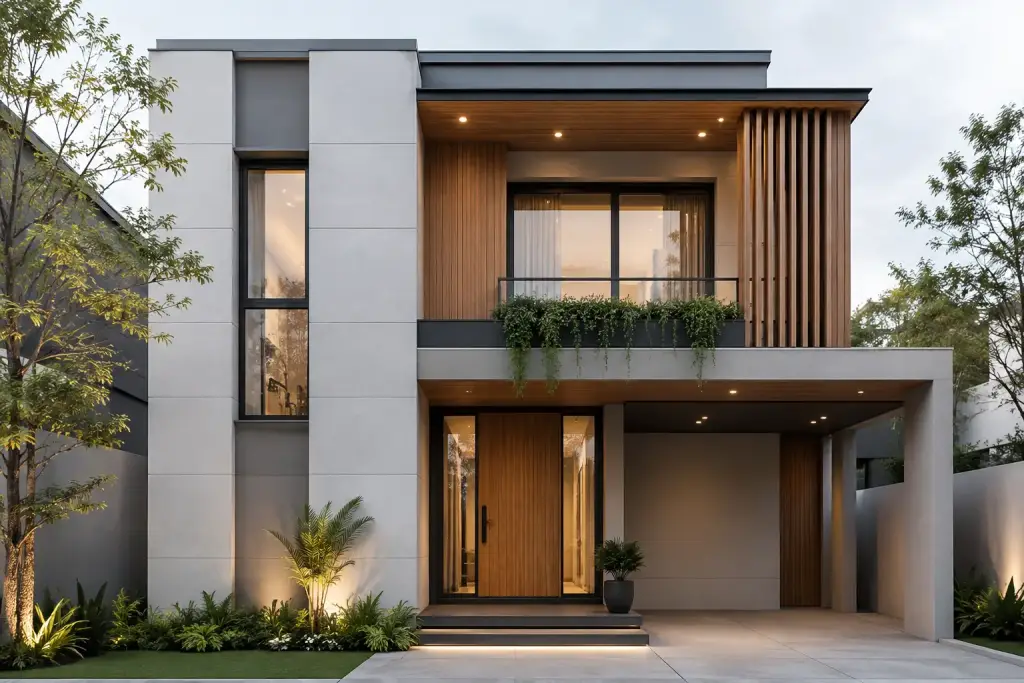
Kombinasi fiber cement dan kayu cocok untuk rumah modern dan minimalis karena menghasilkan kontras antara permukaan yang rapi dengan tekstur alami.
Fiber cement dapat digunakan sebagai bidang utama, sementara kayu menjadi aksen pada area tertentu agar fasad tidak terlihat terlalu monoton.
2. Rumah Gaya Japandi – Kayu Pilihan Terbaik
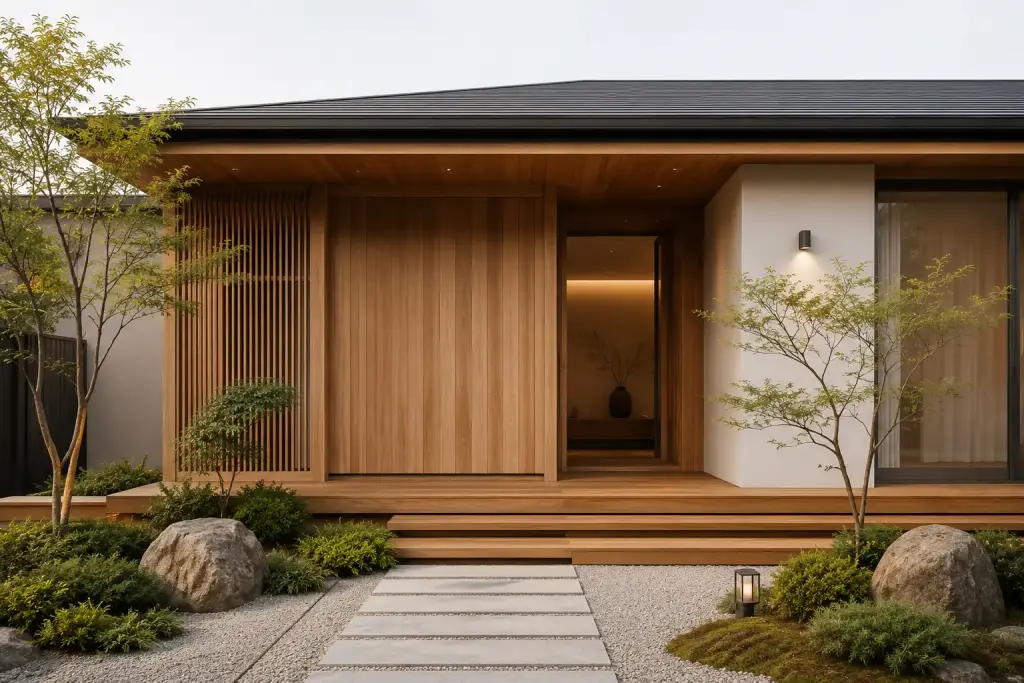
Gaya Japandi mengutamakan kesederhanaan, warna natural, dan suasana hangat. Kayu dapat menjadi pilihan utama karena serat alaminya mampu memperkuat karakter tersebut.
Penggunaan warna kayu yang lembut juga membantu menciptakan tampilan rumah yang tenang dan tidak berlebihan.
3. Rumah Gaya Skandinavia – Perpaduan Fiber Cement + Kayu
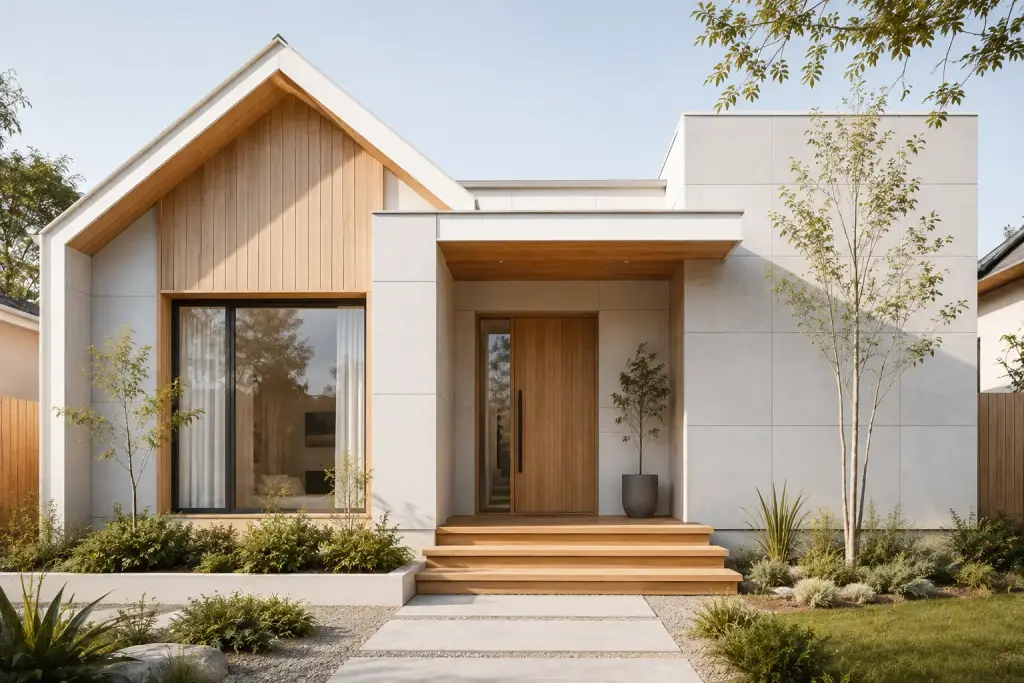
Rumah Skandinavia identik dengan warna terang, bentuk sederhana, dan material natural.
Fiber cement dapat memberikan bidang dinding yang bersih, sedangkan kayu digunakan sebagai aksen untuk menambahkan kehangatan. Perpaduan keduanya membuat tampilan tetap minimalis tetapi tidak terasa kaku.
4. Rumah Industrial Modern – Fiber Cement Lebih Cocok
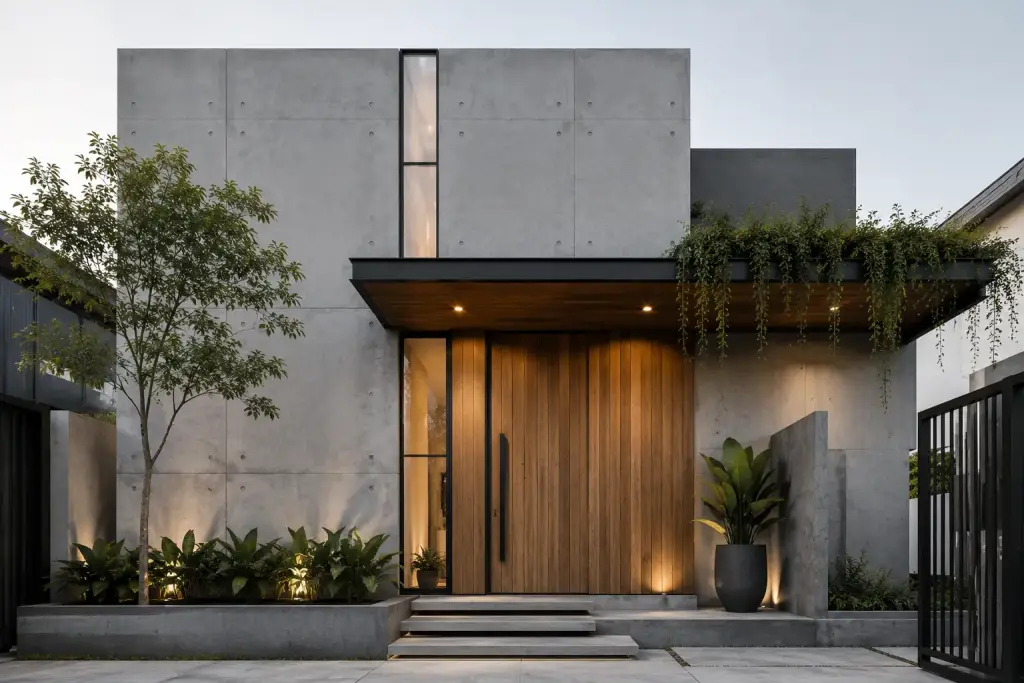
Untuk konsep industrial modern, fiber cement dapat memberikan tampilan yang lebih tegas dan sederhana.
Permukaannya bisa dipadukan dengan material seperti metal, kaca, atau beton ekspos untuk menciptakan karakter industrial yang kuat.
5. Rumah Rustic – Cocok Menonjolkan Serat Alami Kayu
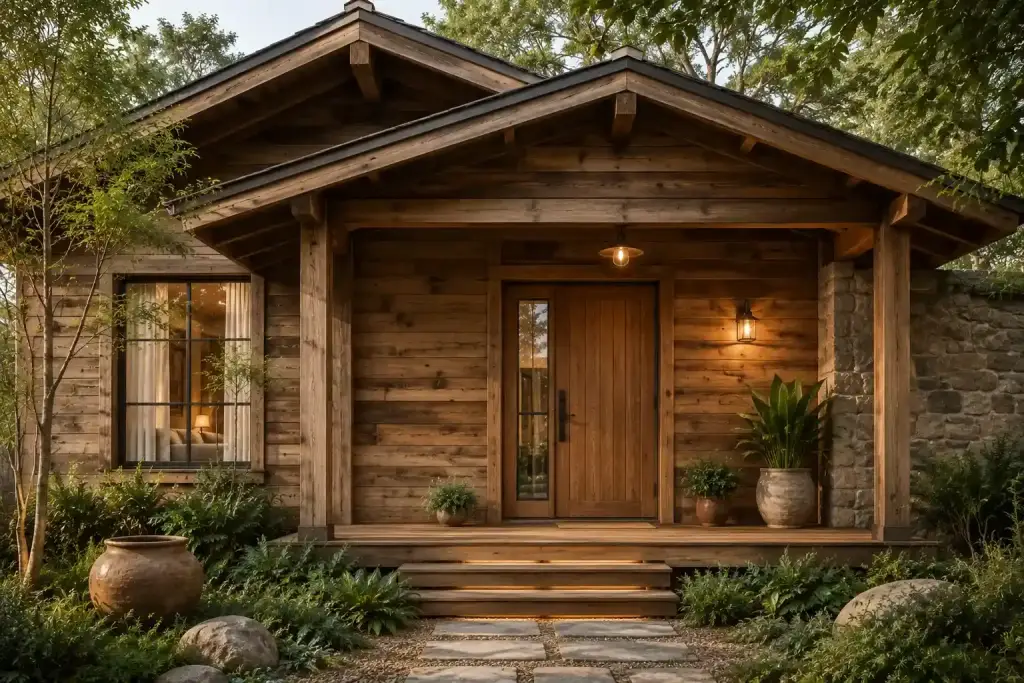
Konsep rustic sangat mengandalkan karakter material alami. Karena itu, kayu menjadi pilihan menarik untuk dinding karena pola serat, warna, dan teksturnya dapat menjadi elemen visual utama.
Finishing yang tepat dapat membantu mempertahankan kesan natural sekaligus membuat permukaannya terlihat lebih elegan.
Hal yang Perlu Dipertimbangkan Sebelum Memilih Material Dinding Rumah
1. Daya Tahan Material terhadap Perubahan Cuaca
Untuk dinding eksterior, material akan menghadapi panas, hujan, kelembapan, dan perubahan kondisi lingkungan.
Pilih material dan sistem finishing yang sesuai dengan tingkat paparan tersebut. Jangan hanya melihat material dasarnya, tetapi perhatikan juga perlindungan permukaannya.
2. Konsep dan Gaya Desain Rumah
Pertimbangkan karakter visual yang ingin ditampilkan. Fiber cement lebih mudah diarahkan ke tampilan modern dan minimalis, sedangkan kayu kuat untuk menghadirkan nuansa natural. Keduanya juga bisa dikombinasikan agar desain terlihat lebih dinamis.
3. Kemudahan Perawatan dalam Jangka Panjang
Dinding bukan hanya perlu terlihat bagus setelah selesai dipasang. Milanians perlu mempertimbangkan bagaimana material tersebut dirawat dan bagaimana finishing-nya dipertahankan dalam jangka panjang.
See Also: Fiber-Cement Board Paint: A Wall Protection Solution with a Natural Look
4. Karakter Material terhadap Lokasi Pemakaian
Material untuk dinding interior tidak selalu membutuhkan pertimbangan yang sama dengan dinding eksterior. Area yang terkena hujan, sinar matahari, atau kelembapan tinggi membutuhkan pemilihan material dan finishing yang lebih cermat.
5. Anggaran yang Dimiliki
Biaya tidak hanya berasal dari harga material. Hitung juga rangka, pemasangan, finishing, tenaga kerja, dan perawatan.
Kayu dengan jenis tertentu dapat memiliki harga cukup tinggi, sementara biaya fiber cement juga dipengaruhi oleh spesifikasi papan dan sistem pemasangannya.
6. Hasil Finishing untuk Menonjolkan Estetika
Finishing sangat menentukan hasil akhir dinding. Warna, tingkat transparansi, efek permukaan, dan teknik aplikasi dapat membuat material yang sama terlihat berbeda.
Jika Milanians memilih fiber cement dan ingin mendapatkan tampilan yang lebih elegan, Milan Acqua Fiber dapat menjadi salah satu pilihan untuk membantu memberikan tampilan akhir pada papan fiber cement sesuai konsep desain yang diinginkan.
Sementara itu, jika memilih kayu dan ingin tetap menonjolkan keindahan serat alaminya, Milan Acqua Stain dapat menjadi pilihan. Finishing stain membantu mempertahankan karakter visual kayu sehingga seratnya tetap menjadi bagian penting dari tampilan dinding.
Mana yang Lebih Cocok untuk Dinding Interior maupun Eksterior Rumah?
| Area Pemakaian | Fiber Cement | Wood | Pertimbangan |
| Dinding ruang tamu | Sangat cocok | Cocok | Sesuaikan dengan konsep interior |
| Dinding kamar | Cocok | Cocok | Utamakan estetika dan kemudahan perawatan |
| Dinding aksen | Sangat cocok | Sangat cocok | Keduanya dapat menjadi focal point |
| House facade | Cocok | Cocok | Perhatikan sistem perlindungan dan finishing |
| Dinding eksterior | Cocok dengan spesifikasi yang sesuai | Cocok dengan jenis dan perlindungan yang sesuai | Paparan cuaca harus diperhitungkan |
Dengan demikian, fiber cement vs kayu untuk dinding rumah tidak harus selalu dipilih salah satu. Pada desain tertentu, kombinasi keduanya justru dapat menghasilkan tampilan yang lebih menarik.
See Also: Discover 6 Wood Finishing Trends for Modern Minimalist Home Interiors
Jadi, Fiber Cement vs Kayu: Mana yang Lebih Tepat untuk Dinding Rumah?
Jika Milanians menginginkan material dengan tampilan yang rapi, modern, dan fleksibel terhadap berbagai konsep desain, fiber cement bisa menjadi pilihan yang praktis. Material ini juga menarik ketika dipadukan dengan aksen kayu untuk menghasilkan fasad yang lebih hidup.
Sebaliknya, kayu lebih tepat jika prioritas utama adalah karakter alami, tekstur, dan kehangatan visual. Serat kayu dapat menjadi elemen dekoratif yang sulit sepenuhnya digantikan oleh material lain.
Jadi, pilihan terbaik dalam fiber cement vs kayu untuk dinding rumah kembali pada kebutuhan proyek.
Untuk rumah modern atau industrial, fiber cement bisa lebih dominan. Untuk Japandi atau rustic, kayu dapat menjadi pilihan utama. Sedangkan untuk desain yang lebih fleksibel, kombinasi keduanya bisa menjadi solusi.
Peran Finishing dalam Menghasilkan Tampilan Dinding Lebih Natural
Material dasar hanya menentukan sebagian dari tampilan akhir dinding. Finishing justru memiliki peran besar dalam menentukan warna, karakter, dan kesan visual yang terlihat setelah pekerjaan selesai.
Pada fiber cement, finishing dapat digunakan untuk membuat permukaannya tampil lebih menarik dan menyatu dengan konsep rumah. Sementara pada kayu, finishing dapat membantu memperkuat karakter serat sekaligus memberikan tampilan warna yang sesuai dengan desain.
Jadi, Milanians sebaiknya tidak memilih material dinding tanpa mempertimbangkan finishing sejak awal. Material, warna, teknik aplikasi, dan kondisi lokasi pemasangan perlu dipikirkan sebagai satu kesatuan agar hasil akhirnya tidak hanya kuat, tetapi juga terlihat rapi dan elegan.
See Also: Melamine vs. NC vs. PU: Which Wood Finish Is Best for Your Project?
Rekomendasi Produk Finishing Dinding Rumah Sesuai Pilihan Material
1. Milan Acqua Fiber – Cocok untuk Papan Fiber Cement dengan Tampilan Elegan
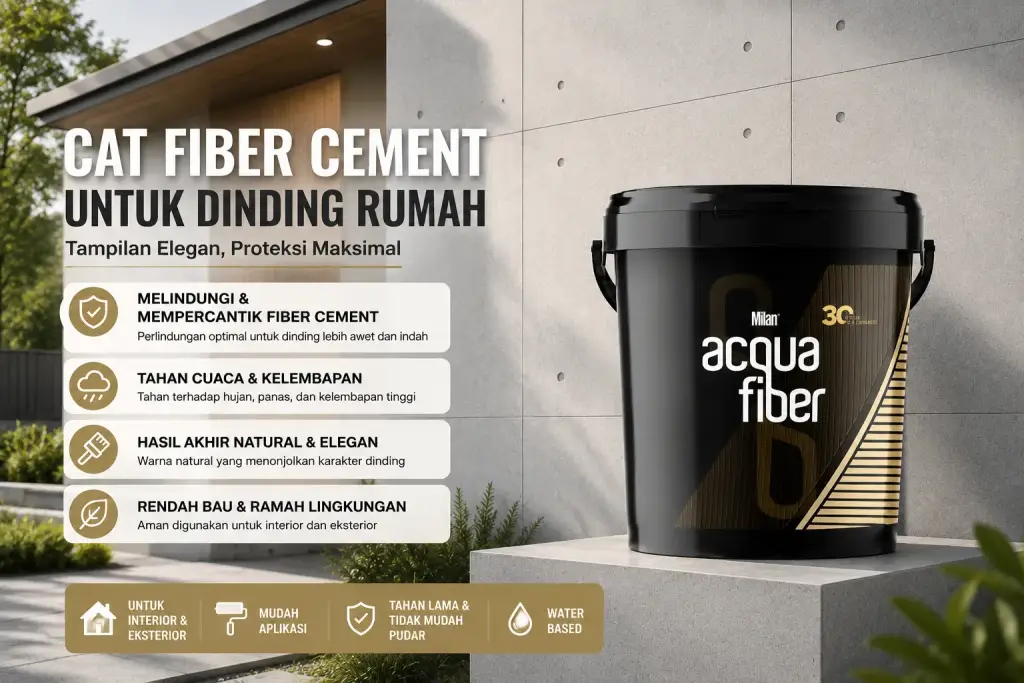
Milanians lebih pilih papan fiber cement sebagai material dinding rumah?
Segera berikan perlindungan maksimal dari paparan cuaca ekstrem dengan menggunakan cat khusus papan fiber cement dari Milan Acqua Fiber.
Milan Acqua Fiber hadir untuk memberikan tampilan dinding fiber cement lebih natural dan elegan. Bahkan, produk ini mampu membuat bangunan tampak lebih artistik, hangat, serta modern.
Tidak hanya itu, Acqua Fiber juga sudah dilengkapi teknologi khusus, sehingga tahan terhadap cuaca dan anti jamur serta lumut. Jadi, sangat cocok untuk kebutuhan eksterior maupun interior rumah.
2. Milan Acqua Stain – Pilihan Terbaik Memperindah Serat Kayu pada Dinding
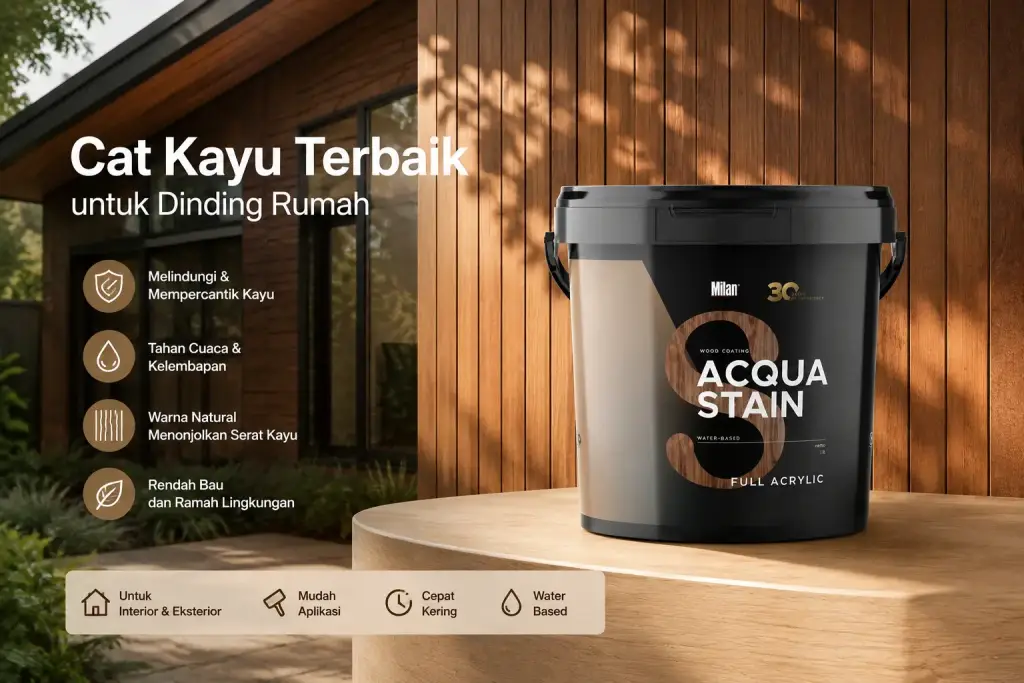
Kalau Milanians ingin tampilan dinding lebih alami dan natural, material kayu bisa digunakan dengan tambahan finishing dari Milan Acqua Stain.
Milan Acqua Stain adalah cat kayu berbasis air dengan teknologi nano-particle pigment khusus untuk memperindah serat kayu.
Karakter serat yang terlihat dapat memberikan kesan lebih hangat dan natural, sehingga cocok untuk dinding dengan konsep Japandi, rustic, natural, maupun desain modern yang menggunakan aksen kayu.
Produk ini juga sudah dilengkapi teknologi anti jamur, lumut, dan serangga. Perlindungan terhadap perubahan cuaca juga sangat maksimal. Jadi, cocok untuk kebutuhan dinding rumah interior maupun eksterior.
Ingin Miliki Dinding Rumah Elegan, Modern, dan Natural? Konsultasikan Kebutuhan Material dan Finishing Bersama Milan!
Memahami perbandingan fiber cement vs kayu untuk dinding rumah saja tidak cukup. Karena, masih banyak aspek yang Milanians perlu pertimbangkan sebelum membangun rumah agar sesuai harapan.
Bersama PT Indocipta Wisesa lewat brandnya – Milan, akan membantu menentukan mana material dan finishing yang tepat untuk gaya rumah impian Milanians.
Berpengalaman sejak 1994 – 30 tahun berlalu sebagai perusahaan Innovative Coating and Adhesive Solutions, Milan berhasil menghadirkan berbagai produk finishing sesuai kebutuhan masyarakat.
Cat khusus fiber cement dari Milan Acqua Fiber dan cat kayu transparan dari Milan Acqua Stain termasuk produk unggulan dari PT Indocipta Wisesa.
Jika Milanians masih bingung ingin menggunakan material dan finishing untuk dinding rumah, konsultasikan kebutuhannya bersama Tim Ahli Milan – kami siap membantu.
Klik banner di bawah ini untuk menghubungi Tim Ahli Milan!