In the paint and adhesive industry, hardeners play a crucial role. They transform ordinary liquid paint into a tough and durable protective coating.
Therefore, before using it for industrial applications, it’s best to first understand its definition, function, and proper application to achieve the best results.
What Is a Hardener and Why Is It Important?
Simply put, a hardener is a chemical substance mixed into paint—particularly two-component paint—to trigger a chemical reaction called polymerization. This reaction transforms the paint from a liquid to a solid state, forming strong molecular bonds and producing a hard paint film.
Without a hardener, two-component paints such as epoxy paint, duco paint, or polyurethane varnish will never dry completely. The paint will simply remain sticky and will not form a hard protective film.
Function of the Hardener
The primary function of a hardener is to harden paint, but its benefits are far more complex and essential. Here are some of the functions that make it an integral part of the professional painting process:
1. Speeding Up the Drying Process
A hardener significantly reduces drying or curing time. This allows the paint to dry faster and be ready for the next coat or ready for use in a short amount of time.
2. Improving Strength and Durability
The polymerization reaction creates very strong molecular bonds, resulting in an extremely hard paint coating. This coating is more resistant to scratches, impacts, and abrasion.
3. Improving Chemical Resistance
Paint mixed with a hardener will be more resistant to exposure to chemicals, oils, or substances corrosive others. This is especially important for painting in industrial settings, workshops, or areas frequently exposed to chemicals.
4. Enhancing Shine and Aesthetics
Many hardeners are designed to provide a glossier and smoother finish. This enhances the aesthetic appeal of the painted surface, making it look more premium and professional.
5. Preventing Yellowing
A high-quality hardener can prevent paint coatings—especially white or light-colored ones—from yellowing due to UV exposure or aging.
Types of Hardener Based on Their Applications
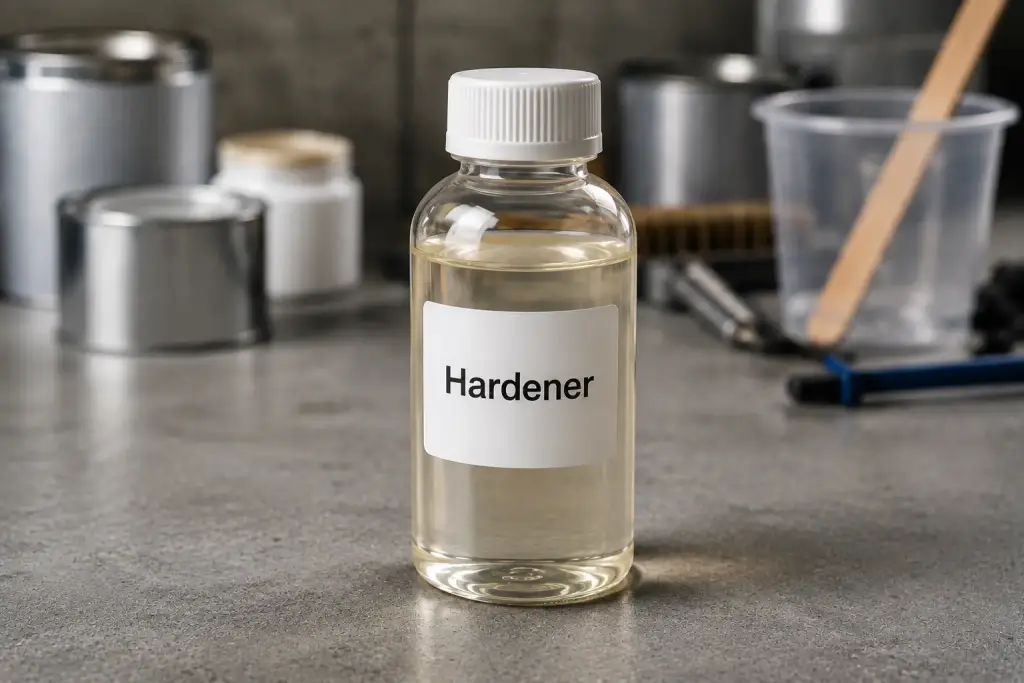
Hardener cannot be used indiscriminately. Each type of paint requires a specific hardener. Using the wrong hardener can damage the paint or even prevent it from drying properly. Here are some common types of hardeners available on the market:
1. Hardener for Epoxy Paint
- Application: Epoxy paint is the most popular type of two-component paint. The hardener for epoxy is typically made from amine or polyamide.
- Uses: Epoxy paint with a hardener is very commonly used to coat concrete floors, garages, furniture, and handicrafts. The result is an extremely hard, glossy, and durable finish.
2. Hardener for Duco & Polyurethane (PU) Paint
- Applications: Used for painting vehicles, wooden furniture, and metal. Hardener for duco and PU is essential for achieving a solid, glossy, and weather-resistant finish.
- Uses: Provides excellent protection against scratches, stains, and sunlight, helping to prevent the paint color from fading quickly.
3. Hardener for Wood Glue (Epoxy)
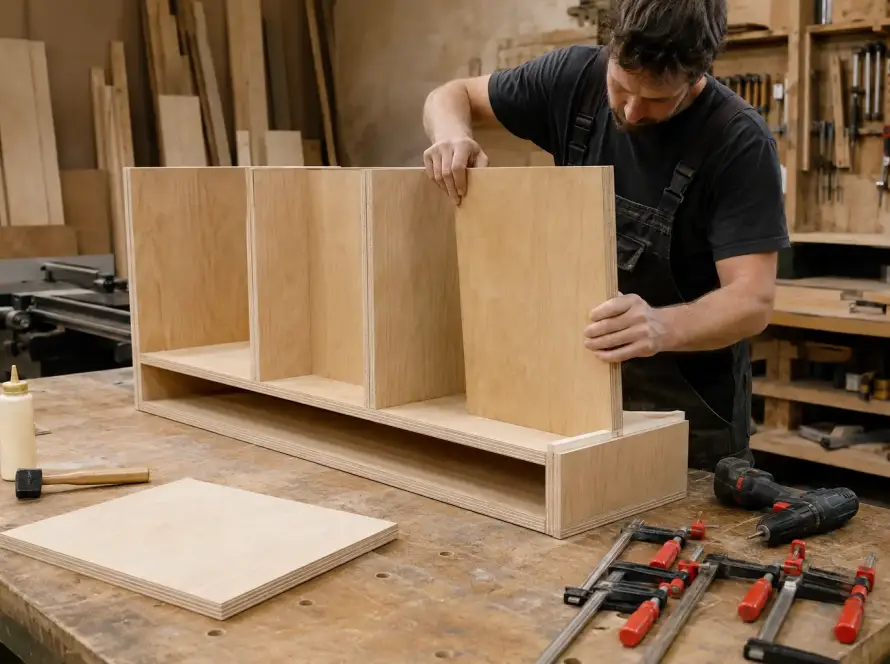
- Application: Hardener is also highly relevant for epoxy adhesives. Hardener and wood glue are essentially the same product, but are tailored for bonding applications.
- Uses: This hardener ensures that the epoxy adhesive dries completely and creates an extremely strong bond—far stronger than that of ordinary wood glue. It is essential for assembling furniture, repairing cracks, or making wood crafts.
- Milan Epoxy Adhesive uses resin and hardener to produce a strong adhesive bond that is waterproof, solvent-resistant, and resistant to various environmental conditions.
See Also: What Is Epoxy Adhesive? Its Functions and Advantages for Modern Industry
How to Use a Hardener Correctly
Installing a speaker isn’t actually difficult, as long as you follow the manufacturer’s instructions carefully. Follow the instructions below.
1. Preparation of Tools and Materials
Prepare the paint, hardener, mixing container, stirrer, and application tools (brush/spray gun). Make sure the work area is well-ventilated.
2. Pay Attention to the Mix Ratio
This is the most crucial step. Each brand and type of paint has a different hardener mixing ratio. Usually, this ratio is listed on the packaging, for example, 2:1 (Paint:Hardener). If the ratio is 2:1, that means for every 2 parts of paint, you must mix in 1 part of hardener.
3. The Proper Mixing Process
- Pour the paint into the mixing container according to the specified amount.
- Add the hardener according to the ratio.
- Stir the mixture gently and thoroughly for a few minutes. Make sure there are no lumps or parts that aren’t fully mixed.
4. Working Time (Pot Life)
A mixture of paint and hardener has a limited usable life, known as pot life. This is the amount of time during which the mixture can still be applied properly before it begins to dry.
Once the pot life has elapsed, the mixture will harden and can no longer be used. The pot life typically ranges from 30 minutes to several hours. Plan your work carefully and don’t mix too much at once.
5. Apply the Paint According to the Instructions
Once the mixture is ready, apply it immediately to the prepared surface. Follow the recommended application method (for example, apply with a spray gun for a smooth finish).
6. Drying Time
After application, let the paint dry. The time to reach a tack-free state and the time to fully cure will be shorter thanks to the hardener.
See Also: A Basic Introduction to Water-Based Paint: Everything You Need to Know
Frequently Asked Questions (FAQ)
Does every type of paint require a hardener?
No. Only two-component (2K) paints require a hardener. Examples include epoxy paint, PU paint, and duco paint. One-component (1K) paints can dry on their own.
What happens if the hardener ratio is too high or too low?
Too much: The paint will dry too quickly, be difficult to apply, and the final result may be brittle or crack.
Too little: The paint will take a long time to dry and may not even harden completely. The result will remain sticky and peel off easily.
Can a hardener be mixed with paint from a different brand?
It’s best to avoid this. Each manufacturer produces a hardener specifically designed for its paint formulations. Mixing different brands risks a chemical reaction failure and can damage the paint. Always use a hardener from the same paint brand.
What is the correct ratio of hardener to paint?
The mixing ratio of hardener to paint varies widely depending on the type and brand of the product. Generally, common ratios are 2:1, 4:1, or 1:1.
How long does it take for epoxy paint mixed with a hardener to dry?
The drying time for two-component paint consists of two stages:
Touch-Dry: Usually within a few hours (2–6 hours), the paint is no longer sticky to the touch.
Full Cure: This process takes longer—anywhere from 7 to 14 days—to allow the paint to reach its optimal hardness and durability.
Can hardener be used with all types of paint?
No. Hardener is only used for two-component paints, such as epoxy, duco, or polyurethane paints. Using hardener with one-component paints, such as wall paint or oil-based paint, will not provide any benefits; in fact, it will damage the paint.
Is hardener dangerous?
Yes. Basically, this hardener is a chemical that is reactive. This means that if it comes into contact with the skin, it can cause irritation, and inhaling its fumes can be harmful to our respiratory system.
Can hardener be mixed with thinner?
No. These are two materials with different functions. A hardener makes the paint hard, while thinner, on the other hand, thins the paint so it’s easier to use.
We must mix the hardener and thinner into the paint separately, according to the recommended instructions for use.
Why won't the paint dry even though I've mixed in the hardener?
There are several common causes:
1. Incorrect Mix Ratio: Too little hardener.
2. Expired: Has deteriorated due to exposure to air or has passed its shelf life.
3. High Temperature or Humidity: Less-than-ideal environmental conditions can hinder the drying process.
Can an opened bottle of hardener still be used?
The hardener will react with moisture in the air. Once the package is opened, its quality will deteriorate over time. Therefore, store any remaining hardener in a tightly sealed container in a cool, dry place to extend its shelf life.
Can a hardener be used with wood glue?
Yes. Especially for epoxy-based wood glue, the hardener is an essential component that must be mixed in to activate the adhesive. This mixture produces an extremely strong bond—far superior to that of regular wood glue.
What is a PU hardener and what is it used for?
PU hardener is a hardener specifically designed for polyurethane-based paints or varnishes. It is used to make PU paint coatings extremely hard, abrasion-resistant, water-resistant, and provide a high-gloss finish.
How long can an unopened bottle of hardener be stored?
The shelf life of unopened products is typically 1–2 years. To ensure quality, check the expiration date printed on the packaging. Store in a cool, dry place, away from direct sunlight.
Conclusion
A hardener is not merely an additive, but a vital chemical component that determines the quality and longevity of the painted finish. Its role in triggering the polymerization reaction is key to transforming a liquid paint coating into a hard, scratch-resistant, chemical-resistant, and durable protective layer.
Understanding the function of a trowel and knowing the correct mixing ratio is what separates amateur painting results from professional ones.
The proper use of hardeners—especially in epoxy paints and epoxy adhesives—ensures that our final products will have strong bonds and maximum durability.
If you need a hardener for epoxy adhesive, you can consult with Milan’s team of experts. That’s because Milan offers Epoxy Adhesive using a combination of high-quality resin and hardener to produce a strong, long-lasting bond.
Let’s discuss your industrial needs with Milan’s team of experts—just click the banner below!