Choosing a wall finish is often considered the final step in the construction or renovation process. In fact, this is precisely where both the appearance and durability of the walls are largely determined.
Choosing the right wall finish is not just a matter of aesthetics. The right finish can make walls more durable, easier to clean, and resistant to moisture, and can even protect the building from weather changes.
If you’re planning to build a house, office, warehouse, or commercial building, understanding how to choose wall finishes from the start will help you avoid unnecessary repair costs down the road.
Why Is Wall Finishing Important? What Are the Reasons?
Wall finishing is the final layer that both protects and enhances the appearance of a wall’s surface. Without the proper finishing, walls are more prone to absorbing water, developing mold, developing hairline cracks, and fading quickly.
In addition to providing protection, finishes also affect the comfort of a room. For example, finishes with a certain level of light reflectivity can make a room feel brighter or warmer. On building exteriors, high-quality finishes help reduce damage caused by the sun’s heat, rain, dust, and pollution.
Another reason is cost efficiency in maintenance. Walls with finishes chosen based on practical needs are generally easier to clean, less prone to peeling, and have a longer lifespan than finishes selected solely based on color or trends.
Differences in Wall Finishes for Interiors and Exteriors
1. Finishing Functions
Interior finishes focus more on aesthetics, comfort, and ease of maintenance. In contrast, exterior finishes are designed to provide maximum protection against the weather, UV rays, rain, and extreme temperature fluctuations.
2. Characteristics
Interior finishes typically have a smoother texture and provide a neat, polished finish. Exterior finishes, on the other hand, have higher adhesion and a stronger coating so they can withstand various environmental conditions.
3. Weather Resistance
The most notable difference lies in weather resistance. Exterior finishes must be resistant to rain, heat, humidity, and the growth of moss and mold. In contrast, interior finishes do not require a high level of weather protection.
4. Ingredients or Formulation
Interior finishes generally have low VOC content, making them safer for indoor use. Exterior finishes, on the other hand, contain resins and special additives that enhance their resistance to sunlight, water, and pollution.
5. Type of Paint Selected
Interior paint is typically chosen for its smooth finish and ease of cleaning. For exterior areas of a building, exterior paint is selected because it is highly elastic, fade-resistant, and capable of maintaining its vibrant color over the long term.
6. Final Finish on the Wall Surface
Interior finishes are available in a variety of options, such as matte, eggshell, satin, and semi-gloss, depending on design needs. Exterior finishes, on the other hand, more often use satin or low-sheen finishes because they help conceal stains and are weather-resistant.
7. Maintenance
Interior walls can generally be cleaned simply by using a damp cloth or sponge. In contrast, exterior surfaces require periodic cleaning to remove dust, moss, or mold in order to maintain their appearance.
See Also: Discover 6 Wood Finishing Trends for Modern Minimalist Home Interiors
Types of Finishes Suitable for Interior and Exterior Walls
| Types of Finishes | Suitable for | Characteristics | Advantages |
| Matte | Interior | Does not reflect light | Elegant, conceals imperfections |
| Eggshell | Interior | Slightly shiny | Easy to clean |
| Satin | Interior & Exterior | Medium gloss | Stain-resistant and durable |
| Semi-Gloss | Interior | Shiny | Easy to wash |
| Gloss | Specific interiors | Very shiny | Resistant to high humidity |
| Elastomeric Coating | Exterior | Elastic | Sealing split ends |
| Textured Finish | Exterior | Textured | Adding character to the facade |
| Water-Repellent Finish | Exterior | Transparent | Protects against water and mold |
Common Mistakes When Choosing Wall Finishes
1. Neglecting the Finishing Process
Many people use interior products for exterior areas because they’re cheaper. However, this causes the paint to deteriorate quickly, peel, and fade easily.
2. Just Following Trends or FOMO
The colors and types of finishes that are currently popular may not necessarily be suitable for the conditions of your building. The best approach is still to consider the room’s needs, lighting, and the building’s character. So, when choosing a wall finish, don’t just follow what others say or give in to FOMO on social media.
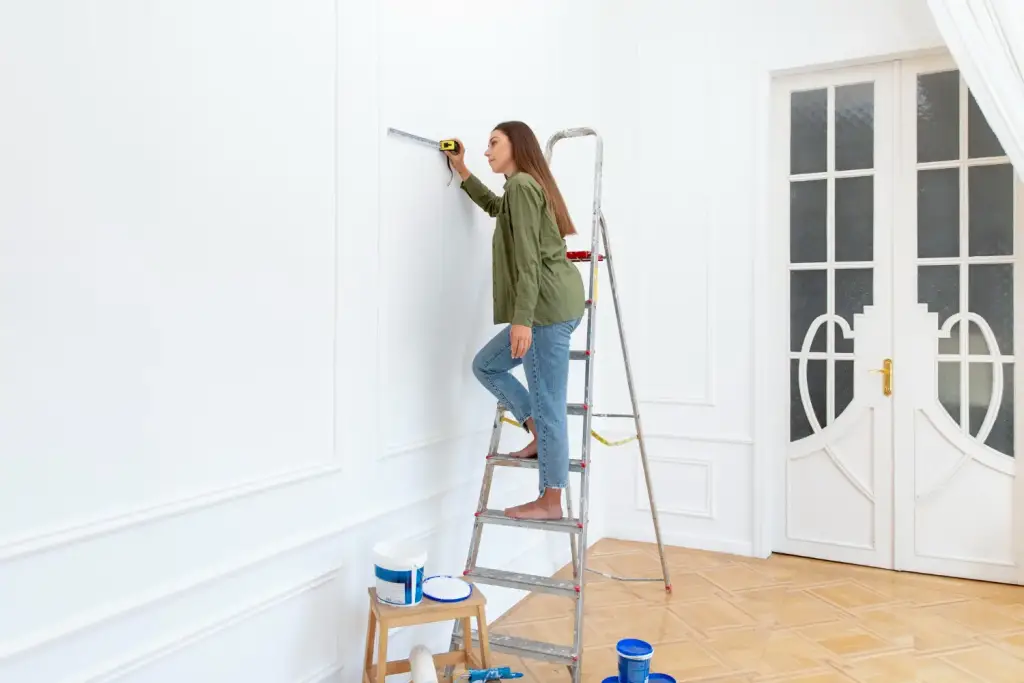
3. The Substrate Was Not Properly Prepared
Even high-quality finishes won’t look their best if applied to walls that are still damp, dusty, or cracked. Surface preparation is an important step before painting.
4. Not Considering the Durability of the Finish
Each type of finish has a different level of durability. High-traffic areas, such as hallways or living rooms, require finishes that are more scratch-resistant and easy to clean.
5. Ignoring Harmony with the Building’s Design
Finishes should complement the overall design concept. For example, minimalist-style homes are better suited to matte or satin finishes, while industrial-style buildings can be paired with textured finishes.
Options for Interior and Exterior Wall Finishing Materials
| Area | Finishing Materials | Characteristics | Suitable for |
| Interior | Wall paint | Easy to apply | Almost every room |
| Interior | Wallpaper | A variety of patterns | Bedroom, living room |
| Interior | PVC Panel | Moisture-resistant | Kitchen, bathroom |
| Interior | Wood Panel | Gives a warm impression | Family Room |
| Interior | Decorative Paint | Artistic effects | Feature wall |
| Interior | Microcement | Modern minimalist | Industrial interior design |
| Exterior | Exterior paint | Weather protection | House facade |
| Exterior | Natural stone | Very durable | Pillar, front wall |
| Exterior | Exterior ceramic tiles | Waterproof | Porch |
| Exterior | Exposed brick | Natural look | Industrial-style house |
| Exterior | WPC Wall Cladding | Weather-resistant | Modern facade |
| Exterior | Textured plaster | Aesthetic | The exterior walls of the building |
How to Choose the Right Wall Finish for Both Interiors and Exteriors
1. Determine the Purpose and Function of Use
The first step in choosing a wall finish is to understand the function of the room. Areas frequently exposed to water require a different finish than a living room or bedroom.
2. Choose the Type of Finish That Best Suits Your Needs
Each type of finish has its own characteristics. A matte finish is ideal for an elegant look, a satin finish is easier to clean, while a textured finish provides both protection and aesthetic appeal to exterior walls.
3. Pay Attention to the Final Gloss Level
The gloss level affects both the appearance and ease of maintenance. Matte gives a soft look, satin offers a balance between aesthetics and durability, while gloss is suitable for areas that require a high level of cleanliness.
4. Match the Design Style
Minimalist homes typically feature matte or satin finishes. Classic styles often use semi-gloss, while industrial designs look more appealing with textured finishes or microcement.
5. Consider How Easy It Is to Maintain
If Milanians have young children or pets, choose a finish that’s easy to clean without compromising color quality. For outdoor areas, choose a finish that’s mold-resistant and fade-resistant to keep maintenance costs down.
See Also: The Secret to a Professional Finish: How to Maximize Transfer Efficiency
Wall Finishing Options Suitable for Both Interiors and Exteriors
| Building Area | Recommended Types of Finishes | Reason |
| Living Room | Matte | Elegant and pleasing to the eye |
| Bedroom | Matte or Eggshell | Creates a warm atmosphere |
| Family Room | Satin | Easy to clean |
| Kitchen | Semi-Gloss | Stain- and oil-resistant |
| Bathroom | Gloss | More resistant to moisture |
| Corridor | Satin | Abrasion-resistant |
| House Facade | Satin Exterior | Weather- and UV-resistant |
| Patio Wall | Textured Finish | Adding character to a building |
| Fence | Satin Exterior Paint | More resistant to heat and rain |
| Park Area | Water-Repellent Finish | Preventing Water Seepage |
Recommendations for High-Quality Finishes for Interior and Exterior Walls of Buildings
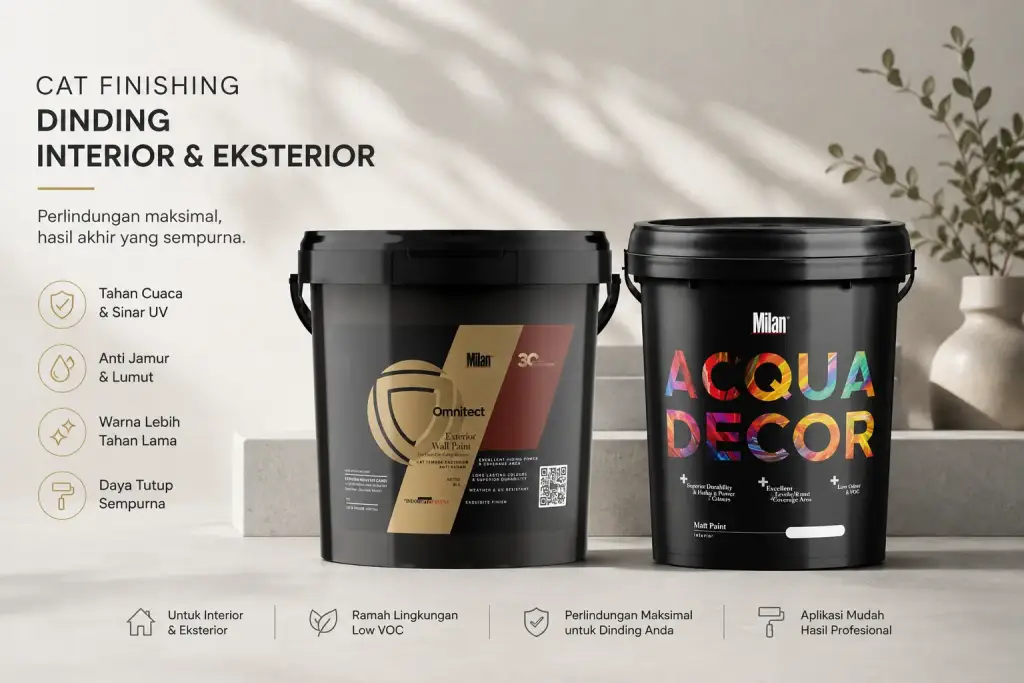
1. Omnitect – Exterior & Interior Wall Paint
Are you looking for a wall finish that’s suitable for both interior and exterior use? Milan Omnitect – Exterior and Interior Wall Paint The answer!
Milan Omnitect’s weather- and mold-resistant technology provides extra protection for the walls of homes, retail units, schools, and offices.
This paint offers good coverage, long-lasting color, and a smooth, neat finish.
2. Acqua Decor Wall Paint
For Milanians who prioritize a clean and modern interior design, Acqua Decor Wall Paint, Milan could be an option.
This water-based product produces an even finish, has a lower odor than solvent-based paint, and is safer to use indoors.
The final result is smooth, easy to apply, and available in a wide range of colors, making it suitable for interior design concepts or specific areas that require a high-quality finish.
Use Milan Wall Finishing Paint to Ensure Your Building Lasts for Years!
Wall finishes are not just a final coat—they’re an investment that determines how long your walls will remain beautiful and protected. By choosing the right finishing products from the start, Milanians can reduce the risk of paint fading or peeling prematurely, as well as the appearance of mold or fine cracks.
It’s time to provide maximum protection for every wall in your building with finishing solutions from Milan. With its range of wall finish paints, Milan is committed to delivering elegant results and optimal protection for buildings.
Milan Omnitect and Acqua Decor is the best choice for finishing both exterior and interior walls.
Still unsure about which type of wall paint and finish to choose? Consult with Milan Indonesia’s team of experts about your Milanians project needs by Click the banner below!