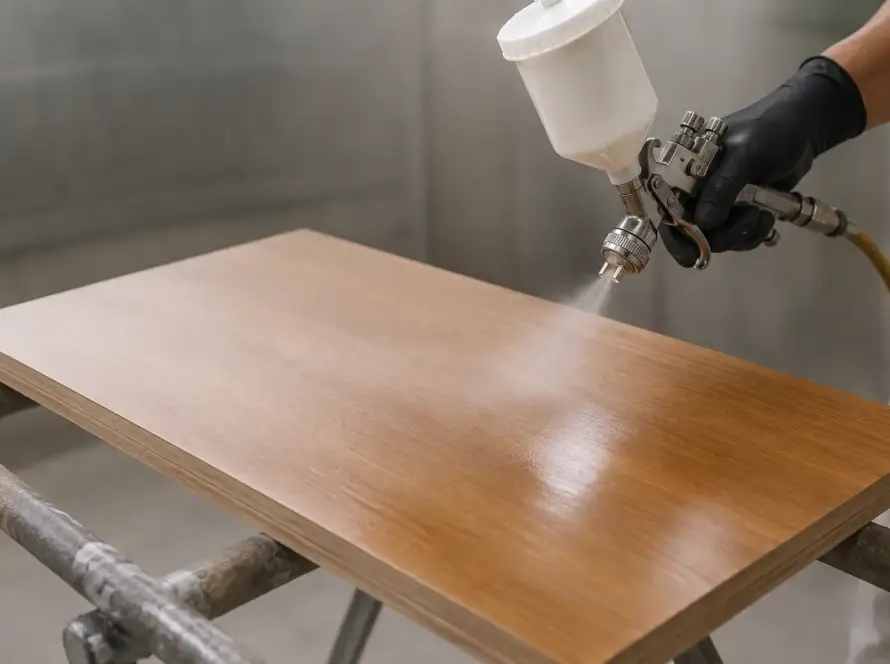
In the worlds of manufacturing, furniture, interior design, construction, and the wood processing industry, The Secret to a Professional Finish It’s not just about the quality of the coating products used. The success of the finishing process also depends on application techniques, tool selection, and the efficient use of materials. The more optimized the finishing process, the higher the quality of the final product and the lower the production costs.
Unfortunately, many industry players still experience material waste due to improper application techniques. In fact, by understanding the concept Transfer Efficiency (TE) By using high-quality finishing products, production costs can be reduced without compromising the quality of the final product.
Since 1994, PT Indocipta Wisesa through the brand Milan has provided a variety of high-quality coating and adhesive solutions to help various industries achieve finishes that are more efficient, durable, and meet international standards. One of the key strategies frequently implemented by Milan’s Technical Applicator team is to enhance value Transfer Efficiency in every application process.
Why Is a Professional Finish So Important in the Industrial World?
Many people think that finishing is only meant to enhance a product’s appearance. In reality, in the industrial world, the finishing process plays a far more important role, as it serves as both a protective coating and a key factor in determining a product’s final quality.
A properly applied finish can protect the material from moisture, UV rays, mold, scratches, and various other factors that can accelerate deterioration.
In addition, a neat and consistent surface finish enhances the product’s aesthetic appeal, thereby increasing its marketability. A professional finish also helps extend the product’s service life, reduces the risk of rework due to finishing defects, and improves production cost efficiency by optimizing material usage.
Ultimately, a high-quality finish not only reflects a company’s production standards but also builds customer confidence in the quality of its products. The higher the quality of the finish, the greater the customer confidence in the quality of the products.
What Is Transfer Efficiency in the Finishing Process?
One of the secrets to a professional finish is understanding Transfer Efficiency (TE).
Transfer Efficiency is the ratio or percentage of a material (such as paint, varnish, or coating) that actually adheres to the surface of the workpiece, compared to the total amount of material dispensed by the applicator.
The simple formula is:
TE (%) = (Material left over ÷ Material used) × 100%
The higher the value Transfer Efficiency, the less material is lost as paint mist (overspray), droplets, or residue left on the device.
Optimizing Transfer Efficiency It’s not just about saving money, but also about reducing environmental impact and improving work productivity. If a company neglects this aspect, production costs can double simply due to material waste.
How to Choose the Right Application Tools for a Professional Finish?
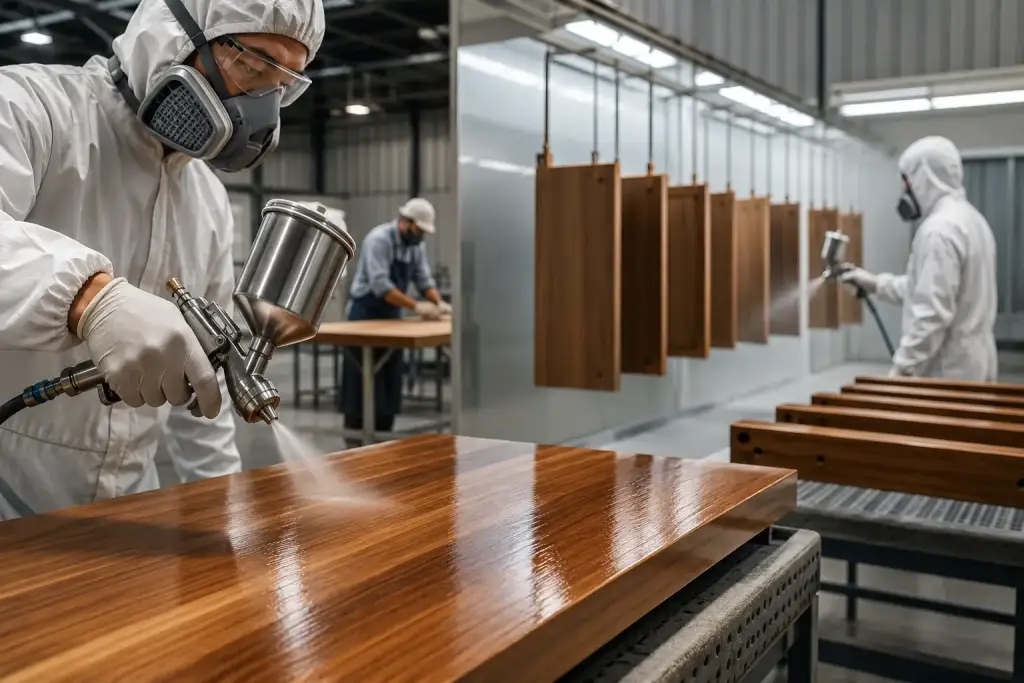
Each type of equipment has different efficiency characteristics. Understanding these differences is crucial for determining wood finishing materials or wall covering which one is best to use.
Here is a comparison of the levels Transfer Efficiency Some application methods:
1. Wiping Cloth (85–98%)
The most cost-effective method for applying wood stain. Ideal for use with Milan Acqua Stain because it produces uniform color penetration with very little material waste.
2. Brush (80–95%)
A classic, highly efficient tool for small areas and fine details. Nearly all of the material is transferred to the workpiece, although the process takes longer than spray methods.
3. Roller (70–90%)
The best choice for large surfaces such as walls or flat panels. Ideal for use with Acqua Decor Wall Paint, Milan because it is capable of producing optimal coverage with a low risk of overspray.
4. HVLP Spray Gun (60–75%)
Technology High Volume, Low Pressure (HVLP) offers the best balance between industrial-grade speed and material efficiency. This tool ensures that more paint particles land on the surface than are released into the air.
5. Conventional Spray Gun (30–45%)
Although it can produce a very smooth surface and works very quickly, its efficiency is the lowest. More than half of the paint is often wasted as overspray.
See Also: A Guide to Wood Finishing to Keep the Wood Grain Looking Natural
What Factors Influence the Success of the Finishing Process?
Simply choosing a tool isn't enough. Professionals must take technical variables into account so that the process wood finishing or optimal construction progress. Several factors that influence the value Transfer Efficiency including:
1. Spraying Distance
For a spray gun, the ideal distance is in the range of 15–20 cm. If the distance is too far, it increases overspray, while if it is too close, it can cause the paint to sag.
2. Spray Angle
The tool must always be positioned perpendicular to the surface of the workpiece. An angled position will cause paint particles to bounce away from the surface.
3. Material Viscosity
Materials that are too thick or too thin will affect the final result. Milan products, such as Acqua Fiber, designed with a modern formulation that makes it easy to adjust the viscosity for various types of application tools.
4. Air Pressure
If the pressure in the compressor is too high, it will break the paint particles down into particles that are too small, causing them to be easily carried away by the wind before they have a chance to adhere.
5. Work Environment Conditions
Room temperature, humidity, and air circulation also affect the drying process and the quality of the finish. A clean, well-ventilated work area will help produce a smoother surface with fewer defects.
How to Choose the Right Finishing Products for Various Industries?
Choosing a finishing product shouldn’t be based solely on color or price. The product used must provide maximum protection while also supporting production efficiency.
Milan offers a variety of coating solutions for the furniture, woodworking, interior design, and construction industries.
Some of the flagship products from the Milan brand, PT Indocipta Wisesa, include:
- Milan Acqua Stain: a water-based wood stain that produces natural colors and is easy to apply.
- Milan Acqua Fiber: High-quality transparent paint for fiber-cement boards, for a natural and elegant look.
- Acqua Decor Wall Paint, Milan: High-quality decorative paint that provides maximum coverage, making it more economical to use.
In addition to coatings, Milan also offers a variety of adhesive solutions for industrial needs, such as:
- Milan Lightweight Brick Adhesive: It has strong adhesive strength and dries quickly—in just 5 minutes.
- Milan Epoxy Adhesive: a two-component adhesive that provides stronger, more durable bonds between various materials.
All Milan products are developed to high-quality standards and comply with regulations ECHA, European Union, making it safe for use in products intended for the export market.
See Also: Furniture Finishing for Export: Required Quality Standards
How to Choose a Finishing System Based on Industry Type?
Each industrial sector has different finishing requirements. Therefore, the selection of a finishing system cannot be standardized.
In the furniture industry, the primary focus is typically on the beauty of the wood grain, scratch resistance, and consistent color. To meet these needs, the use of Milan Acqua Stain that can enhance the beauty of wood grain and Milan Wood Filler because it makes the surface smoother.
Meanwhile, the construction industry places greater emphasis on protection against the weather, moisture, and long-term durability. Products such as Acqua Decor Wall Paint, Milan and Water-Repellent It’s an option that offers both protection and an attractive look.
In every industry, it’s not just professional finishing techniques that matter—production efficiency is also a top priority. This is where Transfer Efficiency, application techniques, and the selection of high-performance coatings are a crucial combination for achieving optimal results.
How Can You Reduce Material Waste During the Finishing Process?
Material waste is one of the causes of rising production costs.
Here are a few simple steps you can take:
- Use the appropriate tools for the job.
- Adjust the air pressure according to the material specifications.
- Adjusting the viscosity of the coating.
- Perform routine maintenance on the spray gun.
- Use a finishing product with high coverage.
- Provide application training to operators.
These steps can significantly improve transfer efficiency, resulting in more efficient material consumption.
What Are Some Cost-Saving Strategies in Industrial Finishing Production?
In addition to guidelines for reducing material waste during the finishing process, strategies for cutting production costs must also be considered. This is one of the often-overlooked secrets to a professional finish—even though it has a significant impact on business sustainability.
On an industrial scale, the increase Transfer Efficiency is the fastest way to increase profits. Imagine if a furniture factory used 1,000 liters of paint per month with spray gun conventional method (TE 40%), only 400 liters actually form a protective layer, while the other 600 liters are lost as waste.
By switching to technologies such as HVLP or optimizing application techniques, companies can save hundreds of liters of material each month. In addition to reducing material costs, this also cuts down on cleanup costs and minimizes health risks to operators caused by excessive paint mist.
Why Is Technical Applicator Support Important for a Professional Finish?
High-quality products are one of the secrets to a professional finish—provided they are applied using the right techniques.
While some competitors in the wood coatings industry often emphasize the various stages of the process, Milan goes a step further by providing technical support (Technical Applicator) to ensure that every customer receives consistent and efficient product performance.
Therefore, Milan not only provides coating and adhesive products, but is also supported by Technical Applicator who are ready to assist customers with:
- Determining the appropriate finishing system.
- Provide recommendations on the best application methods.
- Helps configure application parameters.
- Optimizing the use of materials.
- Improving production process efficiency.
This approach helps companies achieve more consistent finishing results while reducing the risk of production failures.
The Secret to a Professional Finish Lies in the Right Combination of Products and Techniques
The secret to a professional finish depends not only on the quality of the coating used, but also on application techniques, tool selection, and an understanding of Transfer Efficiency. By optimizing all of these factors, the industry can produce finishing coatings that are smoother, more durable, more material-efficient, and have a higher market value.
For more than 30 years, Milan has partnered with various industries in Indonesia to provide high-quality coating and adhesive solutions. Backed by products that meet international standards and services Technical Applicator, Milan is ready to help make every finishing process more efficient, consistent, and professional.
If you want to improve the quality of your finishes while reducing production costs, discuss your project needs with the Milan team and find the finishing solution that best suits your industry. Click the banner below to connect with the Milan team!