Having a luxurious home interior is certainly everyone’s dream. However, behind that luxury lies an important material that should not be overlooked, namely High-Pressure Laminate (HPL) adhesive because it bonds layers more strongly and securely.
Unfortunately, many local artisans often face problems with HPL laminate that is warped or peels easily, even though it had just been glued. As a result, this can compromise the product’s appearance, damage the material, and significantly reduce its resale value.
So, why does HPL peel so easily? How can you prevent this so that your interior and furniture maintain their quality and high resale value? Milanians, just read the explanation below!
Signs That Your HPL Is Starting to Peel Without You Realizing It
Before the HPL layer actually peels off, there are usually some early signs that often go unnoticed. The appearance of a slightly raised edge For example. At first it was only a few millimeters, but over time the area gradually expanded.
In addition, when pressure is applied to the surface, HPL feels slightly hollow or makes a sound because The bottom part is no longer sticking together properly. This indicates that the adhesive's bonding strength is beginning to decrease.
Other changes can be seen in the presence of air bubbles, small creases, or an uneven surface. If left untreated, that area will become increasingly prone to tearing when subjected to impact or pulling.
On some pieces of furniture, HPL also appears to be shifting from its original position resulting in imprecise joints between the sheets. All of these signs indicate that the adhesive layer has begun to lose its strength.
Why Does HPL Peel Easily?
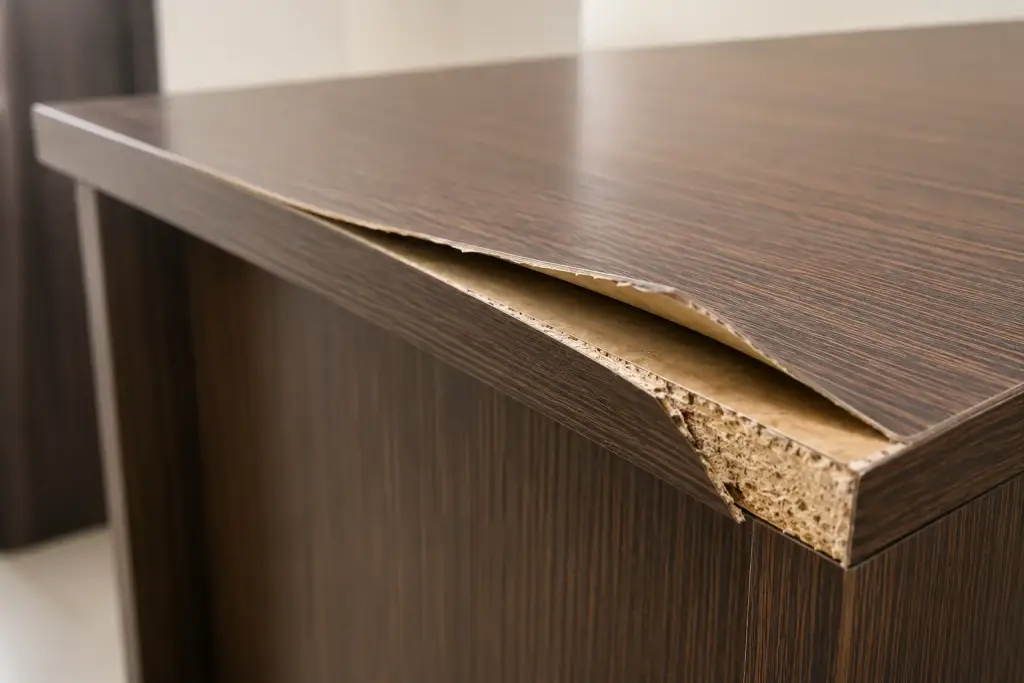
1. Incorrect Application of Adhesive, Not in Accordance with Recommendations
One of the main reasons why HPL peels off easily is that the adhesive was not applied according to the instructions. For example, The adhesive was applied too thinly, too thickly, or the two surfaces were pressed together immediately without allowing time for the adhesive to dry as recommended. As a result, the adhesive bond does not form optimally, causing the HPL to peel off more quickly.
2. Do Not Apply Excessive Pressure During Application
After the adhesive is applied, the HPL surface must be pressed evenly using a roller or a press. Weaker pressure causes air to become trapped between the HPL and the substrate, so that only part of the surface actually adheres. This is one of the reasons why HPL peels off easily after being used for some time or even immediately after the adhesive has been applied.
3. Dirty and Damp Material Surfaces
Dust, oil, sawdust residue, and moisture on the surface of the boards can interfere with the bonding process. The glue cannot adhere directly to the material causing the bond to weaken.
4. The Glue Used Is of Poor Quality
Not all adhesives are specifically designed for HPL installation. Low-quality adhesives typically form bonds that weaken quickly, making the joints more prone to coming apart, especially when the furniture is used frequently.
5. Extreme Temperature Changes
Furniture that is frequently exposed to direct sunlight or extreme temperature fluctuations will undergoes expansion and contraction. If the adhesive isn’t flexible enough to accommodate these changes, the HPL layer will gradually peel away, especially along the edges.
6. It Has Been in Use for Years
After years of use, Adhesive strength may decrease naturally due to exposure to heat, humidity, and the wear and tear of daily use. It’s no surprise, then, that older HPL is indeed more prone to peeling than newly installed HPL.
7. Uneven Seams in the Material
Mistakes made when cutting or joining HPL are also a reason why HPL peels off easily. An imprecise connection causing some areas to lack sufficient adhesive coverage. As a result, those areas become the starting point for peeling, which then spreads to other areas.
See Also: Causes of HPL Laminate Bubbling After Installation
Risks of Leaving Peeling HPL Adhesive Untreated
Allowing the HPL finish to peel off furniture or interior surfaces can have negative consequences, including:
- The peeling is spreading further across the entire surface.
- The furniture looks dull and untidy.
- Water and dust can easily get under the HPL layer.
- The base material deteriorates more quickly.
- Bubbles appear on the surface.
- The corners of HPL are prone to snagging and tearing.
- Repair costs are higher.
- The lifespan of furniture has become shorter.
- The aesthetic value of the interior has declined.
- Ultimately, all the HPL layers need to be replaced.
Can Peeling HPL Be Repaired?
Yes, as long as the damage isn't too severe. If only a small section has started to peel up and the HPL is still intact, the repair can be done by cleaning the area, then reapplying the appropriate adhesive before pressing it down until it adheres completely.
However, if the HPL layer is torn, has bubbles in many places, or has almost completely lost its adhesive strength, The filling process usually does not produce optimal results. Under these circumstances, replacing the HPL is a more effective solution.
When Should HPL Laminate Be Replaced?
HPL replacement should be performed when the damage is too extensive as a result, the repair process is no longer efficient. For example, much of the surface has peeled off, the HPL color has faded, many seams are exposed, or the base panels are beginning to show signs of water damage.
Replacing the entire HPL layer is also the best option if the furniture is to be reused over the long term. With proper installation and the use of high-quality adhesive, the finish will be neater and more durable.
How to Fix Peeling HPL Adhesive to Restore a Perfect Bond
1. First, Clean the Area That Has Started to Peel
Remove any remaining old adhesive, dust, oil, or dirt that is still stuck to the surface using a clean cloth or scraper. A clean surface allows the new adhesive to bond optimally without being obstructed by the old layer.
2. Reapply the Glue According to the Instructions
Use HPL adhesive as recommended by the manufacturer. Apply it evenly to both surfaces to be bonded, then wait until it reaches the recommended consistency before bonding the two materials together.
3. If the Peeling Area Is Large, the Material Must Be Removed from the Adhesive First
If the peeling has spread, you should first remove all the affected sections of HPL. After that, Remove any remaining old adhesive until the surface is smooth again before the reinstallation process is carried out.
4. When Applying, Press the Glue Firmly to Ensure a Perfect Bond
Use a roller, wooden block, or press to apply even pressure across the entire surface. Sufficient pressure helps release trapped air while also increasing the adhesive strength.
5. Tuck in the Edges Again If They’re Still Lifting
Check all sides of the HPL after installation is complete. If there are still any slightly raised areas, press them back down immediately before the adhesive dries completely. This simple step can prevent further peeling in the future.
6. Apply the Finishing Touch
Once the bonding process is complete, Wipe away any excess glue that has oozed out of the joint To ensure a neat finish, make sure not to use the furniture until the adhesive has fully cured so that the bond can reach its maximum strength.
See Also: Find the Right Eco-Friendly Wood Adhesive Solution for Your Industrial Needs
Recommendations for the Best HPL Adhesives to Ensure Strong Bonds That Won’t Peel Easily
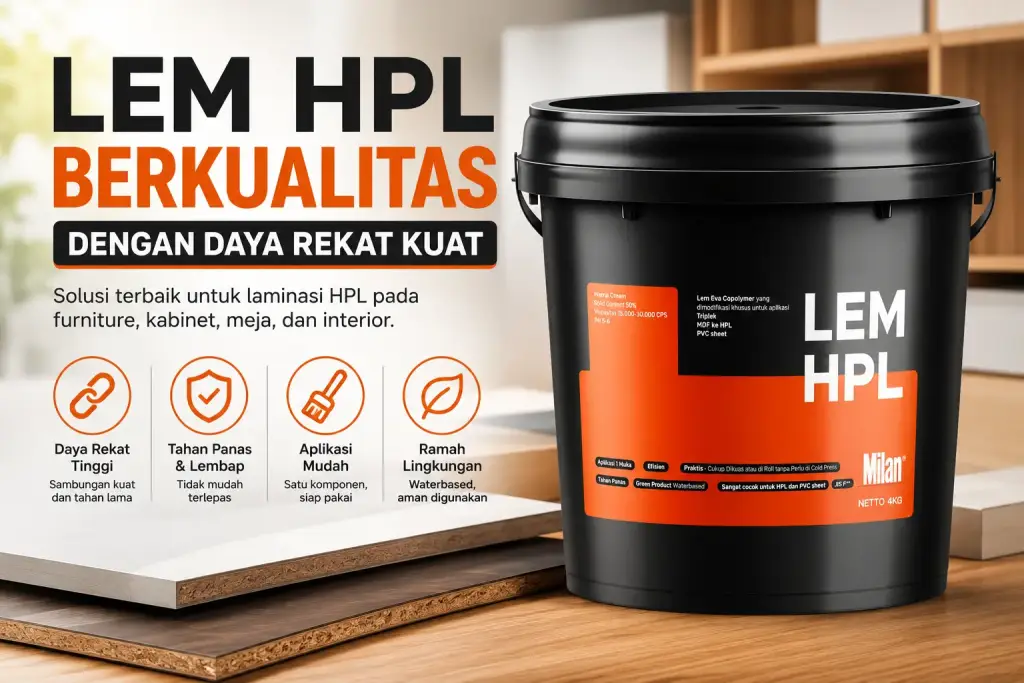
In addition to proper installation techniques, choosing the right adhesive is the most important factor in ensuring that HPL does not come loose easily. A high-quality adhesive has strong bonding power, is easy to apply, adheres evenly, and creates a durable bond that withstands long-term use.
If Milanians are in need of HPL adhesive for various purposes, such as furniture, cabinets, or other interior applications— Milan HPL Glue is the best solution.
The reason is simple, Milan HPL Glue As a water-based adhesive, it has been specially formulated to bond HPL and PVC sheets with strong adhesion. What’s more, it’s quick and easy to use—Milanians can apply it immediately without having to wait for it to flash off.
Another advantage of Milan HPL Glue It is claimed to be environmentally friendly, resistant to strong odors, and heat-resistant. It’s no wonder, then, that this product is the go-to choice for bonding HPL layers.
Don’t Want Your HPL Laminate to Peel Easily? Use Milan HPL Adhesive—Proven to Be Strong and Durable!
If Milanians want to avoid problems with HPL peeling off easily, they should make sure not only to use the correct installation techniques but also to choose the highest-quality HPL adhesive.
That's why PT Indocipta Wisesa, introduces Milan HPL Adhesive to address these needs and challenges. This product features a special formula designed to bond HPL laminates and PVC sheets for a variety of interior applications, offering super-strong adhesion.
Don't hesitate to choose Milan HPL Glue For all your interior design needs, Milanians! See for yourself by ordering products from Milan Indonesia. Click the banner below, Milanians will be connected directly with our team of experts!