Cracks in wall plaster can certainly be a cause for concern, especially if they appear shortly after the wall has been finished. This problem is actually quite common, both in residential homes and other types of buildings.
However, don’t immediately assume that all wall cracks are caused by poor-quality cement. There are many factors that can cause wall plaster to crack, ranging from an unprepared wall surface, an improper mortar mix, construction techniques, to structural movement of the building.
The types of cracks vary, so there’s no one-size-fits-all solution. For Milanians facing this issue, learn about the causes and how to fix them in the information below!
Common Causes of Cracks in Wall Plaster
1. Dirty or Dusty Wall Surfaces
Dust, sand, oil, mortar residue, or other debris can reduce the plaster’s adhesion to the wall surface. As a result, the plaster does not adhere properly and is more prone to cracking or even peeling.
Before plastering, make sure the surface is clean and in proper condition so that the mortar can adhere optimally.
2. Excessively Fast Drying Process
Plaster requires sufficient drying time to develop its full strength.
If the water in the mortar evaporates too quickly due to the heat of the sun, strong winds, or a surface that absorbs too much water, the plaster may shrink unevenly. This is one of the causes of cracks in wall plaster, particularly hairline cracks.
3. Excess Moisture on the Walls
Walls that are constantly damp due to water seepage, leaks, or poor drainage can cause the plaster to lose its stability.
Moisture can also lead to mold growth, efflorescence, and peeling. If the source of the water isn’t fixed first, simply patching the cracks usually won’t solve the problem.
4. Incorrect Cement-to-Sand Ratio
The ratio of cement, sand, and water must be adjusted according to the requirements of the job. A mixture with too much water can result in weaker plaster, while an improper composition can also increase the risk of shrinkage. Sand that is dirty or has poor gradation can further affect the quality of the mixture.
5. Incorrect Plaster Thickness
Plaster that is applied too thickly in a single coat may shrink more significantly as it dries. Conversely, plaster that is too thin on a surface requiring a thicker layer may also not provide optimal results. Application should be adjusted to suit the surface conditions and thickness requirements to ensure a more even drying process.
6. Buildings Experience Settlement and Structural Movement
Buildings may settle after construction is complete. In addition, structures may also shift due to loads, temperature changes, or soil conditions.
If the movement is significant enough, the rigid plaster can be pulled along with it and eventually crack. This is one of the causes of cracked wall plaster that needs to be addressed, as simply covering the surface is not enough to fix the problem.
7. Incorrect Application Techniques
Mistakes made during the application of the mortar—such as an unprepared surface, mortar that is too thin, or improper leveling—can affect the final result. Plaster must also be applied using the proper technique to ensure optimal adhesion and density.
8. Environmental Conditions and Extreme Weather Events
Drastic changes in temperature and humidity can cause building materials to expand and contract. In exterior areas, constant exposure to sunlight, rain, and wind can accelerate the deterioration of plaster, especially if the materials and application methods are not appropriate.
See Also: 8 Mistakes When Installing Lightweight Bricks That Cause Walls to Crack Easily
Types of Cracks in Wall Plaster
1. Hairline Cracks
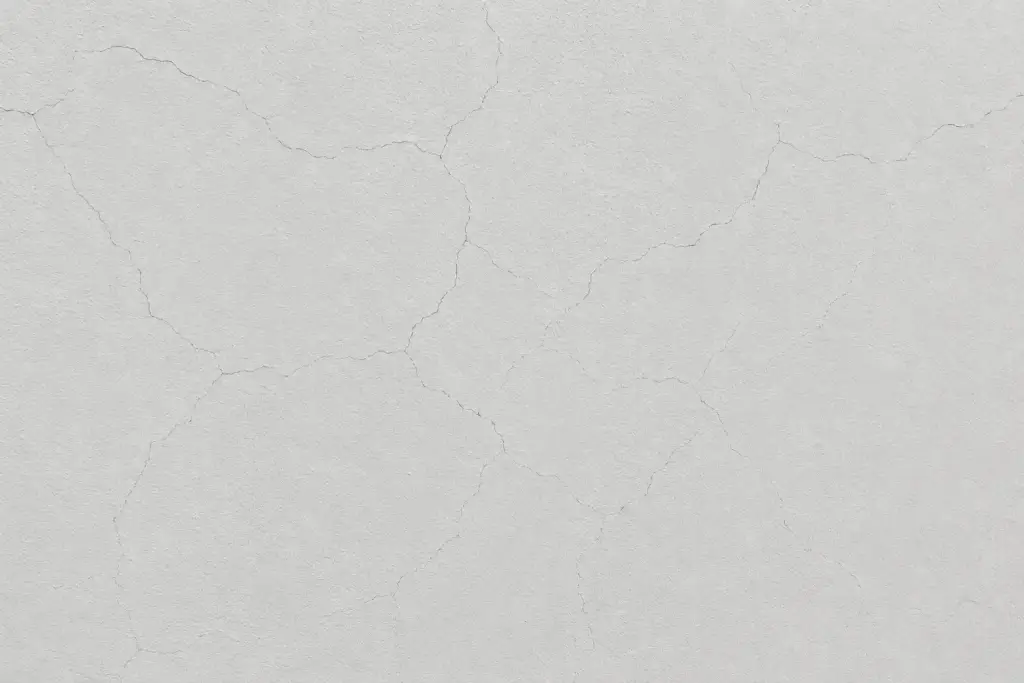
Hairline cracks are very thin cracks that usually look like small scratches on the surface of the plaster. They can be caused by shrinkage, drying too quickly, or an improper mortar mix.
To fix this, clean out the cracks, use an appropriate wall filler, sand it down once it’s dry, and then repaint the area.
2. Cracks Caused by Shrinkage
Shrinkage cracks usually appear as small, spreading lines on the surface. These cracks occur when the water content in the plaster decreases and the material shrinks.
Repairs can be made by opening the crack just enough, cleaning the area, filling it with repair material, and then refinishing it.
3. Cracked Stair Tread
Cracks in stair treads follow a pattern resembling the arrangement of the treads and often align with the mortar joints or the masonry course. These cracks should be inspected because they may be related to movement in the masonry.
If the crack is only minor, the area can be repaired and reinforced. However, if it continues to widen, further inspection is necessary.
4. Cracks Caused by Structural Movement
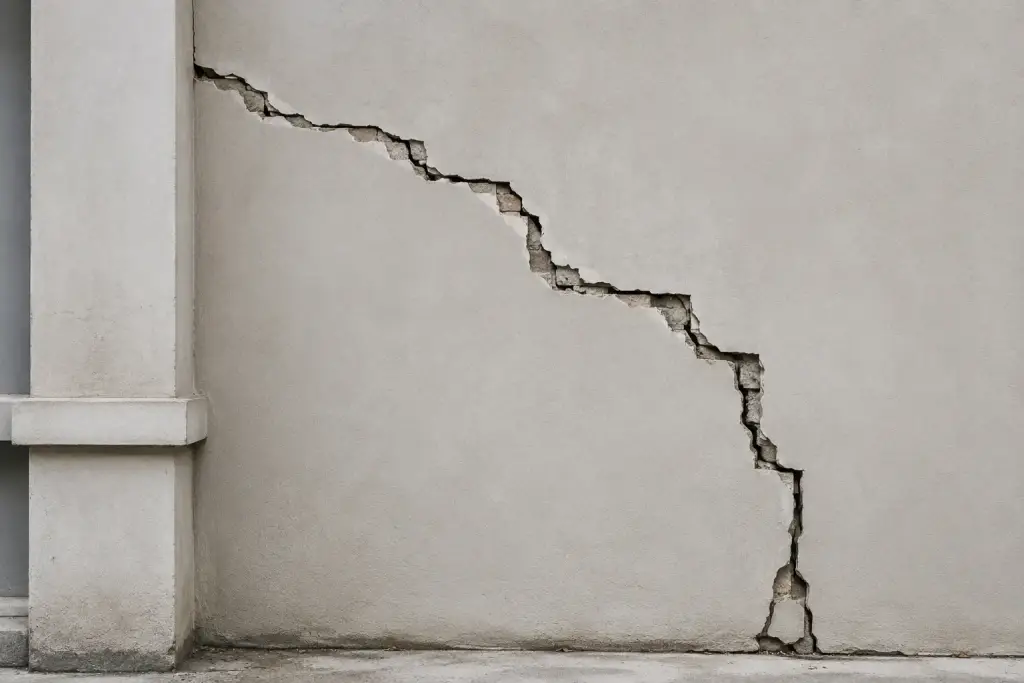
Cracks caused by structural movement are usually more serious and can appear in specific areas in distinct patterns. Simply sealing the cracks from the surface carries the risk that they will reappear.
Repairs must begin by identifying the source of the movement and assessing the condition of the structure before proceeding with finishing work.
5. Longitudinal Cracks
Longitudinal cracks can appear either vertically or horizontally. Their pattern should be noted, as it may be related to material joints, shrinkage, or movement of the surface.
Minor cracks can be repaired once the cause has been identified, while cracks that continue to spread require further inspection.
6. Cracks at Material Interfaces
Cracks often appear where two different materials meet, such as between a brick wall and concrete or at construction joints.
Differences in material properties cause each part to move in different ways. Joint areas need to be reinforced using appropriate methods before finishing.
7. Horizontal Cracks
Horizontal cracks can be caused by shrinkage, pressure, structural movement, or specific issues with the wall. Do not immediately seal the cracks before determining the cause.
If the crack is long enough, has widened, or is accompanied by a change in the wall’s shape, a professional inspection should be conducted.
8. Diagonal Crack
Diagonal cracks may extend from the corners of door or window openings toward other areas of the wall. This pattern warrants attention because it may be related to stress concentrations or structural movement.
How to Tell the Difference Between Split Ends and Dangerous Hair Breakage
Not all cracks in walls indicate that a building has suffered serious damage. Hairline cracks are generally very thin, shallow, do not continue to widen, and are limited to the finish coat or plaster.
Meanwhile, cracks that should be cause for concern typically have the following characteristics:
- The crack is getting wider over time.
- The crack extends through the plaster layer down to the masonry.
- The pattern is diagonal, in steps, or follows the structure of the area.
- Appears around columns, beams, doors, or windows.
- The walls appear to be shifting, curving, or changing shape.
- Cracks accompanied by seepage or recurring moisture.
If you notice this condition, Milanians should not immediately fill the crack with filler or paint. Find out the cause first.
See Also: 8 Ways to Install Lightweight Bricks for a Neater, More Precise, and Sturdier Result
The Right Way to Fix Cracked Wall Plaster
1. Identify the Problem and Its Cause; Don’t Just Guess
The first step is to examine the pattern, width, location, and progression of the cracks. Also check whether the wall is damp, if there are any leaks, or if cracks appear at material joints. This approach helps determine whether the problem can be adequately repaired at the plaster layer or requires more serious attention.
2. Repair Cracked Walls with Plaster
For damage to the plaster layer, cracked and weakened areas must be scraped away until a sufficiently strong surface is exposed. After that, clean the area and replaster it using the appropriate mortar.
The proportions of cement, sand, and water must be just right so that the plaster does not shrink or crack easily after it dries. Milanians can also use Milan Cement Additive as a cement additive to help improve adhesion, retain water in the mortar, and reduce the risk of cracking in plaster and render.
3. Use Wall Filler
For shallow hairline cracks, wall filler can be applied after the surface has been cleaned and is completely dry. Fill the cracks evenly, let them dry, and then sand until the surface is smooth.
Avoid painting over cracks directly without first filling in the damaged areas, as the cracks may become visible again.
4. Repaint the Walls for Maximum Protection
Once the plaster and spackle have been repaired, you can paint the wall to protect it and restore its appearance. Make sure the surface is dry, clean, and dust-free before painting.
For the finishing touches, Milanians can use Milan Acqua Decor, a premium wall paint that offers high coverage, a smooth finish, low odor, low VOC, and features anti-mold technology for both interior and exterior use.
5. Perform Regular Maintenance
Check the condition of the walls regularly, especially in areas that have previously had cracks. Address leaks, seepage, mold, or peeling paint immediately before the damage spreads further. For exterior walls, also check their condition after rain or extreme weather changes.
What Can Be Added to a Cement Mix to Make the Plaster Stronger?
In addition to using the proper mixture of cement and sand, cement additives can be used to help improve the quality of the mortar. These additives can help improve adhesion, maintain the mortar’s properties, and reduce the risk of cracking during the drying process.
One option you can use is Milan Cement Additive which is formulated as a cement additive to help reduce the risk of cracking in plaster and render, improve adhesion, and make the plaster finish stronger and more durable.
The Benefits of Milan Cement Additive for Stronger Plaster

Milan Cement Additive It can be an option for Milanians who need an additive for plastering or rendering work. Using it helps produce a mixture that is easier to apply and has better adhesion.
Some of its advantages include:
- Helps reduce the risk of plaster cracking.
- Improves the adhesion of plaster.
- Helps retain water in the mortar.
- Helps prevent the plaster from drying too quickly.
- Helps create a smoother plaster surface.
- Resistant to lime and weathering.
- Suitable for plastering, skimming, and repairing concrete surfaces.
- Can be used both indoors and outdoors.
FAQ
Why Did the Wall Crack Again Even Though It Had Already Been Repaired?
This is usually because the underlying cause of the cracks has not been addressed. For example, there may still be water seepage, structural movement, shrinkage, or problems with the mortar. If only the cracks are filled, the damage may reoccur.
Why Do Newly Plastered Walls Crack?
New plaster may crack due to drying too quickly, an improper cement-to-sand ratio, too much water, excessive plaster thickness, or improper application techniques. Surface conditions and weather can also affect the final result.
What Materials Are Needed to Repair Cracked Walls?
Generally, you’ll need cleaning supplies, cement, sand as needed, water, cement additives such as Milan Cement Additive, wall filler, sandpaper, and wall paint for the finish. The types of materials can be adjusted based on the extent and cause of the damage.
When Should Wall Cracks Be Inspected by a Contractor or Expert?
Have the area inspected immediately if the crack is widening, lengthening, penetrating the wall masonry, running diagonally or in a stair-step pattern, appearing around the structure, or accompanied by a change in the wall’s shape. Conditions like these should not simply be covered with filler or paint.
Reduce the Risk of Cracks in Wall Plaster with Cement Admixtures from Milan Cement Additive!
There are many factors that cause wall plaster to crack, one of which is an improper cement mix and incorrect application. To prevent this problem, Milanians can use a cement mixture from Milan Cement Additive which is specifically designed to reduce the risk of cracks in wall plaster.
By adding Milan The cement additive in Milanians cement mix makes the plaster used on walls more adhesive and less prone to cracking.
So, to improve the adhesion of plaster to building walls, Milan Cement Additive is the solution!
Get the product and consult with Milan’s team of experts about your needs by clicking the banner below!