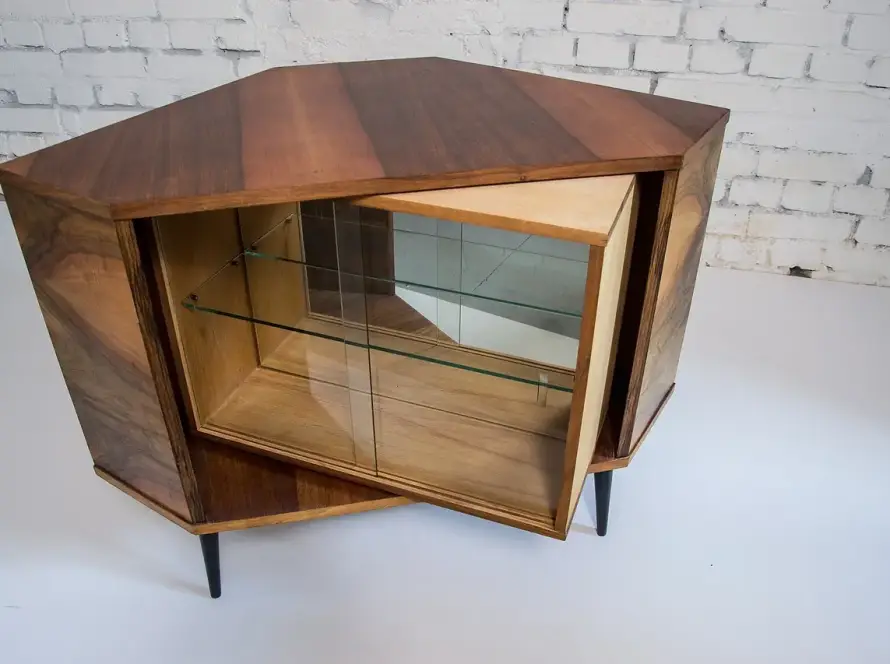
Wood laminating seems simple—it just involves applying glue to several pieces of wood, joining them together, and then pressing them. But in practice, even the slightest mistake can prevent you from achieving the best possible result. Joints may come apart, the surface may be uneven, gaps may appear, and the wood structure may even become less sturdy.
As professional woodworkers, Milanians should be aware of some common mistakes made during the wood lamination process to ensure the best possible results.
Avoiding mistakes during the wood lamination process makes production faster and more efficient. The company also avoids losses because it doesn’t have to discard materials due to mistakes made by Milanians.
What Is the Wood Laminating Process, and Why Is It Important in Production?
Wood lamination is the process of joining two or more pieces of wood using an adhesive to form a single, larger, and more stable surface or component. This technique is widely used in the manufacture of wood panels, tables, doors, furniture components, finger joints, and various other woodworking products.
The purpose of laminating is not merely to increase the width of the wood. This process also helps produce components with shapes and dimensions that meet production requirements.
A flat surface allows for optimal contact between the surfaces, while the proper moisture content helps prevent excessive dimensional changes in the wood after gluing.
Errors during any stage of the wood lamination process can affect subsequent stages. For example, wood that is too wet can result in suboptimal bonding. Similarly, applying the adhesive too thinly, too thickly, or unevenly can result in weak joints.
Characteristics of Good Wood for Laminating Projects
The wood to be used for laminating should have a clean, flat, and sufficiently smooth surface so that the two surfaces can bond properly. A surface that is too rough or has gaps can reduce the effective contact area between the wood and the adhesive.
Moisture content is also an important factor. Wood that is too wet may undergo dimensional changes after the gluing process.
In addition, choose wood that does not have excessive defects at the joints. Cracks, holes, rotten areas, or unstable surfaces can reduce the quality of the laminated product.
Dimensional uniformity is also important. The pieces of wood to be joined should be of consistent thickness and size so that the pressure applied during the pressing process can be distributed more evenly.
See Also: The Benefits of Wood Laminating Adhesives in Improving the Quality of Furniture Products
Factors Affecting the Success of Wood Laminating
Not only do Milanians need to avoid mistakes during the wood lamination process, but they also need to understand the factors that contribute to its success, including:
- Condition and type of wood
- Moisture Content (MC)
- Cleanliness of Wood Surfaces
- Flatness of the bonded surfaces
- Type of adhesive used
- Amount and even distribution of adhesive application
- Direction of wood grain
- Pressure during pressing
- Pressing duration
- Ambient temperature and humidity
- Curing or drying time
- How to Store Wood Before and After Laminating
- Joint Quality Inspection
Mistakes to Avoid During the Wood Laminating Process
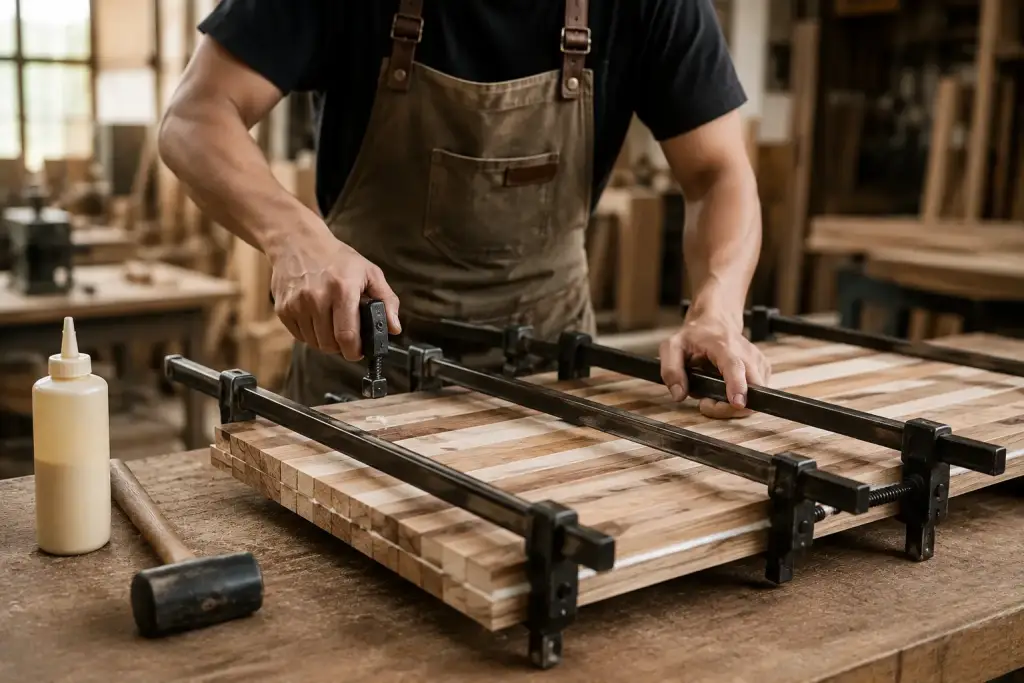
1. The Wood Surface Is Still Dirty and Uneven
Dust, oil, dirt, finishing residues, or wood dust that has adhered to the surface can interfere with direct contact between the adhesive and the wood surface. As a result, the bond strength may decrease, and the joint is more likely to fail.
In addition to cleanliness, surface smoothness must also be considered. Surfaces that are too rough or uneven can create gaps, preventing pressure from being distributed optimally. Before lamination, the surface should be inspected, cleaned, and sanded if necessary.
2. The Wood’s Moisture Content Is Inappropriate
Wood is a material that can absorb and release moisture. If the moisture content is too high, the wood may shrink or expand after the lamination process.
These dimensional changes can put stress on the joints and cause cracks or delamination.
3. Choosing the Wrong Adhesive, One That Doesn’t Meet Your Needs
Not all wood glues have the same characteristics. The choice of adhesive must be tailored to the type of wood, intended use, environmental conditions, and work method.
For laminating and finger-jointing needs, one option to consider is Milan Aliphatic Wood Glue because it has strong adhesive strength and resistance to heat and solvents, and is suitable for wood with a moisture content of 8–12%.
4. Inconsistent Application and Dosage of Adhesive
The amount of adhesive used should be appropriate for the task. Using too little adhesive may result in some areas of the surface not receiving enough adhesive, while using too much does not necessarily result in a stronger bond.
The adhesive must also be applied evenly to the surfaces to be joined. After the adhesive is applied, the two surfaces must be brought together immediately and sufficient pressure must be applied to ensure optimal contact between the surfaces.
5. Not Paying Attention to the Grain of the Wood
The grain direction can affect both the appearance and the behavior of wood in response to changes in humidity. When laminating multiple pieces of wood, the grain orientation must be planned so that the result not only looks neat but also meets construction requirements.
For furniture products that prioritize aesthetics, arranging the grain direction and pattern can also make the final result look more consistent and professional.
6. Uncontrolled Curing Time and Conditions
Just because the pieces of wood have been joined together doesn’t mean the joint is immediately ready to bear a load or move on to the next step. The adhesive needs time to form a stable bond.
The pressing and drying times must be adjusted according to the characteristics of the adhesive used.
For example, according to the Milan Aliphatic guide, wood that has been treated with adhesive must be clamped using an F-clamp or C-clamp for 60 minutes, followed by a drying process until the adhesive has completely cured.
7. Ignoring Environmental Conditions During Lamination
Temperature, humidity, ventilation, and workspace conditions can affect the bonding process. An environment that is too hot, too cold, or too humid can interfere with the consistency of the application and the drying process.
Therefore, the lamination process should be carried out in a work area with controlled environmental conditions and in accordance with the adhesive’s instructions for use.
8. Do Not Perform Repeated Examinations
Errors in the wood lamination process are sometimes only noticeable after the pressing is complete or even after the product has moved on to the finishing stage. This is why inspections should not be limited to just one time.
Check the surface condition, wood positioning, pressure uniformity, joint gaps, and bonding results throughout the process. Repeated inspections help identify problems more quickly before the product moves on to the next stage of production.
See Also: The Secret to Stronger, More Durable Wood Joints in Furniture
How Do You Choose the Right Type of Adhesive for Wood Laminating?
When choosing an adhesive for wood laminating, it’s not enough to rely solely on claims of strong adhesion. Milanians need to consider the type of project, the characteristics of the wood, moisture content, the conditions under which the product will be used, and the required durability of the adhesive.
One recommended adhesive suitable for wood laminating is Milan Aliphatic Wood Glue with specifications specifically designed for wood moisture content of 8–12%
In addition to its adhesive strength, Milan Aliphatic offers resistance to heat and solvents. These characteristics make it suitable for a variety of woodworking applications, such as furniture, wood panels, doors, finger joints, and other laminating applications.
See Also: Understanding Aliphatic Glue: A Professional Adhesive for Woodworking
The Advantages of Milan Aliphatic Adhesive as a Specialized Adhesive for Wood Laminating

Milan Aliphatic Adhesive It has characteristics specifically designed for laminating and finger-jointing applications. Its formula is designed to provide strong adhesion while helping to create precise, long-lasting joints.
Some of the advantages it offers include solvent resistance, no glue line, heat resistance, formaldehyde-free compliance with the F** JIS Standard, and strong adhesive strength.
In terms of application, Milan Aliphatic is applied to one of the pieces of wood to be laminated, then spread evenly over the entire surface. After the two pieces are joined, the joint can be clamped using an F-clamp or C-clamp for 60 minutes before proceeding to the next step.
Packaging options are also available in 0.5 kg, 4 kg, and 20 kg sizes, so they can be tailored to job requirements and production scale.
Guide to Using Milan Aliphatic Adhesive for Proper Wood Laminating
1. Prepare the Piece of Wood to Be Laminated
Make sure the pieces of wood to be joined are ready for the laminating process before applying the adhesive.
2. Apply Milan Aliphatic Glue to One Section of the Wood
Apply Milan Aliphatic Adhesive to one of the pieces of wood to be laminated. Apply the adhesive directly to the surfaces of the wood pieces to be joined.
3. Spread the Glue Evenly Over the Entire Surface
Apply and spread Milan Aliphatic Glue until it evenly covers the entire wood surface. Make sure you don’t miss any spots.
4. Join the Two Pieces of Wood Together
After the adhesive has been applied evenly, join the glued piece of wood to the other piece of wood to be laminated.
5. Press Using an F Clamp or a C Clamp
Press the pieces together using an F-clamp or C-clamp for 60 minutes. Make sure there is enough pressure to keep the two pieces of wood firmly joined together throughout the process.
6. Remove the Clamp and Proceed to the Next Step
After 60 minutes, remove the F-clamp or C-clamp. The laminated wood is then ready to move on to the next step.
FAQ (Frequently Asked Questions)
What Factors Determine the Strength of a Wood Laminate Joint?
The strength of the joint is influenced by the condition of the wood surface, moisture content, type of adhesive, evenness of adhesive application, pressure during pressing, and curing time. These factors must be properly balanced so that the adhesive can form an optimal bond.
When Should Laminated Wood Products Be Repaired or Replaced?
The laminated product must be re-inspected if gaps, open joints, misaligned surfaces, uneven adhesion, or significant deformation are found. If the issue compromises the structural integrity, remanufacturing is generally safer than retaining the defective joint.
What Is the Difference Between Wood Laminates for Interior and Exterior Products?
The main difference lies in the conditions of use and environmental exposure. Exterior products generally require greater resistance to changes in temperature, humidity, and environmental conditions, so the choice of adhesive must be tailored to those needs.
What Quality Standards Should Be Considered in the Production of Laminated Wood?
Quality standards can be assessed based on surface cleanliness and flatness, appropriate moisture content, adhesive application consistency, pressing pressure, curing time, and the final condition of the joint.
Avoid Laminated Wood Surfaces That Are Exposed and Don’t Bond Properly with Milan Aliphatic Adhesive!
One of the mistakes often overlooked during the wood lamination process is the incorrect selection and use of adhesives. Not all types of glue can bond one piece of wood to another.
However, if Milanians use Milan Aliphatic Adhesive – This problem can be avoided. The reason is that Milan Aliphatic Glue bonds wood perfectly, especially wood with a moisture content of 8–12%.
PT Indocipta Wisesa We are committed to providing high-quality products, one of which is Milan Aliphatic Adhesive. This product is not only suitable for wood laminating but also for finger joints.
Still unsure? Milanians can consult with Milan’s team of experts about their wood lamination project needs and the use of aliphatic adhesives by clicking the banner below!