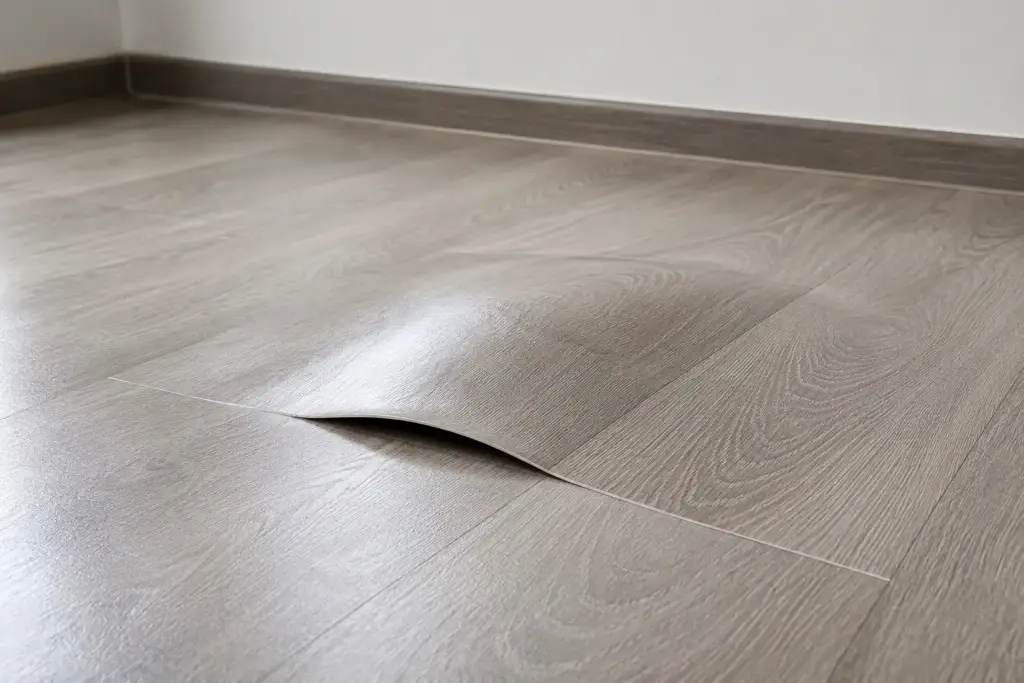
Have you ever seen a vinyl floor that was originally flat and neat, but after a while, bubbles started to appear in some areas?
This problem occurs quite often, especially when the installation process or preparation of the subfloor isn’t done properly. So, if you’re wondering why vinyl flooring bubbles so easily, there are many underlying causes—though they’re often overlooked.
The good news is that bubbles in vinyl flooring don’t always mean the entire floor has to be torn up. By understanding the causes and how to fix them, the damage can be addressed more effectively.
Types of Vinyl Flooring That Are Prone to Bubbling
1. Vinyl Roll
Vinyl rolls come in long sheets and are typically installed using adhesive over the entire floor surface or part of it. Because of their width, air can more easily become trapped beneath the material if it is not installed evenly.
Loose seams or a subfloor that is still damp can also cause certain sections to lift and form bubbles.
2. Vinyl Plank
Vinyl planks are long, narrow pieces that resemble wooden boards. This type of flooring may bubble or lift at the seams if the subfloor is uneven, if the material expands, or if the adhesive does not work properly.
For vinyl planks that use an adhesive system, the adhesive application technique is critical to the strength and stability of the installation.
3. Vinyl Tiles
Vinyl tiles are square-shaped, making their installation relatively more flexible. However, the corners and edges of each tile may lift if the adhesive is not applied evenly or if the subfloor is not fully prepared.
If vinyl tiles are installed too closely together without accounting for temperature changes, the material may also be pushed up and appear to bubble.
See Also: 11 Mistakes to Avoid When Installing Vinyl Flooring
Signs That Vinyl Flooring Is Starting to Bubble
In fact, there are already several signs that vinyl flooring is starting to bubble that can be addressed immediately before the problem gets worse, including:
- A bump or uneven surface appears.
- Small to large bubbles are visible in the center of the vinyl.
- Certain parts feel softer when stepped on.
- The vinyl surface looks wavy.
- The edges or corners of the vinyl are starting to peel up.
- A hollow sound is heard when certain parts are tapped or stepped on.
- The vinyl is starting to peel away from the subfloor.
- A gap has appeared at the seam between the vinyl panels.
- The vinyl surface warps when exposed to heat.
Why Do Vinyl Floors Bubble Easily?
1. The Ground Floor Is Still Damp
One of the main causes of vinyl flooring bubbling is a subfloor that still contains too much moisture. Water or water vapor from below can become trapped between the subfloor and the vinyl.
Over time, this pressure can cause the vinyl to bulge upward, resulting in bubbles. So, make sure the concrete or screed surface is sufficiently dry before installation.
2. Air Trapped During Installation
Air trapped beneath the vinyl can form air pockets. This usually happens when the material isn’t pressed down or smoothed out properly during installation.
In large areas, small bubbles may become more noticeable after the floor has been in use. This is why the installation technique is crucial for preventing vinyl flooring from bubbling easily.
3. Improper Application of Adhesive
Uneven application of adhesive, using too little adhesive, or an improper application method can prevent the vinyl from adhering properly. Some areas may end up with weaker adhesion, making them prone to peeling.
The type of adhesive must also be selected based on the vinyl material and installation conditions to ensure a stronger and more stable result.
4. Exposure to Direct Sunlight
Continuous exposure to sunlight can increase the surface temperature of vinyl. The material then expands and changes in size.
If heat is applied repeatedly, pressure on the seams or areas with weaker adhesion may increase. As a result, the vinyl surface may warp, lift, or form bubbles.
5. Choosing the Wrong Type of Vinyl or Low-Quality Vinyl
Not all vinyl has the same characteristics. Choosing a material that isn’t suitable for the room’s conditions, the intensity of use, or the installation method can increase the risk of damage.
Low-quality vinyl is also more prone to warping when exposed to heat, pressure, or changes in environmental conditions.
6. Extreme Temperature Changes
Drastic temperature changes cause the material to repeatedly expand and contract. If the installation does not allow for expansion or does not use the appropriate adhesive, this movement of the material can cause the vinyl to bulge, warp, or come loose.
Can Bubbles in Vinyl Flooring Be Repaired Without Replacing the Entire Floor?
Yes, as long as the damage isn’t too severe. Small bubbles caused by trapped air or areas where the vinyl has come slightly loose can still be repaired without replacing the entire floor. The method depends on the cause and the condition of the material.
However, if the vinyl has permanently warped, torn, been damaged by moisture, or if most of the adhesive has failed, replacing the damaged section is usually the safer option.
Don’t patch it right away before finding out why the vinyl floor is bubbling, because the same problem could happen again.
See Also: Key Differences Between Vinyl Adhesive and Regular Wood Glue You Should Know
How to Fix Vinyl Flooring That Has Bulged After Being Installed
1. Find Out the Cause First
First, check the condition of the subfloor for moisture, uneven adhesive, or excessive heat exposure. Identifying the source of the problem will help you determine the most appropriate repair method and prevent bubbles from reappearing.
2. Press the Bubble from the Center Toward the Edge
For small bubbles that haven’t caused permanent damage, gently press the surface from the center toward the edges. This helps release any trapped air and re-adhere the vinyl to the surface beneath it.
3. Use a Needle to Release Trapped Air
If there is air inside the bubble and it is difficult to remove by hand, you can carefully make a small hole using a needle.
Once the air has been removed, the vinyl surface can be pressed back down to make it adhere. This must be done carefully to avoid causing damage or visible holes in the vinyl.
4. Warm the bubbled area until it softens
According to Easipay Carpets, heat helps soften the vinyl, making it easier to smooth out. The vinyl can be made more pliable by applying controlled heat to problem areas.
Once the material is soft enough, the surface can be smoothed out again. Avoid excessive heat, as temperatures that are too high can actually damage the surface or cause the vinyl to warp.
5. Reapply the Adhesive According to the Instructions and Be More Careful
If bubbles form due to insufficient adhesion, the vinyl section can be repaired by reapplying the adhesive evenly.
Use an adhesive specifically designed for vinyl flooring and follow the instructions for use, including the application thickness and the waiting time before installing the vinyl.
For best results, Milanians can use Milan Vinyl Glue Designed for use with vinyl flooring and carpet. Its advantages include strong adhesion and the fact that it only needs to be applied to one side.
Available in 1 kg, 4 kg, and 20 kg packages to suit the needs of Milanians.
6. Replace Damaged Sections of Vinyl Flooring
If the vinyl is damaged, warped, or cannot be flattened again, do not try to repair it.
Cut out and replace the damaged section with new material. Make sure the subfloor is clean, dry, level, and ready before installing the replacement vinyl.
7. Make Sure the Edges Are Securely Attached
The edges are often prone to lifting if the adhesive isn’t applied properly. Check the entire surface of the vinyl and make sure there are no sections that are hanging loose or not adhering properly.
Applying even pressure during installation also helps ensure that the entire surface makes good contact with the adhesive.
8. Allow Sufficient Curing Time; Avoid Applying Heavy Loads Immediately
After the vinyl has been reattached, do not immediately place heavy objects on it or put excessive strain on the area.
Adhesives take time to reach their optimal bonding strength. Follow the product’s recommended curing or drying time to prevent the vinyl from shifting or bubbling.
The Benefits of Milan Vinyl Adhesive for Installing Vinyl Flooring
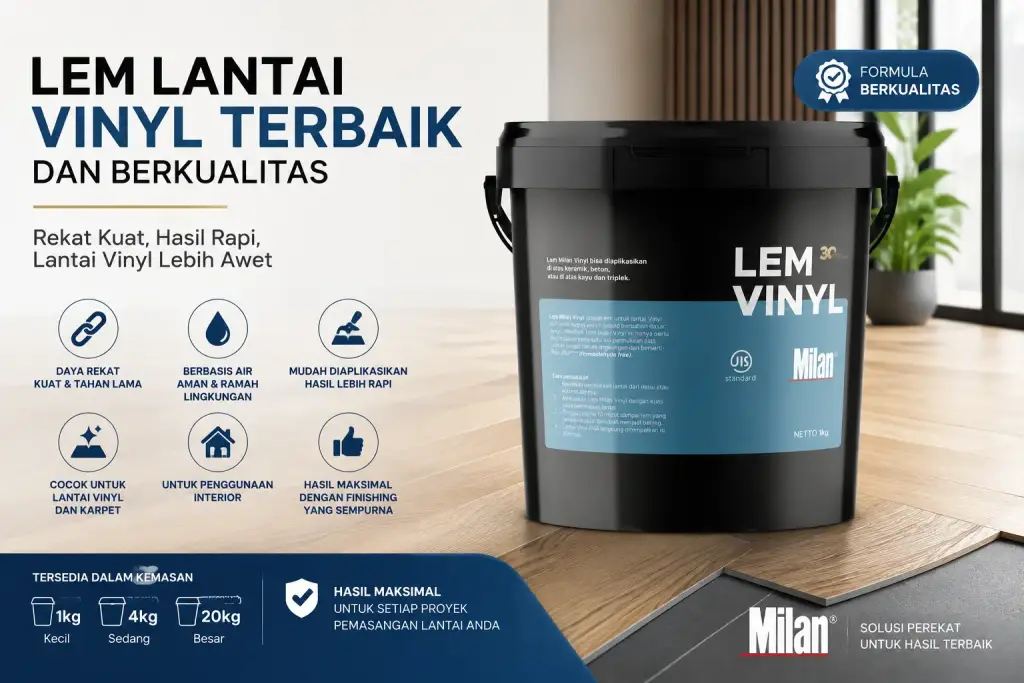
To prevent vinyl flooring from bubbling easily, Milanians should use a high-quality adhesive that has been proven to provide strong adhesion.
The recommendation is Milan Vinyl Glue A water-based adhesive specifically formulated for installing vinyl flooring and carpet. It’s easy to apply and helps ensure a neater, stronger, and more precise installation.
For renovation projects, new flooring installations, or professional needs, Milanians can choose the package size that best fits the area being worked on. Make sure the floor surface is properly prepared and follow the application instructions for the adhesive to ensure the best possible results.
Here are some of the advantages of Milan Vinyl Adhesive that Milanians may want to consider, including:
- Water-based.
- Suitable for vinyl flooring.
- Can be used on carpets.
- Available in 1 kg, 4 kg, and 20 kg sizes.
- Convenient for installation purposes.
- Helps ensure even adhesion.
- Ideal for professional work needs.
FAQ (Frequently Asked Questions)
How Can You Prevent Vinyl Flooring from Bubbling Down the Road?
Make sure the subfloor is completely dry, level, clean, and free of dust before installation. Use the appropriate adhesive, apply it evenly, and allow sufficient curing time before the floor is used or subjected to heavy loads.
When Can Bubbled Vinyl Still Be Repaired?
Vinyl can still be repaired if the bubbles are relatively small and the material has not permanently deformed. If the vinyl is torn, severely warped, or damaged by moisture, that section should be replaced.
What Should You Keep in Mind Before Installing Vinyl Flooring to Prevent Bubbling?
Pay attention to the condition of the subfloor, moisture levels, surface levelness, type of vinyl, installation method, and choice of adhesive. Do not install the vinyl until the subfloor is completely ready.
Is Vinyl Flooring Suitable for Installation in Damp Areas?
Vinyl can be used in certain areas with high humidity, but the condition of the subfloor must still be monitored. Moisture trapped beneath the vinyl can cause the adhesive to fail and lead to bubbling.
Prevent Vinyl Flooring from Bubbling with High-Quality Adhesive from Milan!
Don’t let adhesive issues cause your installed vinyl flooring to become wavy or bubble. From proper floor preparation to adhesive selection, every step of the installation process affects the final result.
To meet that need, PT Indocipta Wisesa featuring Milan Vinyl Glue which is specifically designed to make vinyl flooring installation easier and ensure a perfect bond.
With proper installation, Milanians can prevent vinyl flooring from bubbling. The end result is neater, stronger, more precise, and longer-lasting.
Want to prevent your vinyl flooring from bubbling? Use Milan Vinyl Glue Now!
Discuss your Milanians project needs with the Milan Expert Team Click the banner below!