Demand for Indonesian furniture in the global market remains very promising. According to data from Directorate General of Small, Medium, and Miscellaneous Industries shows that The value of Indonesia's furniture exports in the second quarter of 2025 reached USD 0.92 billion with the United States accounting for 54.6% as the largest market.
Business in Indonesia He also noted that HIMKI has set a target for Indonesian furniture exports reach USD 6 billion by 2030 because global market opportunities continue to grow.
To make this plan a reality, local artisans in Indonesia must understand Quality Standards for the Finishing of Export Furniture required to enter the international market. This is because foreign buyers evaluate not only the design or type of wood, but also the quality of the finish, which determines the product’s beauty, durability, safety, and compliance with the regulations of the destination country
Why Is Finishing an Important Factor in Furniture Exports?
In the export industry, finishing is not merely about applying color to a wooden surface. Finishing furniture for export is the final stage that determines both the visual quality and performance of the product throughout the distribution process until it is used by consumers.
Furniture intended for export typically spends several weeks in transit by sea. During this process, the products are exposed to temperature fluctuations, high humidity, and the risk of friction between packages.
Poor finishing can cause the color to fade, the coating to peel, and mold to grow, even fine cracks on the surface of the wood.
In addition to protecting the material, the finish also increases the product’s resale value. International buyers generally have very high standards regarding color consistency, texture, gloss level, and the safety of the chemicals used.
Therefore, the finishing process for export furniture must produce a consistent appearance while also complying with environmental regulations in various destination countries.
Regulations on Finishing Quality Standards That Must Be Met for Export Furniture
1. ECO Mark Certification (Japan)
Japan has regulations regarding furniture finishing that are set forth in ECO Mark. For furniture products, the finish must using materials with low emissions, does not contain excessive amounts of hazardous substances, and promotes the use of more environmentally friendly materials.
2. ECHA Regulations (European Union)
The European Union, through European Chemicals Agency (ECHA) implementing the REACH regulation (Registration, Evaluation, Authorization, and Restriction of Chemicals), which governs the use of chemicals in various products, including furniture.
Finishing must not contain any substances on the list Substances of Very High Concern (SVHC) exceed the limit as specified. These regulations are intended to protect human health while reducing the impact of environmental pollution.
3. Dubai Central Laboratory (DCL) Certification
To enter the Middle Eastern market, particularly the United Arab Emirates, certain furniture products must meet the requirements of Dubai Central Laboratory. Testing covers the safety of finishing materials, chemical content, coating quality, and product durability in accordance with the technical standards in effect in that region.
4. EPA Formaldehyde Standards
The United States enforces formaldehyde emission standards through Environmental Protection Agency (EPA) under TSCA Title VI. This rule limits the amount of formaldehyde released from composite wood products.
Therefore, the finishing process for export furniture must use materials and coatings that do not increase formaldehyde emissions so that the products can pass testing.
5. Eco-Label Regulations (South Korea)
Korea Eco Label is awarded to products that meet resource efficiency requirements and have a low environmental impact. For furniture, the finish must have low VOC content, be safe for indoor use, and minimize pollution during both the production process and the product’s use.
Characteristics of High-Quality Furniture Finishes for Export to Ensure Market Acceptance
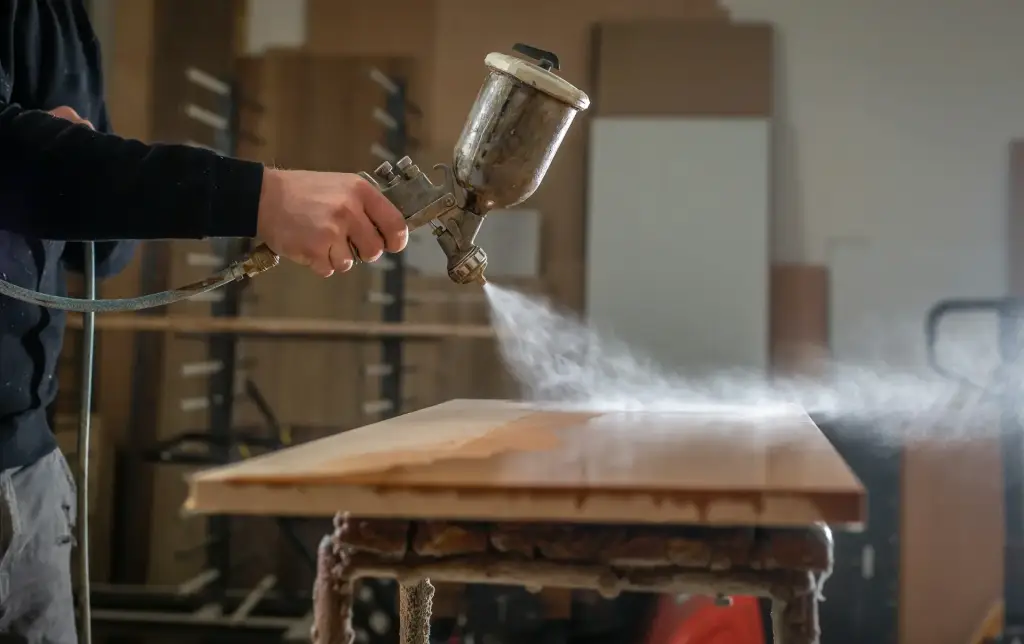
1. Consistent, Natural, and Neutral Colors
Typically, products imported into other countries prioritize color consistency among products within a single production batch. Natural colors such as oak, walnut, and teak, as well as neutral colors It is more widely accepted because it aligns with various modern interior design concepts.
2. Resistant to Weather, Humidity, and Chemicals
Furniture intended for export must be able to withstand temperature changes, high humidity, and exposure to mild cleaning solutions. The finish that High durability will extend its service life products while reducing the risk of customer claims.
3. A Touch of Rustic Style
Global furniture trends still favor tA rustic look that highlights the natural character of the wood grain. A finish that preserves the wood’s natural texture gives the product a premium look while enhancing its aesthetic appeal.
4. Using Matte Finishes and Stains
Matte and stain effects are becoming increasingly popular because gives it an elegant look without being over the top. This type of finish highlights the beauty of the wood grain while creating a natural look that is popular in export markets.
5. Low VOC, Environmentally Friendly, and Safe
Many countries now prefer furniture with low VOC content to maintain indoor air quality. In addition to complying with international regulations, Low-VOC finishes are also a selling point because they are safer for users.
6. Featuring a Minimalist and Functional Style
Minimalist designs with simple finishes continue to dominate the global market. Clean colors, natural textures, and smooth finishes makes it easier to coordinate furniture with various interior styles.
How to Ensure Furniture Finishes Meet Export Standards
1. Choose a Finish That Meets International Standards
Using finishing products designed to meet the needs of the international market helps reduce the risk of buye rejectionr. In addition, the quality of the final product is more consistent and meets the required specifications.
2. Use Environmentally Friendly Materials
Currently, many countries are placing a high priority on environmental sustainability. The use of water-based finish with low VOC content This is one way to meet those demands while also enhancing the competitiveness of the product.
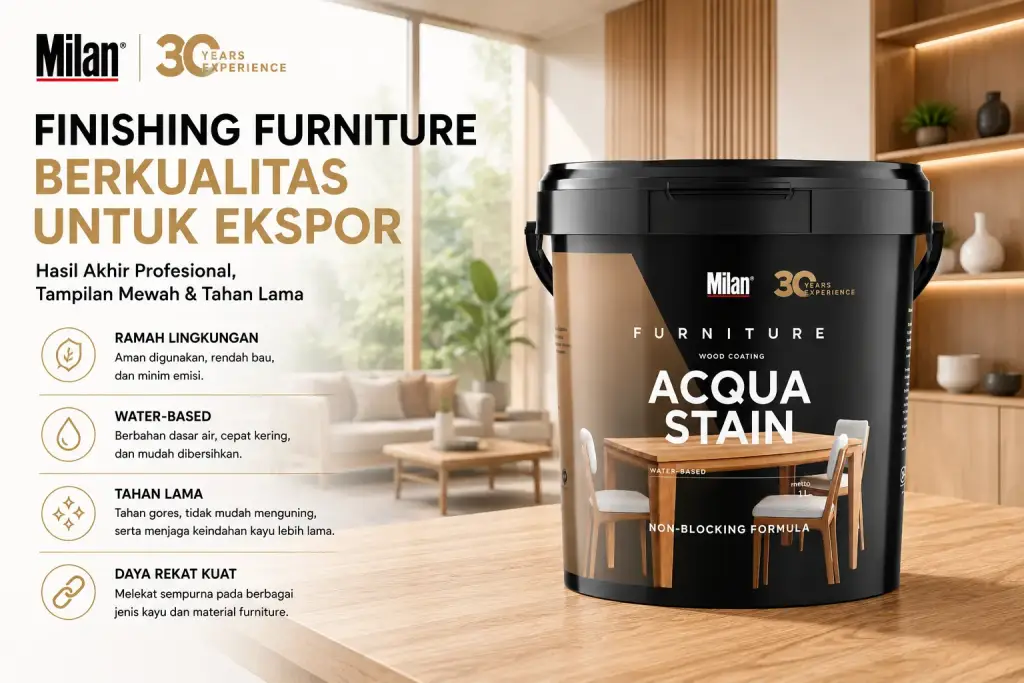
One option Milanians might consider is Milan Acqua Stain. This water-based product preserves the beauty of the wood grain, has lower emissions than solvent-based finishes, and produces natural colors that meet the requirements for finishing furniture intended for export.
3. Tailor the Finishing to the Preferences of Each Country’s Market
Every country has different preferences. The European market tends to favor natural colors with a matte finish, while some Middle Eastern countries prefer warmer wood tones. Understanding market trends helps increase a product’s chances of being accepted by buyers.
4. Choose a Finish That Is Durable and Won’t Fade Easily
The finish coat must be capable of retains its color, is scratch-resistant, and remains stable even though it goes through a lengthy shipping process. The durability of the finish will increase customer satisfaction while strengthening the manufacturer’s reputation.
5. Make sure the wood used has the proper moisture content
Excessively high moisture content in wood can cause the finish to peel, crack, or bubble after the product is used. Ideally, The wood has undergone a drying process so that the finish will adhere optimally and produce consistent export-quality products.
Challenges Facing Indonesia’s Furniture Industry in Exporting High-Quality Finished Products
Competition with other manufacturing countries, such as Vietnam and China, is becoming increasingly intense. In addition, local Indonesian manufacturers must also contend with changes in environmental regulations and demands for the use of eco-friendly materials, fluctuations in raw material prices, as well as maintaining consistent quality in large-scale production. All of these challenges mean that the finishing process for export furniture cannot be carried out haphazardly.
On the other hand, use of water-based finishes A product like Milan Acqua Stain can be a more efficient solution. This product helps create a natural wood look, reduces the use of high-emission chemicals, and delivers a high-quality finish without significantly increasing production costs.
The Benefits of Milan Acqua Stain as a Furniture Finishing Product
Milan Acqua Stain is a water-based finish designed to produce a high-quality, natural wood look. This product able to penetrate the wood fibers so that the color appears more even and enhances the material’s natural character.
In addition to providing aesthetic results, Milan Acqua Stain has a lower VOC content making it more environmentally friendly and in line with trends in export market demand. The application process is also easy, it dries quickly, and it is compatible with various finishing systems, thereby improving production efficiency.
For Milanians looking to produce high-quality finishes for export-grade furniture, Milan Acqua Stain is the ideal choice, combining a premium look, ease of application, cost efficiency, and support for sustainability standards—which are increasingly in demand in the international market.
Ready to Break into the Export Market? Use High-Quality Furniture Finishes from Milan Acqua Stain!
Want to maximize your share of the international market with high-value products? Don't use just any furniture finish, because it would be difficult to gain acceptance in the export destination country.
If Milanians are interested in breaking into the furniture export market—where high-quality products command prices many times higher than those sold locally—then use Acqua Stain furniture finishes from Milan are the best solution!
The formula is designed to be low in VOCs, making it safe and environmentally friendly in accordance with regulations in various countries around the world. It is available in a variety of colors, such as Natural Teak, Cherry, Dark Brown, and much more—giving Milanians the freedom to adapt to the needs or trends of their destination country.
So, if you at Milanians want your furniture finishes to meet export standards, try consulting with our team of experts Milan, Indonesia to get recommendations on colors and how to apply them. Click the banner below to connect!