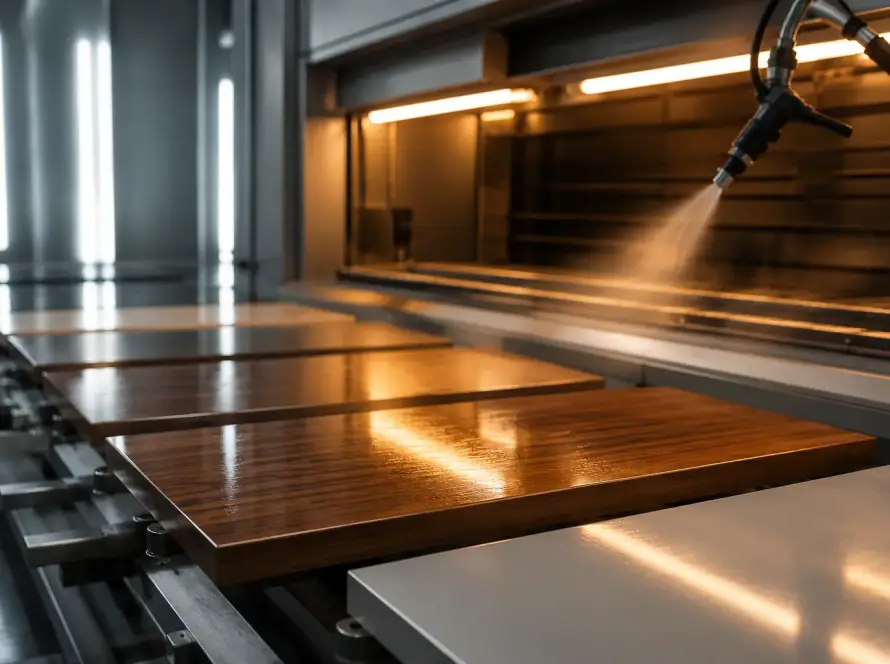
Have you ever wondered why painting results on wood are often less than ideal? Uneven color, paint that peels easily, or a rough surface are common problems that often arise.
The answer may lie in one important step that is often overlooked: the use of a wood base coat.
Many people think that paint or varnish alone is enough to protect and beautify wood. In fact, the base coat plays a fundamental role in determining the final quality of the finish.
In this article, we’ll take an in-depth look at why a base coat is so important, the difference between a base coat and a primer, and a complete guide on how to apply them to achieve optimal, professional-looking results.
What Is a Base Coat and Why Is It Important for Wood?
Simply put, a base coat—or wood primer—is the first layer applied to a wooden surface before the main painting process.
Its function is not merely to serve as a primer, but rather as a foundation that ensures the subsequent coat of paint adheres perfectly.
Applying a base coat is like building a house on a solid foundation. Without a foundation, the house will easily crack and collapse. The same goes for wood paint: without a base coat, the paint layer will easily peel off because it doesn’t adhere firmly.
See Also: 9 Differences Between Water-Based and Solvent-Based Wood Paint
5 Reasons Why a Base Coat Is Important for Wood
1. Improving Paint Adhesion
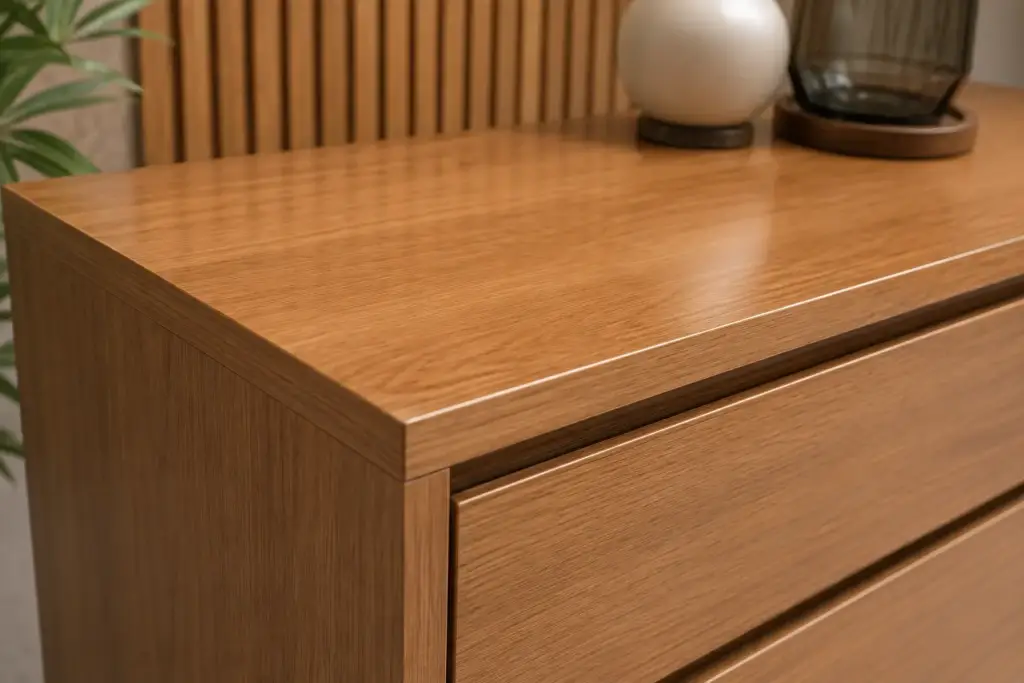
Wood has pores that can absorb paint. Without a base coat, the paint will be absorbed unevenly, resulting in uneven color and suboptimal adhesion. A base coat fills these pores, creating a smooth surface that is ideal for paint adhesion.
2. Preventing Stains and Tree Sap
Some types of wood, especially new ones, can release sap or tannins that can stain the paint finish. The base coat acts as an effective barrier, preventing stains and sap from seeping into the paint surface.
3. Reducing Paint Usage
Since the basecoat has already filled the pores of the wood, there’s no need to apply the main coat of paint multiple times. One or two coats of paint are enough to achieve a rich, even color, making it more cost-effective.
4. Produces Brighter and Sharper Colors
A base coat is often white or light gray, serving as a blank canvas. This is very helpful, especially if you want to paint wood with light colors, ensuring that the paint color looks brighter, more vivid, and turns out exactly as you expect.
5. Extending the Life of the Paint Coating
With strong adhesion and optimal protection, the paint coating won’t peel or crack easily. This ensures that the paint job lasts longer and looks beautiful for years to come.
Base Coat vs. Primer: Are They the Same Thing?
The terms “base coat” and “wood primer” are often used interchangeably, and essentially, both refer to products that serve a similar function: as a base coat. However, there are slight differences that can distinguish the two, especially when considering more specific products.
- Primer: Primers often focus on adhesion and surface preparation. They are designed to adhere to difficult surfaces (such as very smooth or oily wood) and provide “grip” for the paint to adhere to.
- Base Coat: Sometimes, the term “base coat” refers to a product that not only serves as a primer but also provides other benefits, such as filling small cracks, sealing wood grain, or even providing a base color that closely matches the final color.
So, even though both serve the same primary function, “base coat” is likely a more general and broader term that encompasses not only the primer’s function but also other protective and filling functions.
When choosing a product, the most important thing is to read the label and understand what the product offers—whether it simply provides adhesive strength or also has the ability to seal wood fibers.
For example, Milan Melamine Sanding Sealer (MSS) 251 as a melamine wood primer that fills the pores and makes the surface smoother, more even, and ready for a topcoat.
With a drying time of about 1 hour, Milan Melamine Sanding Sealer can help improve the quality of the wood finish.
See Also: What Is a Hardener? Here’s the Definition, Function, and Proper Application Method
A Complete Guide to Applying a Wood Base Coat
Although it may seem easy, applying a base coat correctly requires a few preparatory steps to ensure the best results. Follow these steps:
Step 1: Preparing the Wood Surface
This is the most crucial step. A clean, smooth surface will produce a perfect finish.
- Clean the Wood: Make sure the wood is free of dust, dirt, oil, or old paint residue. Use a damp cloth to clean the surface, then let it dry completely.
- Sand the Surface: Use sandpaper with the appropriate grit (for example, 120–180 grit to start) to smooth the wood surface. If there are any scratches or raised grain, sand until the surface is even. After sanding, remove any remaining sanding dust with a cloth or brush.
- Repair Defects: If there are nail holes or small cracks, use wood putty or a wood filler specifically designed for wood to fill them. Once the putty is dry, sand it down until smooth.
Step 2: Preparing the Base Coat
Before you begin applying the product, stir the base coat until it is evenly mixed. Make sure there is no sediment at the bottom of the can. If the product is too thick, follow the manufacturer’s instructions to thin it.
Step 3: Applying the Base Coat
- Use the Right Tools: You can use a brush, roller, or spray gun. For small areas or corners, a brush is the best choice. For large surfaces like doors or tables, a roller or spray gun will be more efficient.
- Apply a Thin, Even Coat: Apply the base coat in strokes that follow the grain of the wood. Avoid applying it too thickly, as this can cause drips or uneven drying. It’s better to apply two thin coats than one thick coat.
- Allow to Dry Completely: Drying time varies depending on the type of product and weather conditions. Generally, the basecoat will be touch-dry within a few hours, but it takes longer to dry completely (usually 4–6 hours or more). Follow the instructions on the product packaging.
Step 4: Sanding and Second Coat (Optional)
Once it’s dry, check the surface. If any areas are still rough or if wood fibers are raised, you can sand them again with finer-grit sandpaper (for example, 220–320 grit). This will make the surface very smooth. If necessary, apply a second coat of base coat for a more perfect finish.
Recommended Base Coat Products for a Smoother Wood Finish
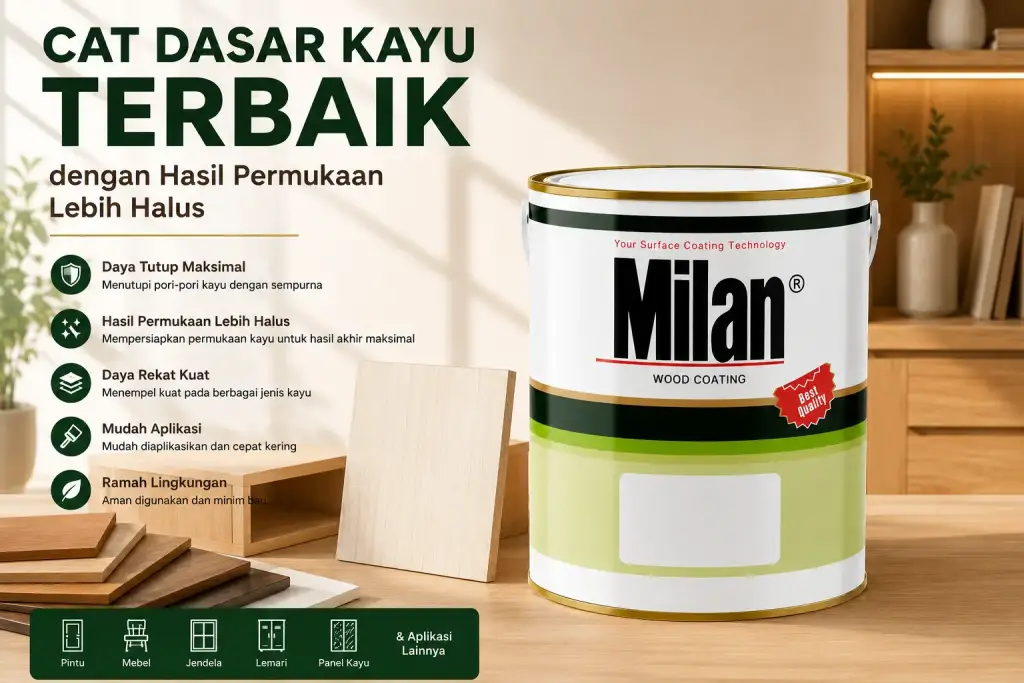
Want a smoother, neater wood finish? Don’t just use any base coat—choose a trusted brand, such as Milan Melamine Sanding Sealer (MSS) 251.
Milan Melamine Sanding Sealer has a special formulation that helps seal wood pores completely. As a result, it makes the wood surface smoother, more even, and ready for a final finish with a drying time of just 1 hour.
The base coat of this Milan Melamine Sanding Sealer can also improve the adhesion of the topcoat. Of course, the finish looks more professional, since the paint doesn’t peel off easily.
Ideal for modern wooden furniture and interior design projects.
FAQ (Frequently Asked Questions)
Are a base coat and a primer the same thing?
Yes, generally speaking, these two terms refer to the same product, namely a base coat applied before the main coat of paint.
However, the term “base coat” is sometimes used to refer to products that have additional functions—such as filling pores or sealing wood grain—in addition to their primary function as an adhesive.
Why does wood need a base coat?
Wood should be coated with a base coat to improve paint adhesion, prevent stains and wood sap from seeping through, reduce the amount of topcoat needed, and produce a brighter, more even finish. A base coat also helps extend the life of the paint finish.
How long does it take for the base coat to dry?
The drying time for a base coat varies depending on the type of product, weather conditions, and the thickness of the coat. On average, a base coat will be touch-dry in 2–4 hours, but it takes 4–6 hours or more to dry completely before applying the next coat of paint. Always follow the instructions on the product packaging.
Can a base coat be applied directly to new wood?
Yes, a base coat is highly recommended for new wood. In fact, a base coat will help seal the wood’s open pores and prevent sap or the wood’s natural tannins from seeping out, which can stain the paint.
Should I apply the wood base coat with a brush or a roller?
The choice of tool depends on the type of project. Brushes are suitable for small areas, corners, and details. Rollers are more efficient for large, flat surfaces. Meanwhile, spray guns provide the smoothest and most even finish, especially for large areas.
What happens if you don't use a base coat?
If you don’t use a base coat, the paint will be absorbed unevenly by the wood, resulting in a mottled or uneven color. The paint’s adhesion will also be weak, causing it to peel, crack, or flake off over time.
Does the base coat need to be sanded after it dries?
Sanding the base coat after it has dried is an optional step, but it is highly recommended. Use fine-grit sandpaper (220–320 grit) to smooth the surface and remove any wood fibers that may have risen to the surface. This will make the surface smoother and ready for the next coat of paint.
Can a base coat be used on all types of wood?
Generally, base coats are formulated to work on various types of wood, including both softwoods (such as pine) and hardwoods (such as teak). However, for certain types of wood that contain a lot of oil or sap, it is recommended to look for a special base coat designed specifically for that type of wood.
How do you choose the right base coat?
Choose a base coat based on the type of paint you’ll be using (for example, a water-based base coat for water-based paint). Also consider any additional functions you need, such as the ability to cover stains, fill cracks, or strengthen wood fibers.
How many coats of base coat are ideal?
Ideally, one coat of base coat is sufficient if applied evenly. However, if the wood surface still looks patchy or you want to ensure perfect coverage, you can apply a second coat after the first coat has dried completely.
Achieve a Smoother Finish with a High-Quality Base Coat from Milan MSS 251!
Skipping the base coat is a common mistake that can ultimately ruin the appearance and durability of the paint job.
By understanding the importance of the base coat as a foundation, we will not only achieve a more beautiful and professional paint finish, but also save time and money in the long run.
Moreover, if the base coat you’re using is from Milan Melamine Sanding Sealer (MSS) 251. This product is specifically designed as a melamine wood primer made from resin and a hardener that completely seals the pores.
Of course, the use of primer from Milan MSS 251 This can make the wood surface smoother and ready for paint or a final finish.
The results are guaranteed to be even better, and the paint finish on the wood will remain durable for years to come.
What do you think? Interested in using the Milan MSS 251 base coat? If so, you can consult with Milan’s team of experts about your industrial project needs to get the best recommendations.
Click the banner below to connect with the Milan Expert Team!