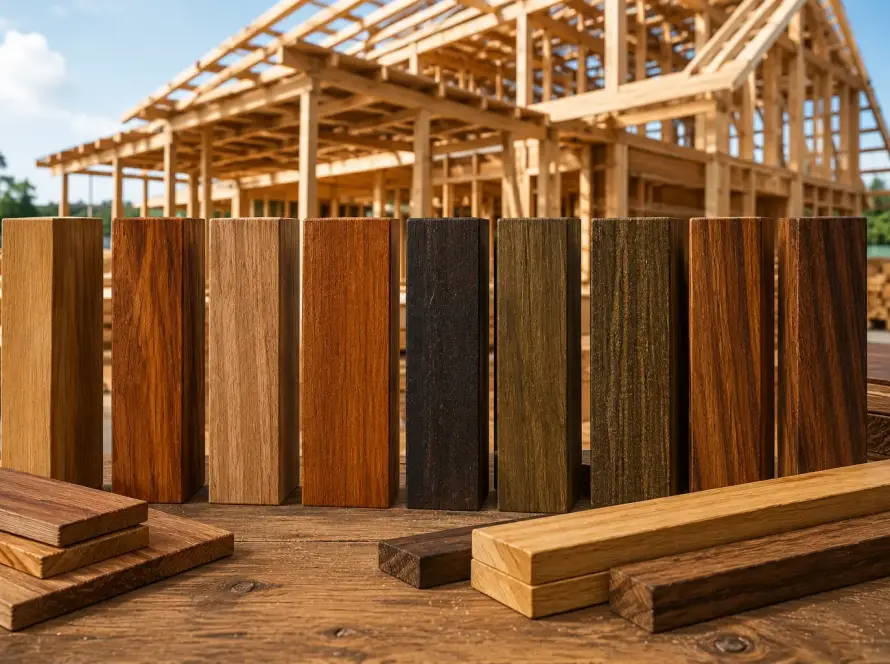
Choosing bricks to build a house turns out to be more complicated than simply picking the lightest ones or the cheapest ones.
Milanians who are currently working on a construction or renovation project may have come across two types of lightweight bricks that are quite commonly used: AAC (Autoclaved Aerated Concrete) and CLC (Cellular Lightweight Concrete).
The two have different characteristics. Everything from the base material, production process, size, and water absorption capacity to the installation method can vary.
So, when comparing AAC and CLC lightweight bricks, which one is better suited for homes? Let’s take a look at the differences so that Milanians can make a choice based on their project’s needs.
Understanding the Different Types of AAC and CLC Lightweight Bricks
AAC (Autoclaved Aerated Concrete) is a lightweight, porous concrete made from a mixture of materials such as cement, silica sand, lime, water, and an aluminum-based expanding agent.
After the mixture has expanded and been cut to size, the material is processed in an autoclave—a pressurized chamber filled with hot steam—for curing. This process helps produce bricks with relatively precise dimensions and a uniform pore structure.
Meanwhile, CLC (Cellular Lightweight Concrete) It is made using a mixture of cement, sand, water, and a foaming agent to create air bubbles within the material. Unlike AAC, CLC does not undergo a high-pressure autoclave process but cures naturally or at atmospheric pressure.
So, simply put, both methods use air pockets to make the material lighter. The most fundamental difference lies in the blowing agent and the curing process.
See Also: 8 Ways to Install Lightweight Bricks for a Neater, More Precise, and Sturdier Result
Reasons Why Lightweight Bricks Are a Popular Choice for Home Construction
Lightweight bricks are widely used because they offer several practical advantages over conventional wall materials, such as:
- The material is lighter
- The bricks are larger, so installation is faster
- Reducing dead loads on building structures
- It is relatively easy to cut and shape
- Has good thermal insulation properties
- Helps make wall construction more efficient
- The surface is relatively flat and precise
- Requires a special adhesive with a thinner layer
- Ideal for both new home construction and home renovations
The use of lighter materials can also help reduce the load that the building’s structure must bear.
Differences Between AAC and CLC Lightweight Bricks
1. Raw Materials Used
The first difference between AAC and CLC lightweight bricks is evident in their foaming agents. AAC typically uses silica sand, cement, lime, water, and aluminum powder or aluminum paste as pore-forming agents.
Meanwhile, CLC uses cement, sand, water, and a foaming agent to produce air bubbles.
2. Brick Size
In terms of size, AAC and CLC also differ and cannot be equated.
Typically, AAC lightweight bricks are manufactured according to the factory’s specifications and cannot be customized.
Unlike CLC lightweight bricks, which can be customized to meet specific needs, ranging in size from 400 to 1,800 kg/m3 (customizable).
3. Characteristics
AAC lightweight bricks generally have a porous structure formed through chemical reactions and an autoclaving process, resulting in a material that is lightweight, precise, and has more consistent characteristics when produced under strict quality control.
Meanwhile, CLC is also lightweight and provides both thermal and acoustic insulation, but its properties depend heavily on the composition of the mixture, the type of foaming agent, the density, and the curing process.
4. Material Manufacturing Process
In the AAC process, the expanded mixture is cut to size and then cured in an autoclave using hot steam and high pressure. This process requires specialized production facilities.
Next, CLC uses a foam generator to produce foam, which is then mixed into the mixture. After molding, the material undergoes a curing process without an autoclave.
5. Brick Color
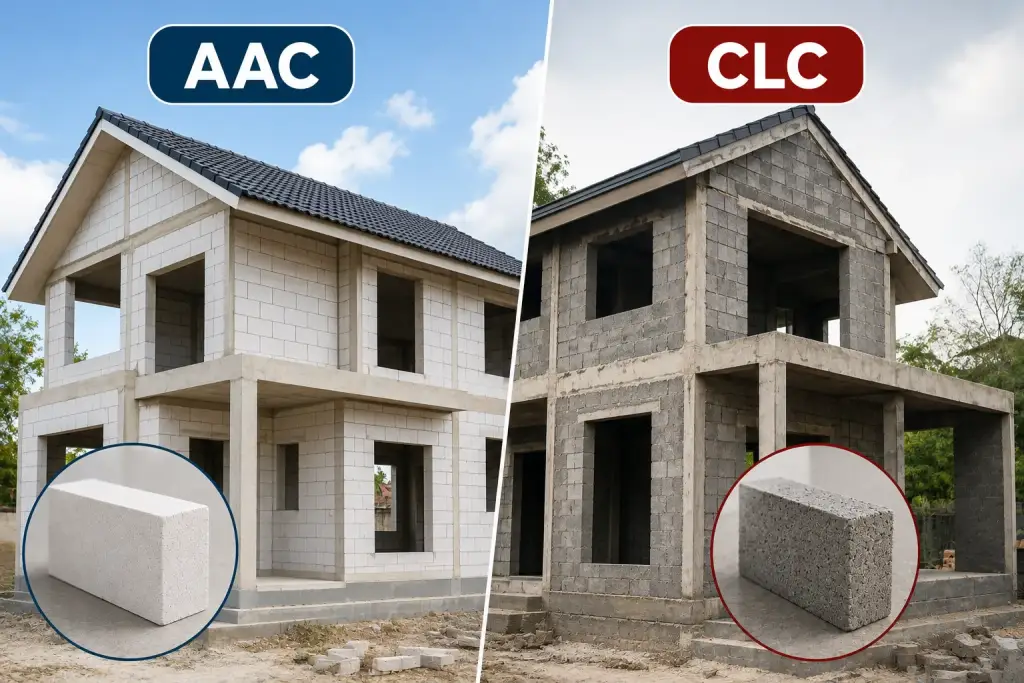
In general, AAC tends to be white or grayish-white, mainly due to the use of silica sand and the composition of the materials used. CLC typically has a gray color more similar to concrete because it uses a mixture of cement and sand.
However, color isn’t the only indicator of quality. Milanians still need to check the technical specifications and product quality provided by the manufacturer.
6. Water Absorption
Lightweight bricks have pores, so water and moisture management must be taken into account, especially when used on exterior walls.
Water absorption rates cannot be generalized based solely on the type of AAC or CLC, as they are influenced by density, pore structure, composition, and the production process.
Therefore, for exterior walls, an appropriate waterproofing system is still necessary, especially in areas frequently exposed to rain.
7. Installation
Both can be used as wall-building materials, but installation must follow the manufacturer’s recommendations. Lightweight bricks are generally installed using a special adhesive or thin-bed mortar, rather than just conventional cement-sand mortar.
A flat, clean, and dust-free surface is essential for the adhesive to perform optimally. The larger size of the bricks also makes the installation process relatively faster compared to smaller bricks.
8. What Kinds of Projects Is It Suitable For?
AAC lightweight blocks are widely used for the walls of houses, buildings, shop houses, and construction projects that require lightweight and precise materials.
However, CLC can also be used for walls and partitions, especially when project requirements allow for the use of materials with customized densities and characteristics.
So, don’t base your decision solely on the product name. Consider the product specifications and the requirements of the construction project you’re working on.
See Also: 8 Mistakes When Installing Lightweight Bricks That Cause Walls to Crack Easily
Which Is More Cost-Effective: AAC or CLC Bricks?
There is no definitive answer as to whether AAC or CLC is always cheaper. The cost of materials is only one part of the total construction cost.
Milanians also need to factor in adhesives, labor, installation time, transportation, waste levels, and finishing requirements.
CLC can be a cost-effective option under certain conditions, primarily because its production process does not require an autoclave. However, AAC, which has more precise dimensions, can also improve efficiency during installation and finishing.
So, the most cost-effective option is the one that results in the most efficient total project cost, not just the lowest price per unit.
Advantages and Disadvantages of AAC and CLC Lightweight Bricks
| Type | Advantages | Disadvantages |
| AAC | Lightweight, precise, relatively quick to install, uniform pore structure, good thermal insulation | The price may be higher; it requires proper handling and the right adhesive; and water protection must be considered |
| CLC | Lightweight, can be produced using a simpler process, and density characteristics can be adjusted | Precision and characteristics may vary depending on the manufacturer and production process |
Tips for Choosing High-Quality Lightweight Bricks Suited to Your Home Construction Needs
1. Identify and Understand the Characteristics of Different Types of Lightweight Bricks
Don’t rush into a purchase just because a contractor recommended it or the price seems low. First, find out whether the product is AAC or CLC, how it’s manufactured, and what its technical specifications are.
2. Align with Development Needs
When building a house, first determine your wall requirements—whether for exterior walls, interior partitions, or renovations. Choose the type and thickness of the bricks based on the building’s design and technical specifications.
3. Pay Attention to the Quality, Flatness, and Precision of the Lightweight Bricks
Bricks with consistent dimensions are easier to lay. Check that their surfaces are flat, their corners are free of defects, and their dimensions are consistent. The precision of the materials affects the neatness of the wall and the efficiency of the mortar.
4. Check the Certifications Held
If available, check the manufacturer’s certifications, test results, and technical standards. Don’t just look for the word “premium” on the packaging—such claims must be backed by clear specifications.
5. Consider the Weight, Density, and Durability
Lightweight materials do help reduce the load, but focusing too much on weight alone is not the right approach. Consider density, compressive strength, and other characteristics to ensure they meet the job’s requirements.
6. Consider the Price Being Offered
Compare prices based on total cost. Calculate the material requirements per square meter, as well as the costs for adhesives, labor, shipping, and finishing. That way, Milanians can determine which option is truly the most cost-effective for their project.
How Can Lightweight Bricks Be Perfectly Bonded to the Walls of a House?
The key to installing lightweight bricks is not just choosing good-quality bricks, but also using the right adhesive and applying it correctly.
The brick surface must be free of dust, oil, moss, and dirt. If the surface is uneven, level it first.
Next, apply the adhesive according to the product instructions and immediately place the next brick. Check the brick’s position using a level, then tap it into place with a rubber mallet to ensure the adhesive is evenly distributed across the contact surface.
If Milanians want the lightweight bricks to bond perfectly with a fast curing time, Milan Lightweight Brick Adhesive become the adhesive of choice.
As a ready-to-use instant adhesive, Milan Lightweight Brick Adhesive provides strong bonding power with drying time is about 5 minutes.
See Also: Cement Mortar vs. Milan Lightweight Brick Adhesive: Which Is Stronger for Walls?
Reasons to Use Milan Lightweight Brick Adhesive for Home Construction
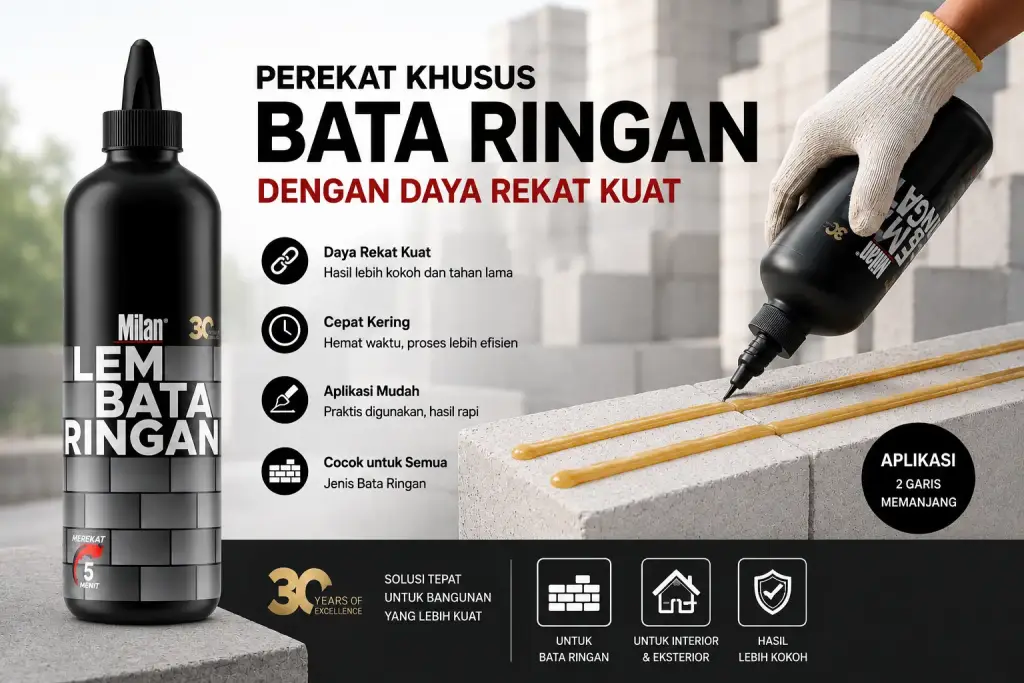
Milan Lightweight Brick Adhesive Designed as a modern adhesive to make the installation of construction materials more practical and efficient. Its formula is ready to use, so it does not require any additional mixing, unlike conventional adhesives.
Some of its advantages that Milanians should consider include:
- Dries quickly and sets in about 5 minutes
- Ready-to-use single-component formulation
- Strong adhesive strength
- Cost-effective and economical
- Water- and weather-resistant
- Helps improve work productivity
- Suitable for lightweight bricks and various stone materials
So, Which Is Better Suited for Home Construction: AAC Lightweight Bricks vs. CLC?
If Milanians need lightweight bricks with precise dimensions and a controlled production process, AAC could be an attractive option for home construction.
Meanwhile, CLC may be considered when the material characteristics and project requirements align with the available specifications.
So, when choosing between AAC and CLC lightweight bricks, there isn’t one type that’s automatically the best for all projects.
The most important thing is to match the density, compressive strength, size, manufacturing quality, wall requirements, budget, and installation method to the building’s conditions.
FAQ (Frequently Asked Questions)
Which Is Faster and Easier to Install: AAC or CLC?
Both are relatively easy to install because they are large and lightweight. However, AAC, which has more precise dimensions, can help produce neater and more consistent wall construction. Installation speed is still heavily influenced by the quality of the materials and the skill of the workers.
Which Is Better for Home Renovations: AAC or CLC?
Both can be used for renovations. Choose based on the wall’s requirements, the material’s weight, size, product availability, and the condition of the existing building structure.
Why Is It Better to Use Special Adhesive When Installing Lightweight Bricks?
Special adhesives are designed to provide a bond that is suited to the characteristics of lightweight bricks. Using the right adhesive also helps create a thinner, neater, and more efficient joint layer compared to using conventional mortar.
When Should You Use AAC and When Should You Use CLC?
AAC is the right choice when Milanians need lightweight bricks with dimensional precision and consistent production characteristics. CLC should be considered when project requirements align with the specifications and density of available CLC products.
Are Lightweight Bricks More Cost-Effective Than Red Bricks?
It can be more cost-effective in terms of installation time, adhesive usage, and labor, but the material cost per unit isn’t always lower. Compare the total cost per square meter of wall, not just the price of a single brick.
Improve the Bond Strength of Hebel in Your Home to Make It More Sturdy with Milan Lightweight Brick Adhesive!
Simply understanding the differences between AAC and CLC lightweight bricks isn’t enough if Milanians want to build strong and sturdy structures.
To meet these needs, a special lightweight brick adhesive with strong bonding power is required. That is why Milan Lightweight Brick Adhesive was developed to speed up the construction process while ensuring a strong bond.
Compared to conventional methods, Milan Lightweight Brick Adhesive is more cost-effective because you only need to apply two longitudinal lines to each Hebel block.
Moreover, Milan Lightweight Brick Adhesive It is also weather- and water-resistant. This makes the building even more sturdy and durable.
So, what do you think? Are Milanians interested in using Milan Lightweight Brick Adhesive for their home construction projects?
Discuss your needs with Milan’s team of experts by clicking the banner below!